
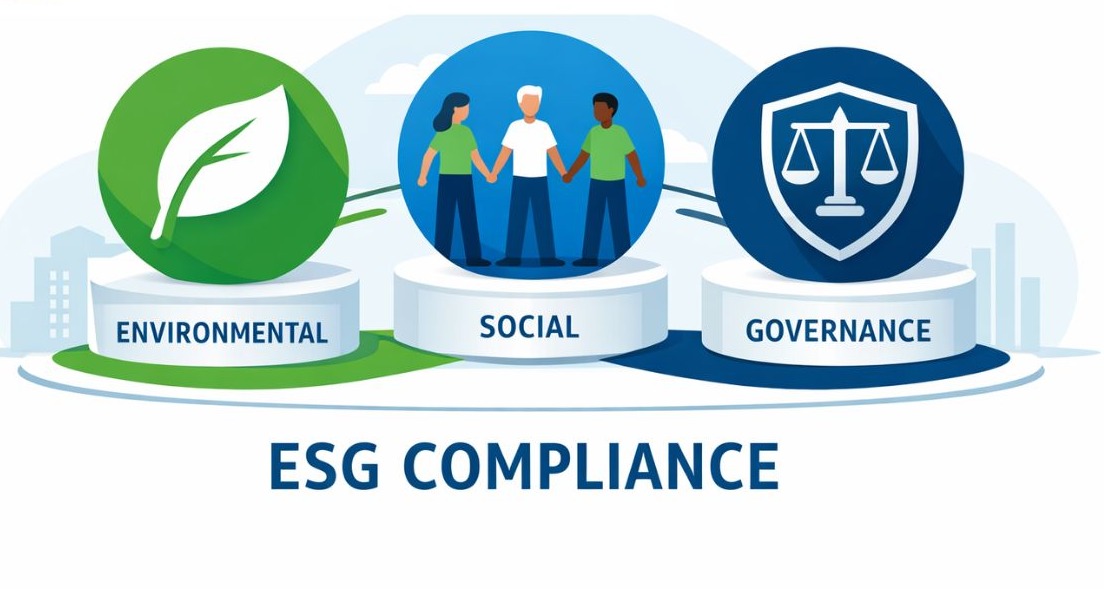
Green Deals: How ESG Clauses Are Redefining Global Trade
From carbon footprints to labour rights, sustainability is now a trade priority.
India’s challenge: balancing growth with global ESG commitments.
By Vishwas Kumar
New Delhi: June 05, 2026:
Trade agreements have traditionally focused on tariffs, quotas, and market access. But in the 21st century, a new dimension has emerged: sustainability. Environmental, social, and governance (ESG) clauses are increasingly embedded in Free Trade Agreements (FTAs) and Bilateral Trade Agreements (BTAs), reflecting global concerns about climate change, labour rights, and corporate responsibility.
For India, ESG clauses present both opportunities and challenges. On one hand, they align with India’s push for renewable energy, sustainable agriculture, and inclusive growth. On the other, they raise compliance costs and create new hurdles for exporters, particularly small and medium enterprises. This article explores the evolution of ESG in trade agreements, India’s approach, landmark disputes, and the future of sustainability-linked trade.
Section 1: Evolution of ESG in Trade
Trade agreements have historically been instruments of economic liberalization, designed to reduce tariffs, eliminate quotas, and expand market access. For decades, the focus was squarely on growth and efficiency, with little attention paid to sustainability. Environmental concerns, labour rights, and governance standards were considered domestic matters, not issues for international trade. Yet as globalization deepened and climate change became a pressing global challenge, the role of trade agreements began to shift. Today, Environmental, Social, and Governance (ESG) clauses are increasingly central to negotiations, reflecting a new era in global commerce.
Early Trade Agreements: Growth First, Sustainability Later
In the post-World War II era, trade agreements were primarily about rebuilding economies and fostering growth. The General Agreement on Tariffs and Trade (GATT) and early FTAs focused almost exclusively on reducing barriers to trade in goods. Environmental and social issues were largely absent. Developing countries, including India, prioritized industrialization and export growth, often at the expense of sustainability. The prevailing belief was that economic growth would eventually create the resources needed to address social and environmental concerns.
This growth-first approach meant that trade agreements did little to prevent practices like overexploitation of natural resources, weak labour protections, or lax governance. Sustainability was seen as secondary, and trade was viewed as a tool for prosperity rather than responsibility.
Rise of Climate Change and Global Activism
By the late 20th century, climate change, environmental degradation, and labour rights abuses began to dominate global discourse. Civil society movements, NGOs, and international organizations pushed for sustainability to be integrated into trade. The 1992 Rio Earth Summit and subsequent global climate conferences highlighted the need for collective action. Activists argued that trade agreements could not remain blind to sustainability, as global commerce was directly linked to carbon emissions, deforestation, and exploitation of workers.
This activism created pressure on governments, particularly in developed nations, to embed ESG considerations into trade policy. The idea was simple yet powerful: trade should not only promote growth but also ensure that growth is sustainable, inclusive, and ethical.
EU and US Lead the Way
The European Union (EU) and the United States became pioneers in incorporating ESG clauses into trade agreements. EU FTAs began to include commitments to international labour standards, environmental protection, and adherence to climate agreements like the Paris Accord. The EU’s Carbon Border Adjustment Mechanism (CBAM), for instance, links trade directly to carbon emissions, requiring exporters to meet sustainability standards or face tariffs.
Similarly, US trade agreements started including labour rights provisions, prohibiting child labour and mandating workplace safety. Environmental clauses addressed pollution, biodiversity, and sustainable resource management. These measures reflected a growing recognition that trade could be a lever for positive change, not just economic gain.
For exporters in developing countries, however, these clauses created new challenges. Compliance with ESG standards often required costly reforms, new technologies, and stricter governance — raising concerns about competitiveness.
India’s Cautious Approach
India has supported sustainability in principle but adopted a cautious stance in practice. As a developing nation, India emphasizes the need to balance growth with responsibility. Policymakers argue that overly strict ESG clauses in FTAs could hurt competitiveness, particularly for small and medium enterprises (SMEs) that lack resources to meet advanced standards.
For example, India’s textile and steel exporters face challenges in meeting EU sustainability requirements, which demand cleaner production processes and stricter labour compliance. While India is investing heavily in renewable energy and promoting sustainable agriculture, it resists clauses that could impose disproportionate costs or restrict policy flexibility.
India’s approach reflects its broader philosophy: sustainability is important, but trade agreements must account for developmental realities. Rather than adopting one-size-fits-all ESG clauses, India advocates for differentiated responsibilities, allowing developing nations to pursue sustainability at a pace aligned with their economic capacity.
The Bigger Picture
The evolution of ESG in trade agreements marks a paradigm shift. What began as purely economic instruments are now becoming vehicles for sustainability and ethical governance. The EU and US have set the tone, embedding ESG clauses into their FTAs, while countries like India navigate the tension between global expectations and domestic priorities.
This transformation underscores a new reality: trade is no longer just about goods and services; it is about values. As ESG clauses become standard, nations must adapt, balancing competitiveness with responsibility. For India, the challenge is to embrace sustainability without compromising growth — a delicate balance that will define its role in the future of global trade.
Section 2: ESG Clauses in Modern FTAs
The integration of Environmental, Social, and Governance (ESG) clauses into modern Free Trade Agreements (FTAs) marks a profound shift in how nations view commerce. Trade is no longer seen as a purely economic activity; it is increasingly tied to sustainability, ethics, and responsibility. Today, ESG clauses are not peripheral add-ons but central features of many FTAs, shaping the way goods and services flow across borders.
Environmental Commitments
Modern FTAs often include explicit environmental provisions. The European Union (EU) has been at the forefront, embedding commitments to international climate agreements such as the Paris Accord into its trade deals. Exporters to the EU are expected to comply with sustainability standards, ranging from carbon emissions reporting to waste management practices. The EU’s Carbon Border Adjustment Mechanism (CBAM) is a striking example: it imposes tariffs on imports of carbon-intensive products like steel and cement, ensuring that foreign producers face the same environmental costs as domestic firms.
For countries like India, this means exporters must adapt production processes to meet stricter environmental requirements. While this creates challenges, it also incentivizes investment in cleaner technologies and renewable energy.
Social Clauses: Labor Rights and Inclusion
Social provisions in FTAs focus on labour rights, workplace safety, and inclusivity. The United States has been particularly active in embedding labour standards into its trade agreements, prohibiting child labour and mandating fair wages. These clauses aim to prevent a “race to the bottom,” where countries compete by lowering labour standards to attract investment.
For India, compliance with labour rights clauses is complex. While reforms are underway to modernize labour laws and improve workplace conditions, enforcement remains uneven. Export sectors such as textiles and garments face scrutiny from global buyers, who demand proof of ethical sourcing and fair labour practices. Meeting these standards is essential not only for compliance but also for maintaining credibility in international markets.
Governance Clauses: Transparency and Anti-Corruption
Governance-related ESG clauses address issues of transparency, anti-corruption, and corporate responsibility. FTAs increasingly require signatories to adopt measures that ensure fair competition, prevent bribery, and promote accountability. These provisions reflect the growing recognition that governance is integral to sustainable trade.
India has made strides in improving governance, with initiatives like the Goods and Services Tax (GST) and digitalization of compliance processes. However, challenges remain in areas such as corruption and bureaucratic inefficiency. Governance clauses in FTAs push India to strengthen institutions and align with global best practices, enhancing investor confidence.
India’s Negotiations with EU and UK
India’s ongoing negotiations with the EU and UK highlight the centrality of ESG clauses. The EU insists on strong sustainability commitments, including adherence to climate targets and labour standards. India supports these goals but seeks flexibility, arguing that overly strict obligations could hurt competitiveness, especially for small and medium enterprises.
The UK, post-Brexit, is also embedding ESG clauses into its trade deals, focusing on green technology cooperation and labour rights. For India, these negotiations are a test of its ability to balance developmental priorities with global expectations. Success will depend on crafting agreements that recognize India’s unique challenges while committing to meaningful progress on sustainability.
The Bigger Picture
ESG clauses in modern FTAs represent a new paradigm: trade agreements are now instruments of global governance, shaping not just economic flows but also social and environmental outcomes. For India, they present both hurdles and opportunities. Compliance requires investment, reform, and adaptation, but it also opens doors to new markets, green technologies, and sustainable growth.
The challenge lies in ensuring that ESG clauses are not seen as barriers but as pathways to modernization. By embracing sustainability, labor rights, and governance reforms, India can strengthen its position as a responsible trade partner, aligning economic growth with global values.
Section 3: India’s ESG Landscape
- India’s renewable energy push: solar, wind, hydrogen.
- Social commitments: labour reforms, gender inclusion, rural development.
- Governance challenges: corruption, compliance gaps, uneven enforcement.
- Case studies: India’s textile exports facing EU sustainability standards; IT services adapting to ESG reporting.
Section 4: Landmark Disputes & Case Studies
- EU’s Carbon Border Adjustment Mechanism (CBAM) and its impact on Indian steel and cement exports.
- Labor rights disputes in garment exports.
- ESG-linked disputes in renewable energy contracts.
- Case study: India’s pharma exports challenged over environmental compliance.
Section 5: Emerging Issues
- Digital ESG: carbon footprint of cloud services and data centers.
- ESG in fintech and blockchain: transparency and governance.
- ESG in agriculture: sustainable farming, seed patents, biodiversity.
- ESG in AI: ethical use and bias in algorithms.
Section 6: The Road Ahead
- India’s upcoming FTAs with EU, UK, GCC — ESG clauses central to negotiations.
- Need for stronger domestic ESG frameworks to meet global standards.
- Recommendations: invest in green tech, improve labor compliance, enhance corporate governance.
- India’s potential to position itself as a sustainable trade partner if reforms succeed.
Conclusion
ESG clauses are no longer optional add-ons; they are becoming core components of trade agreements. For India, the challenge is to balance growth with sustainability, ensuring that exports remain competitive while meeting global standards. The future lies in embracing ESG not as a burden but as an opportunity — to innovate, attract investment, and build credibility as a responsible global partner. If India can align its domestic policies with international ESG commitments, it will not only secure trade deals but also strengthen its role in shaping the future of sustainable commerce.
40 FAQs with Short Answers
- What is ESG in trade?
Environmental, social, and governance standards in agreements. - Why are ESG clauses important?
They ensure sustainability and fairness in global trade. - What is India’s stance on ESG clauses?
Supportive but cautious about strict obligations. - What is CBAM?
EU’s Carbon Border Adjustment Mechanism. - How does CBAM affect India?
Raises costs for steel and cement exports. - What are labour rights clauses?
Provisions ensuring fair wages and safe workplaces. - What are environmental clauses?
Commitments to reduce emissions and protect biodiversity. - What are governance clauses?
Rules on transparency, anti-corruption, and corporate ethics. - What is India’s renewable energy push?
Investments in solar, wind, and hydrogen. - What is India’s textile ESG challenge?
Meeting EU sustainability standards. - What is ESG in IT services?
Reporting on carbon footprint and governance. - What is ESG in agriculture?
Sustainable farming and biodiversity protection. - What is ESG in fintech?
Transparency in digital payments and governance. - What is ESG in blockchain?
Ensuring ethical and transparent use. - What is ESG in AI?
Addressing bias and ethical concerns. - What is India’s labour reform role?
Improving compliance with global standards. - What is India’s governance challenge?
Corruption and uneven enforcement. - What is ESG in pharma exports?
Environmental compliance in production. - What is ESG in renewable energy contracts?
Disputes over sustainability obligations. - What is ESG in digital trade?
Carbon footprint of cloud services. - What is ESG in FTAs?
Clauses mandating sustainability commitments. - What is India’s ESG opportunity?
Positioning as a sustainable trade partner. - What is ESG in GCC FTAs?
Focus on renewable energy cooperation. - What is ESG in UK FTAs?
Labor rights and green tech standards. - What is ESG in EU FTAs?
Carbon clauses and Paris Agreement commitments. - What is ESG in corporate governance?
Transparency and accountability in business. - What is ESG in investment treaties?
Sustainability-linked investor protections. - What is ESG in supply chains?
Ensuring ethical sourcing and labour rights. - What is ESG in startups?
Green innovation and governance compliance. - What is ESG in SMEs?
Challenges in meeting costly standards. - What is ESG in trade disputes?
Conflicts over sustainability obligations. - What is ESG in arbitration?
Panels resolving sustainability-linked disputes. - What is ESG in WTO?
Growing emphasis on sustainability in trade rules. - What is ESG in India’s FTAs?
Central issue in negotiations with EU, UK. - What is ESG in carbon trading?
Mechanisms to offset emissions. - What is ESG in green finance?
Investments tied to sustainability goals. - What is ESG in infrastructure?
Sustainable construction and energy efficiency. - What is ESG in education?
Training workforce for green economy. - What is ESG in governance reforms?
Strengthening compliance and transparency. - What is the future of ESG in trade?
Integration into all major agreements.