
Equality Before Law: India’s Constitutional Promise and Judicial Journey
How Articles 14–18 Shape Social Justice
Global Lessons on Affirmative Action and Equality
By Vishwas Kumar
New Delhi: June 10, 2026:
Equality is one of the most enduring promises of the Indian Constitution, woven into its very fabric as a guiding principle of justice. When the framers drafted the document in 1950, they were acutely aware of India’s deeply stratified society—marked by caste hierarchies, gender inequalities, and economic disparities. To build a democratic republic that could stand on the pillars of liberty and fraternity, they recognized that equality had to be more than a lofty aspiration; it had to be a legally enforceable right. This vision found expression in Articles 14 to 18, which collectively form the equality code of the Constitution. These provisions not only prohibit discrimination but also empower the State to take affirmative measures to uplift disadvantaged groups, reflecting a nuanced balance between formal equality and substantive justice.
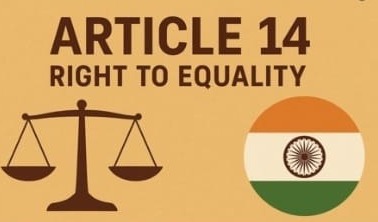
Article 14 is the cornerstone, guaranteeing equality before law and equal protection of laws. It embodies the idea that no individual is above the law and that state action must be fair, non-arbitrary, and just. Over time, the judiciary has expanded its scope, interpreting equality not merely as sameness but as fairness in governance. Article 15 prohibits discrimination on specific grounds but simultaneously allows the State to make special provisions for women, children, and socially and educationally backward classes. This duality reflects the Constitution’s pragmatic approach: equality does not mean ignoring differences but addressing them to ensure fairness. Article 16 extends this principle to public employment, ensuring equal opportunity while permitting reservations for disadvantaged groups. Article 17 abolishes untouchability, making its practice a punishable offense, while Article 18 abolishes titles, reinforcing egalitarian ideals.
Judicial interpretation has been central to breathing life into these provisions. In E.P. Royappa v. State of Tamil Nadu (1974), the Supreme Court famously declared that equality is the antithesis of arbitrariness, linking it to fairness in governance. In Indra Sawhney v. Union of India (1992), the Court upheld reservations for Other Backward Classes while introducing the 50% cap and the creamy layer concept, shaping India’s affirmative action policies. More recently, in Navtej Singh Johar v. Union of India (2018), the Court decriminalized homosexuality, affirming equality and dignity for LGBTQ+ citizens. These cases illustrate how equality has evolved from a formal guarantee to a substantive principle that adapts to contemporary challenges.
Comparative perspectives highlight India’s distinctive approach. The United States, through the Equal Protection Clause of the 14th Amendment, emphasizes civil liberties but has struggled with affirmative action debates. South Africa’s post-apartheid Constitution explicitly guarantees socio-economic rights and affirmative action, reflecting its unique historical context. The European Union enforces equality through anti-discrimination directives and supranational mechanisms. India’s model, rooted in its social realities, blends prohibitions on discrimination with proactive measures like reservations, though enforcement remains uneven.
The sociological impact of equality provisions has been profound. They have empowered marginalized communities, dismantling entrenched hierarchies and opening doors to education and employment. Economically, reservations have expanded opportunities, though debates on meritocracy and efficiency persist. Ethically, equality raises dilemmas about balancing individual fairness with collective justice, especially in affirmative action policies. The introduction of EWS reservations through the 103rd Amendment reflects evolving understandings of disadvantage, extending benefits beyond caste to economic criteria.
Yet, challenges remain. Enforcement is uneven, with marginalized groups still facing discrimination and exclusion. Procedural delays, lack of awareness, and systemic inefficiencies dilute the effectiveness of constitutional guarantees. The judiciary’s activism, while empowering, also raises questions about separation of powers and democratic accountability. Courts cannot indefinitely substitute for legislative and executive action. The future of equality in India requires strengthening institutions, expanding awareness, and ensuring that reservations reach the truly disadvantaged.
In essence, equality in India is both a constitutional promise and a lived struggle. It is not a static entitlement but an evolving guarantee that must adapt to new challenges—digital divides, climate justice, and global migration. The Constitution’s vision, enriched by judicial innovation and social movements, must continue to expand the horizons of equality. The promise of justice, liberty, equality, and fraternity remains the guiding light, but its realization depends on collective commitment to transform constitutional text into lived reality.
Constitutional Foundations of Equality
- Article 14: Guarantees equality before law and equal protection of laws. It is the cornerstone of India’s equality jurisprudence.
- Article 15: Prohibits discrimination on grounds of religion, race, caste, sex, or place of birth, while allowing affirmative action for disadvantaged groups.
- Article 16: Ensures equality of opportunity in public employment, with provisions for reservations.
- Article 17: Abolishes untouchability, making its practice a punishable offense.
- Article 18: Abolishes titles, reinforcing egalitarian ideals.
Together, these provisions create a framework that balances formal equality with substantive justice, recognizing India’s diverse social fabric.
Judicial Precedents Expanding Equality
- State of West Bengal v. Anwar Ali Sarkar (1952): Early interpretation of Article 14, emphasizing fairness in classification.
- Indra Sawhney v. Union of India (1992): Landmark case upholding reservations for Other Backward Classes, while capping them at 50%.
- Navtej Singh Johar v. Union of India (2018): Decriminalized homosexuality, affirming equality and dignity for LGBTQ+ citizens.
- N.M. Thomas v. State of Kerala (1976): Recognized affirmative action as part of equality.
- E.P. Royappa v. State of Tamil Nadu (1974): Redefined equality as antithesis of arbitrariness.
Comparative Perspectives
- United States: Equal Protection Clause of the 14th Amendment underpins civil rights, with affirmative action debated in cases like Brown v. Board of Education and Grutter v. Bollinger.
- South Africa: Constitution explicitly guarantees equality and affirmative action, reflecting post-apartheid reconciliation.
- European Union: Equality is a fundamental principle, enforced through directives on anti-discrimination.
- India’s uniqueness: Balances prohibitions on discrimination with proactive measures like reservations, reflecting socio-historical realities.
Sociological, Economic, and Ethical Impacts
- Sociological: Equality provisions empower marginalized communities, dismantling caste hierarchies and gender barriers.
- Economic: Reservations in education and employment enhance opportunities for disadvantaged groups, though debates on merit persist.
- Ethical: Balancing individual fairness with collective justice raises dilemmas, especially in affirmative action policies.
Case Studies
- Indra Sawhney (Mandal Commission case): Affirmed reservations for OBCs, shaping India’s affirmative action landscape.
- Navtej Singh Johar (2018): Humanized equality by recognizing LGBTQ+ rights.
- Vishaka v. State of Rajasthan (1997): Though primarily about workplace harassment, it reinforced gender equality.
- Olga Tellis v. Bombay Municipal Corporation (1985): Linked equality with livelihood, protecting pavement dwellers.
Extended FAQ: Quick Legal Understanding
1. What is Article 14?
It guarantees equality before law and equal protection of laws, forming the foundation of India’s equality jurisprudence.
2. What is Article 15?
It prohibits discrimination on grounds like religion, caste, sex, or place of birth, while allowing affirmative action for disadvantaged groups.
3. What is Article 16?
It ensures equality of opportunity in public employment, with provisions for reservations to uplift marginalized communities.
4. What is Article 17?
It abolishes untouchability and makes its practice a punishable offense, reinforcing social justice.
5. What is Article 18?
It abolishes titles, preventing hierarchies of privilege and promoting egalitarian values.
6. What is formal equality?
It means treating everyone the same under the law, regardless of differences.
7. What is substantive equality?
It ensures fairness by addressing disadvantages and creating real opportunities for marginalized groups.
8. What is affirmative action?
Policies like reservations that aim to uplift historically disadvantaged communities.
9. What is the Indra Sawhney case?
A landmark ruling that upheld OBC reservations while introducing the 50% cap and the creamy layer concept.
10. What is the 50% cap on reservations?
The Supreme Court held that reservations should not exceed 50% to maintain balance with merit.
11. What is E.P. Royappa case?
It redefined equality as the antithesis of arbitrariness, linking fairness with governance.
12. What is N.M. Thomas case?
It recognized affirmative action as an integral part of equality under the Constitution.
13. What is Navtej Singh Johar case?
It decriminalized homosexuality, affirming equality and dignity for LGBTQ+ citizens.
14. What is Anwar Ali Sarkar case?
An early test of Article 14, focusing on fairness in classification.
15. What is classification under Article 14?
It allows reasonable distinctions between groups if based on intelligible differentia and rational nexus.
16. What is arbitrariness doctrine?
It holds that state action must not be arbitrary, linking equality with fairness.
17. How does Article 15(3) protect women?
It permits special provisions for women and children to promote equality.
18. How does Article 15(4) protect backward classes?
It enables reservations in education for socially and educationally backward classes.
19. How does Article 16(4) protect backward classes?
It allows reservations in public employment for disadvantaged groups.
20. What is Article 16(4A)?
It provides reservation in promotions for SC/ST employees.
21. What is Article 16(4B)?
It allows unfilled reserved vacancies to be carried forward to subsequent years.
22. What is Article 335?
It balances reservations with the need for efficiency in administration.
23. What is Article 340?
It empowers the President to appoint a commission to examine backward classes.
24. What is Article 341?
It gives the President power to specify Scheduled Castes.
25. What is Article 342?
It gives the President power to specify Scheduled Tribes.
26. What is the Mandal Commission?
It recommended OBC reservations, shaping India’s affirmative action policies.
27. What is creamy layer concept?
It excludes affluent OBCs from reservation benefits to ensure fairness.
28. What is the 103rd Amendment?
It introduced 10% reservation for economically weaker sections (EWS).
29. What is EWS reservation?
It provides benefits to poor individuals across communities, irrespective of caste.
30. What is the Supreme Court’s view on EWS?
In 2022, the Court upheld EWS reservations as constitutionally valid.
31. How does India compare with US on equality?
India emphasizes affirmative action more strongly, while the US focuses on civil liberties.
32. How does South Africa approach equality?
Its Constitution explicitly guarantees socio-economic rights and affirmative action.
33. How does EU enforce equality?
Through anti-discrimination directives and supranational enforcement mechanisms.
34. What is untouchability abolition?
Article 17 abolishes untouchability, making its practice punishable by law.
35. What is Protection of Civil Rights Act?
It enforces Article 17 by penalizing untouchability practices.
36. What is SC/ST (Prevention of Atrocities) Act?
It protects marginalized communities from caste-based violence and discrimination.
37. What is gender equality in Constitution?
Articles 14, 15, and 16 collectively ensure gender equality in law and employment.
38. What is LGBTQ+ equality?
Affirmed in Navtej Singh Johar, recognizing dignity and equal rights for LGBTQ+ citizens.
39. What is substantive equality in reservations?
It ensures disadvantaged groups gain real opportunities, not just formal inclusion.
40. What is the future of equality law?
It lies in balancing merit, social justice, and economic fairness while adapting to new challenges.
Long Op‑Ed Style Closing Vision
Equality in India is both a constitutional promise and a lived struggle. The framers of the Constitution recognized that a society fractured by caste, gender, and economic disparities could not achieve justice without proactive measures. Articles 14–18 embody this vision, balancing prohibitions on discrimination with affirmative action to uplift disadvantaged groups. Over the decades, the judiciary has played a transformative role, expanding the meaning of equality beyond formal sameness to substantive fairness.
Cases like Indra Sawhney illustrate the complexities of affirmative action. While reservations have opened doors for millions, debates on meritocracy and efficiency persist. The introduction of EWS reservations through the 103rd Amendment reflects evolving understandings of disadvantage, extending benefits beyond caste to economic criteria. Yet, questions remain about balancing social justice with fairness to all.
Judicial creativity has redefined equality. In E.P. Royappa, equality was seen as the antithesis of arbitrariness, linking it to fairness in governance. In Navtej Singh Johar, equality embraced dignity and identity, affirming LGBTQ+ rights. These judgments show how equality adapts to new challenges, from caste hierarchies to gender discrimination and sexual orientation.
Comparatively, India’s model is distinctive. The United States emphasizes civil liberties but struggles with affirmative action debates. South Africa explicitly enforces socio-economic rights, reflecting its post-apartheid context. The European Union enforces equality through supranational mechanisms. India’s approach, rooted in its social realities, blends prohibitions on discrimination with proactive measures, though enforcement remains uneven.
Sociologically, equality provisions have empowered marginalized communities, dismantling entrenched hierarchies. Economically, they have expanded opportunities, though disparities persist. Ethically, they raise dilemmas about balancing individual merit with collective justice. The challenge is to ensure that equality does not become tokenistic but genuinely transformative.
The future of equality in India requires a multi-pronged approach. Strengthening institutions to enforce anti-discrimination laws, expanding awareness of rights, and ensuring that reservations reach the truly disadvantaged are critical. Technology can aid transparency in recruitment and education, reducing arbitrariness. International collaborations can enrich India’s framework, aligning it with global standards while respecting local realities.
Ultimately, equality is not a static entitlement but an evolving guarantee. It must adapt to new challenges—digital divides, climate justice, and global migration. India’s constitutional vision, enriched by judicial innovation and social movements, must continue to expand the horizons of equality. The promise of justice, liberty, equality, and fraternity remains the guiding light, but its realization depends on collective commitment. Equality must move from constitutional text to lived reality, ensuring that every citizen, regardless of caste, gender, religion, or economic status, can walk with dignity in a truly democratic society.