
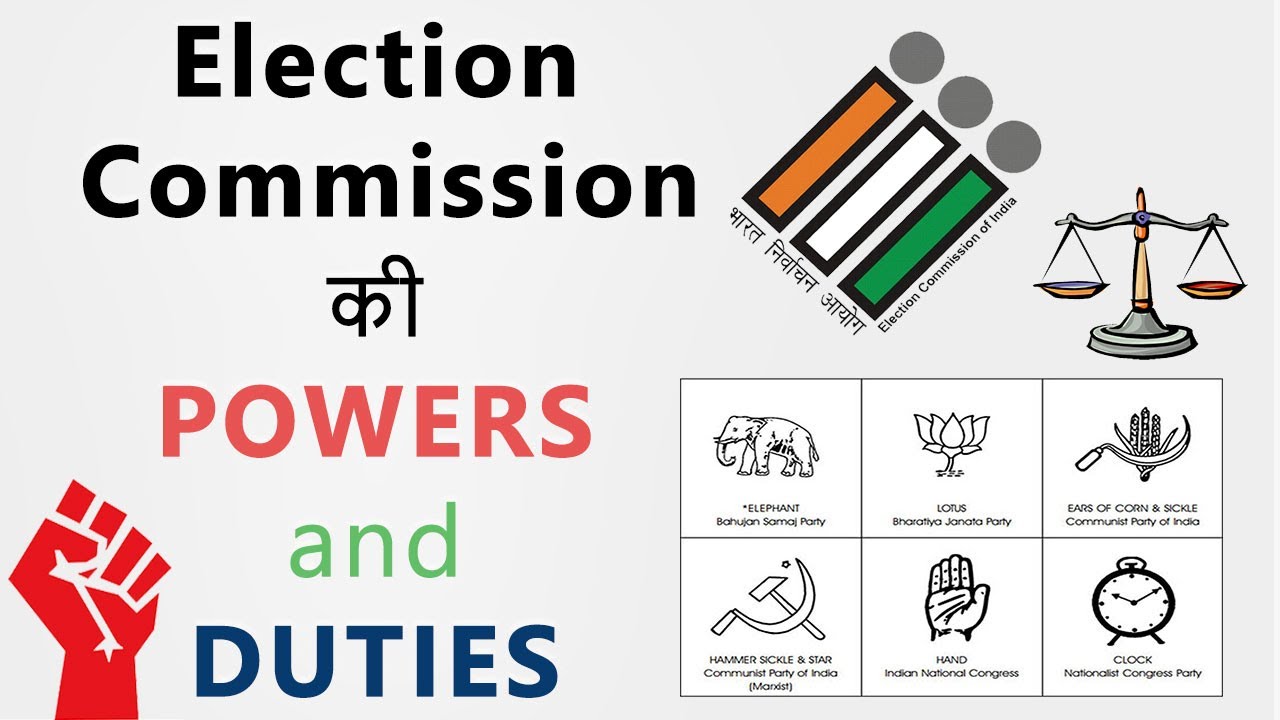
Election Commission’s Powers and Limitations Under Article 324
Supreme Court’s Role in Defining EC Authority
Balancing Free and Fair Elections with Constitutional Boundaries
By Legal Editor
New Delhi: June 16, 2026:
The Election Commission of India (ECI) is the constitutional body entrusted with conducting free and fair elections. Its powers stem from Article 324 of the Constitution, which grants it “superintendence, direction, and control” over elections. However, the scope of these powers has often been contested, leading to landmark judicial pronouncements. This article examines the legal framework, key rulings, and the limitations imposed on the ECI’s authority.
Freedom of speech, expression, movement, and profession are protected under Article 19 of the Constitution of India, making it one of the most important fundamental rights interpreted through several landmark Supreme Court judgments in India.
Constitutional Framework
Article 324: Grants ECI authority over elections to Parliament, State Legislatures, and offices of President and Vice-President.
Representation of the People Act, 1951 (RPA): Provides statutory backing for electoral processes.
Delicate Balance: ECI’s powers are broad but not unlimited; they must align with constitutional principles and statutory law.
Key Legal Issues
Extent of Plenary Powers
Whether ECI can act beyond statutory provisions when law is silent.
Courts have held ECI can issue directions to ensure free and fair elections.
Judicial Oversight
Supreme Court has clarified that ECI’s powers are subject to judicial review.
Prevents arbitrary exercise of authority.
Limitations of Authority
ECI cannot override explicit statutory provisions.
Must act within constitutional boundaries.
Landmark Judicial Rulings
Mohinder Singh Gill v. Chief Election Commissioner (1978)
Held that ECI has plenary powers to ensure free and fair elections.
Powers extend to situations not covered by law.
A.C. Jose v. Sivan Pillai (1984)
Clarified that ECI cannot override statutory provisions of RPA.
Directions valid only when law is silent.
Union of India v. Association for Democratic Reforms (2002)
Directed ECI to mandate disclosure of candidates’ criminal records, assets, and qualifications.
Reinforced voters’ right to know.
PUCL v. Union of India (2003)
Upheld disclosure requirements, strengthening transparency.
Practical Powers of ECI
Conduct of Elections: Scheduling, notifications, and supervision.
Model Code of Conduct (MCC): Ensures level playing field during campaigns.
Monitoring Expenditure: Prevents misuse of money power.
Enforcement Powers: Can censure parties, order re-polling, and deploy central forces.
Limitations
No Legislative Power: Cannot make laws; only Parliament can.
Subject to Judicial Review: Courts can strike down arbitrary directions.
Dependence on Government Machinery: Relies on state officials for implementation.
Enforcement of MCC: Lacks statutory backing; relies on moral authority.
Comparative Perspective
India: ECI has constitutional powers but limited by statute and judicial review.
US: Federal Election Commission regulates campaign finance; states conduct elections.
UK: Electoral Commission oversees compliance, but Parliament retains legislative control.
Inference: India’s ECI is among the most powerful globally, but judicial oversight ensures balance.
Implications
For Political Parties: Must comply with MCC and disclosure norms.
For Voters: Gain transparency and fairness in elections.
For Democracy: Judicial oversight prevents misuse of ECI’s powers.
For Policy: Debate continues on giving statutory backing to MCC.
Conclusion
The Election Commission’s authority under Article 324 is broad but not absolute. Judicial rulings have clarified that while ECI can act to ensure free and fair elections, it cannot override statutory provisions. This balance between autonomy and accountability is essential for safeguarding democracy.
FAQs
1. What powers does the Election Commission have under Article 324?
It has superintendence, direction, and control over elections to Parliament, State Legislatures, and offices of President and Vice-President.
2. Can the ECI make laws?
No. Only Parliament can legislate; ECI can issue directions when law is silent.
3. What was the Mohinder Singh Gill case about?
It held that ECI has plenary powers to ensure free and fair elections.
4. What did the A.C. Jose case decide?
That ECI cannot override statutory provisions of the RPA.
5. What is the Model Code of Conduct?
A set of guidelines issued by ECI to ensure fairness during campaigns.
6. Does MCC have statutory backing?
No. It relies on moral authority and compliance by parties.
7. Can ECI’s decisions be challenged?
Yes. They are subject to judicial review by courts.
8. How does India’s ECI compare globally?
It is among the most powerful election bodies, though judicial oversight ensures balance.
9. What role does ECI play in transparency?
Mandates disclosure of candidates’ criminal records, assets, and qualifications.