
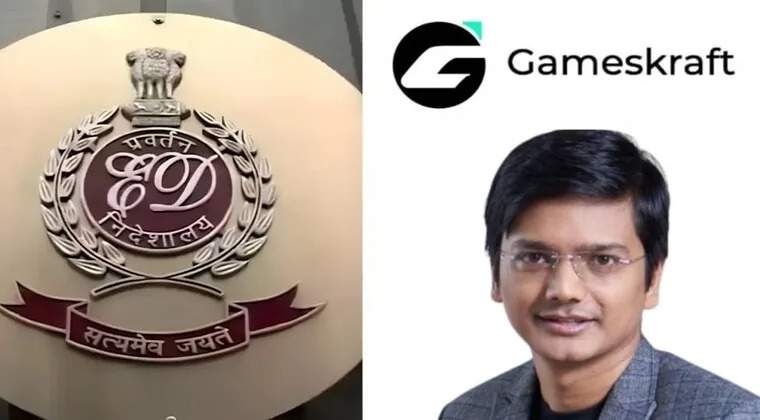
Legal Dimensions: ED Arrests Gamezkraft Founders in Money Laundering Probe
PMLA Enforcement Targets Online Money Gaming Operators
New Gaming Law Bans Real‑Money Platforms, Protects Players
By Legal Reporter
New Delhi: May 09, 2026:
The Enforcement Directorate (ED) has arrested three founders Deepak Singh, Prithvi Raj Singh, and Vikas Taneja of Gamezkraft Technologies under the Prevention of Money Laundering Act (PMLA), following raids across NCR and Karnataka. The arrests stem from multiple FIRs alleging cheating and fraud linked to online money gaming platforms like RummyCulture and Rummytime. This case also intersects with India’s new Online Gaming Regulation Bill, 2025, which bans real‑money gaming services while promoting e‑sports and social gaming.
For readers researching inheritance disputes, validity of wills, and succession rights of family members under Indian law, the Supreme Court judgment in Yumnam Ongbi Tampha and Ibemma Devi vs Yumnam Joykumar Singh is a significant authority on proof of testamentary documents and competing claims of legal heirs. The Court examined how suspicious circumstances surrounding execution of a will must be evaluated before granting succession rights in family property matters.
Key Laws and Rules Discussed
1. Prevention of Money Laundering Act (PMLA), 2002
- Provides ED authority to investigate and prosecute money laundering.
- Allows search, seizure, and arrest without warrant in certain cases.
- Offenders face rigorous imprisonment (3–7 years) and fines.
2. Multiple FIRs for Cheating and Fraud
- FIRs registered against Gamezkraft founders Deepak Singh, Prithvi Raj Singh, and Vikas Taneja for alleged fraud and victim suicides linked to online gaming losses.
- These FIRs form the predicate offences enabling ED’s PMLA case.
3. Promotion and Regulation of Online Gaming Bill, 2025
- Passed by Parliament and signed by the President.
- Bans online money gaming services (skill, chance, or hybrid).
- Promotes e‑sports and social gaming as safe alternatives.
- Penalizes service providers, advertisers, and financiers, not individual players.
4. Jurisdictional Procedures
- Accused produced before Bengaluru court after transit remand.
- Seizure of incriminating documents during raids strengthens ED’s case.
Case Context
- Accused: Deepak Singh, Prithvi Raj Singh (arrested in NCR), Vikash Taneja (arrested in Bengaluru).
- Raids: Conducted on May 7, 2026, at 17 locations across NCR and Karnataka.
- Charges: Running online real‑money games, laundering proceeds of crime.
- Legal backdrop: New Online Gaming Bill bans such platforms, signalling stricter enforcement.
Detailed FAQ for Easy Understanding
Q1. Why were Gamezkraft founders arrested?
For alleged money laundering under PMLA, linked to fraud and cheating cases involving online money gaming platforms.
Q2. What is PMLA and how does it apply here?
PMLA criminalizes laundering of proceeds from illegal activities. FIRs alleging fraud enabled ED to register a PMLA case.
Q3. Does the Online Gaming Bill ban all online games?
No. It bans real‑money gaming but promotes e‑sports and social gaming.
Q4. Are players punished under the new law?
No. Only service providers, advertisers, and financiers face penalties. Players are exempt.
Q5. Can ED arrest without warrant?
Yes, under PMLA, ED officers can search, seize, and arrest without warrant in certain cases.
Q6. What happens to seized documents?
They serve as evidence in prosecution, supporting charges of money laundering.
Q7. How does this affect the gaming industry?
It signals stricter regulation—companies must pivot to e‑sports/social gaming to remain compliant.
Risks and Takeaways
- For gaming companies: Real‑money platforms face outright ban; compliance with new law is critical.
- For investors: Regulatory risk is high; capital in gaming startups must be aligned with permitted formats.
- For players: No direct punishment, but platforms offering money games are illegal.
- For regulators: Enforcement of PMLA and Gaming Bill ensures consumer protection and curbs financial crimes.
Bottom Line: The ED’s arrests of Gamezkraft founders highlight India’s aggressive stance against online money gaming and laundering. With the Online Gaming Bill, 2025, now law, the industry must shift toward regulated e‑sports and social gaming, while enforcement agencies continue to clamp down on illegal operators.