
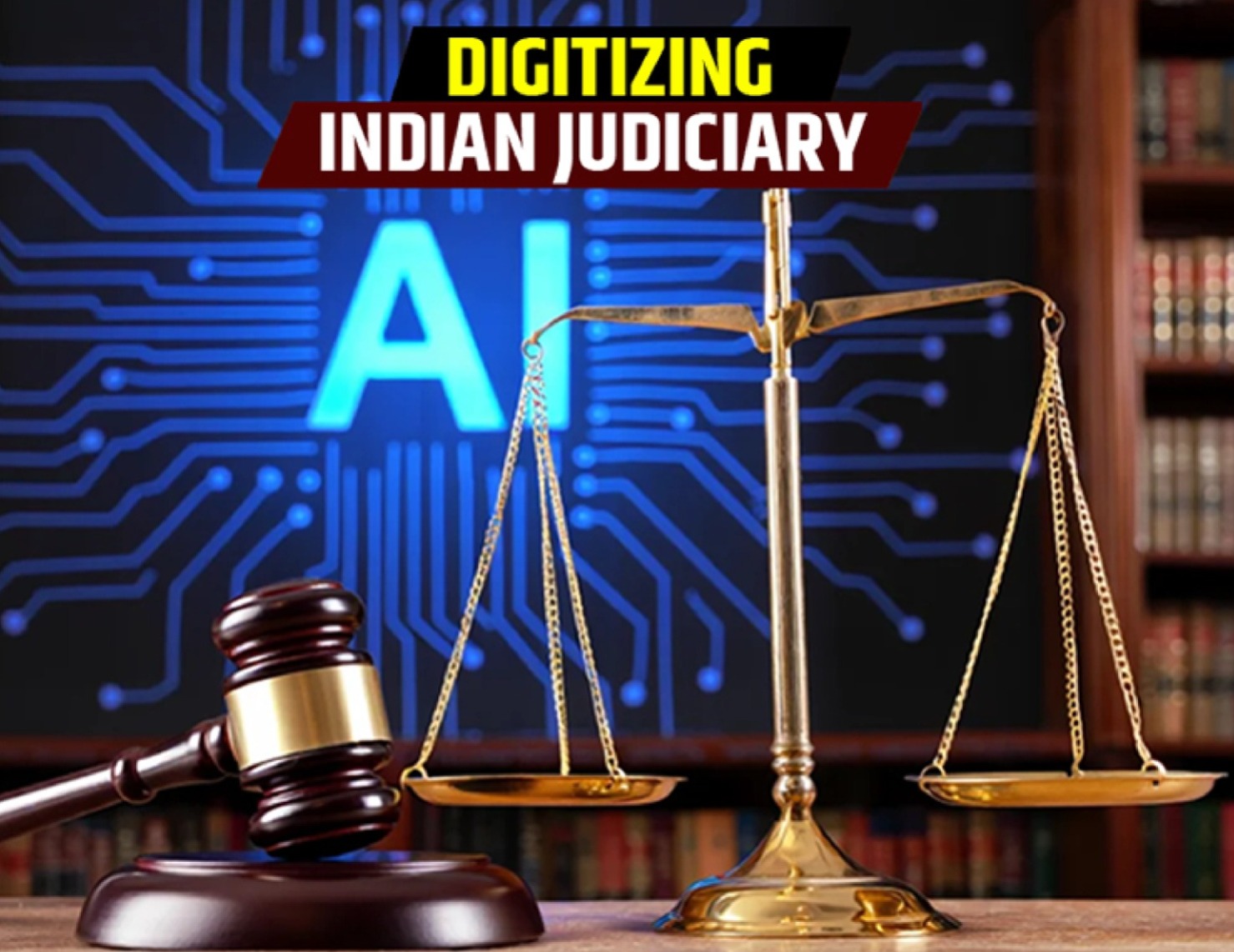
Digital Justice in India: The Rise of Online Courts
How Virtual Hearings Are Transforming Access to Justice
Technology, Transparency, and Challenges in the Post-Pandemic Era
By Vishwas Kumar
New Delhi: June 12, 2026:
The COVID-19 pandemic forced India’s judiciary to embrace technology at an unprecedented pace. What began as an emergency measure—video conferencing for hearings—has now evolved into a permanent fixture of the justice system. The concept of digital justice is no longer futuristic; it is the present reality of Indian courts. This transformation has opened up new possibilities for efficiency, transparency, and inclusivity, but it also raises questions about sustainability, fairness, and the digital divide.
India’s Digital Justice Journey
During the pandemic, the Supreme Court and High Courts adopted video conferencing to keep the justice system functioning. Hybrid hearings, where some participants join physically and others virtually, are now common. E-filing systems have streamlined documentation, reducing paperwork and corruption risks. Online Dispute Resolution (ODR) platforms have emerged as alternatives for commercial disputes, especially in sectors like e-commerce and fintech. These innovations align with Article 21, which guarantees access to justice, and judicial precedents such as State of Maharashtra v. Praful Desai (2003), which validated video testimony.
Global Legal Tech Innovations India Could Adopt
India’s progress is significant, but global innovations show how much further digital justice can evolve:
AI-Driven Legal Research (US & UK): Tools like ROSS Intelligence and LexisNexis AI analyze thousands of cases instantly, helping lawyers craft arguments more efficiently. India could integrate similar AI platforms into court systems to reduce backlog.
Blockchain for Evidence Management (Singapore & Estonia): Blockchain ensures tamper-proof storage of contracts and evidence. Indian courts could adopt blockchain registries to secure digital evidence and prevent manipulation.
Virtual Reality (VR) Courtrooms (South Korea): VR is being tested to simulate crime scenes and evidence presentation. This could help Indian judges visualize complex cases, especially in criminal trials.
Smart Contracts and Automated Compliance (EU): Legal tech startups in Europe use smart contracts to automate compliance in corporate law. India’s corporate sector could benefit from similar systems, reducing disputes and regulatory delays.
Digital Arbitration Hubs (Singapore): Singapore has positioned itself as a global hub for online arbitration. India could replicate this model, leveraging its growing arbitration market to attract international cases.
AI-Powered Sentencing Tools (US pilot projects): Though controversial, AI tools are being tested to recommend sentencing ranges based on precedent. India could cautiously explore such systems to assist judges, while ensuring safeguards against bias.
Sociological and Ethical Dimensions
Digital justice democratizes access by reducing travel costs and enabling participation from remote areas. However, the digital divide remains a major challenge—litigants without reliable internet or devices risk exclusion. Ethical concerns include data privacy, cybersecurity, and the authenticity of digital evidence. Training judges and lawyers in digital ethics is essential to ensure fairness.
Economic Implications
For law firms, digital justice reduces operational costs and expands client bases. Firms can serve international clients without physical presence abroad. Yet, smaller practitioners face financial pressure to invest in digital infrastructure. ODR platforms also create new opportunities for startups in legal tech, boosting India’s innovation ecosystem.
The Road Ahead
India’s judiciary has proven that technology can sustain justice even in crises. The next step is to institutionalize these innovations, drawing lessons from global practices. AI-driven research, blockchain evidence management, VR courtrooms, and smart contracts could revolutionize Indian legal practice. But reforms must remain anchored in constitutional morality, ensuring inclusivity and fairness.
In conclusion, digital justice in India is not just about adopting technology—it is about reimagining the justice system for the 21st century. By learning from global innovations and addressing domestic challenges, India can build a judiciary that is efficient, transparent, and accessible to all.
Virtual Courts and Hybrid Hearings
The Supreme Court and High Courts quickly adopted video conferencing platforms during lockdowns, ensuring continuity of justice. Today, hybrid hearings—where some participants join physically and others virtually—are common. This has reduced delays, improved accessibility for litigants in remote areas, and lowered costs associated with travel and logistics.
E-Filing and Digital Documentation
Another major reform is the widespread adoption of e-filing systems. Lawyers now submit petitions, affidavits, and evidence electronically. This reduces paperwork, streamlines processes, and enhances transparency. Digital documentation also minimizes corruption risks, as records are easier to track and audit.
Online Dispute Resolution (ODR)
The pandemic accelerated the growth of ODR platforms, which allow parties to resolve disputes through mediation or arbitration online. For commercial disputes, especially in sectors like e-commerce and fintech, ODR has become a preferred mechanism. India’s legal framework is gradually adapting to recognize and regulate these platforms, positioning them as a permanent fixture in the dispute resolution landscape.
Constitutional and Judicial Dimensions
Digital justice aligns with Article 21, which guarantees access to justice as part of the right to life and liberty. Judicial precedents such as State of Maharashtra v. Dr. Praful Desai (2003), which upheld video conferencing as valid testimony, laid the groundwork for today’s virtual courts. The judiciary has consistently emphasized that technology must serve constitutional goals of fairness and inclusivity.
Comparative Perspectives
United States: Federal courts adopted remote hearings extensively, with debates on privacy and fairness.
UK: Hybrid hearings became standard, especially in commercial courts.
Singapore: Positioned itself as a hub for digital arbitration, integrating ODR into mainstream practice. India’s adoption mirrors these global trends but must contend with unique challenges such as rural connectivity and linguistic diversity.
Sociological, Economic, and Ethical Impacts
Sociological: Virtual courts democratize access, allowing litigants from remote areas to participate. Yet, the digital divide risks excluding those without reliable internet or devices.
Economic: Reduced travel and logistical costs make litigation more affordable. Law firms benefit from efficiency, but smaller practitioners face pressure to invest in digital infrastructure.
Ethical: Data privacy, cybersecurity, and authenticity of digital evidence are pressing concerns. Lawyers and judges must be trained in technology ethics to safeguard justice.
Case Studies
Supreme Court of India (2020–2021): Conducted thousands of hearings via video conferencing, proving the feasibility of virtual justice.
Delhi High Court: Adopted e-filing and hybrid hearings, setting a model for other jurisdictions.
Private ODR Platforms: Companies like Presolv360 and SAMA have facilitated online mediation, resolving disputes efficiently during the pandemic.
FAQs:
Basics of Digital Justice
What is a virtual court? → A court that conducts hearings via video conferencing.
Is video conferencing legally valid? → Yes, upheld in Praful Desai (2003).
What is e-filing? → Electronic submission of petitions and documents.
What is ODR? → Online platforms for mediation and arbitration.
How does Article 21 relate? → Ensures access to justice, including digital formats.
What are the benefits of virtual courts? → Reduced delays, lower costs, wider access.
What are the challenges? → Digital divide, cybersecurity, authenticity of evidence.
How do global courts compare? → US, UK, and Singapore have adopted similar hybrid models.
What is the future of digital justice? → Permanent integration of technology into India’s judiciary.
Are virtual hearings constitutionally valid? → Yes, if fairness and due process are maintained.
Judicial & Constitutional Dimensions
Which constitutional provisions support digital justice? → Article 21 and Directive Principles emphasizing access to justice.
What judicial precedents exist? → Praful Desai (2003) validated video testimony; pandemic rulings reinforced virtual hearings.
Can evidence be submitted digitally? → Yes, through e-filing and electronic documentation.
Do virtual courts reduce backlog? → They help by speeding up hearings and reducing adjournments.
Are hybrid hearings common? → Yes, many courts now allow both physical and online participation.
How does the Supreme Court use technology? → Through video conferencing, e-filing, and live streaming of select cases.
Do High Courts follow similar practices? → Yes, most High Courts have adopted hybrid and e-filing systems.
Is digital justice recognized internationally? → Yes, many jurisdictions validate online hearings.
Does Article 19(1)(g) apply? → It protects lawyers’ right to practice, including digitally.
Can virtual courts ensure fair trial rights? → Yes, if safeguards for evidence and participation are upheld.
Global Comparisons
How does the US use virtual courts? → Widely adopted during COVID-19, with debates on privacy.
What about the UK? → Hybrid hearings are standard in commercial courts.
How does Singapore lead? → Integrated ODR into mainstream arbitration.
Are Indian practices aligned globally? → Yes, though rural connectivity remains a challenge.
Do other Asian countries use ODR? → Yes, China and Singapore have advanced ODR systems.
Is India a hub for digital arbitration? → Emerging, with reforms aligning to global standards.
How does EU handle digital justice? → Emphasis on privacy and data protection in online hearings.
Are Indian rulings influenced by global norms? → Increasingly, especially in arbitration and human rights.
Do global courts livestream proceedings? → Some do; India has begun experimenting with it.
Is India unique in challenges? → Yes, due to linguistic diversity and rural digital gaps.
Sociological & Ethical Impacts
Does digital justice improve access? → Yes, for remote litigants, but risks excluding the digitally poor.
What is the digital divide issue? → Lack of internet and devices in rural areas.
How does it affect marginalized groups? → They may struggle to access online hearings without support.
Are women benefitting from virtual courts? → Yes, reduced travel burdens improve participation.
What ethical concerns exist? → Data privacy, cybersecurity, and fairness of digital evidence.
Can digital justice reduce corruption? → Yes, e-filing and transparency limit manipulation.
Does technology affect lawyer-client relations? → It improves communication but reduces personal interaction.
Are judges trained in digital ethics? → Training programs are being introduced.
Does digital justice affect public trust? → Transparency improves trust, but technical glitches can undermine it.
What is the long-term vision? → A hybrid, inclusive system blending technology with constitutional morality.
Op-Ed Style Closing Vision
Digital justice is no longer a temporary experiment—it is the future of India’s judiciary. The pandemic revealed both the potential and the pitfalls of technology in law. Virtual courts, e-filing, and ODR platforms have made justice more accessible, efficient, and transparent. Yet, they also expose deep inequalities in digital access and raise ethical questions about privacy and fairness.
The constitutional vision demands that technology serve justice, not replace it. Article 21’s guarantee of access to justice must be interpreted expansively to include digital participation. Courts must ensure that litigants without digital resources are not excluded. Scholarships, infrastructure investments, and digital literacy programs are essential to bridge the divide.
Comparative lessons show that India is not alone in this journey. The US and UK grapple with similar challenges, while Singapore demonstrates how digital arbitration can strengthen global competitiveness. India must adapt these lessons to its pluralistic society, ensuring inclusivity across languages, regions, and socioeconomic groups.
Economically, digital justice reduces costs and expands opportunities for law firms. Ethically, it challenges the profession to safeguard data privacy and ensure authenticity of digital evidence. Sociologically, it democratizes access but risks exclusion if not managed responsibly.
The vision is clear: India’s judiciary must embrace technology as a tool for justice, not a barrier. Virtual courts should complement physical ones, ensuring flexibility and inclusivity. ODR platforms should be regulated to guarantee fairness. E-filing must become universal, reducing corruption and inefficiency.
Ultimately, digital justice is about more than technology—it is about constitutional morality. It is about ensuring that every citizen, regardless of geography or income, can access justice in a timely and fair manner. If managed responsibly, India’s digital judiciary can become a global model, proving that technology and justice can coexist harmoniously.