
Digital Democracy and the Indian Constitution: Reimagining Participation in the Age of Technology
How Technology Is Transforming the Meaning of Representation
Constitutional Challenges of E‑Governance, Online Speech, and Algorithmic Politics
By Vishwas Kumar
New Delhi: June 02, 2026:
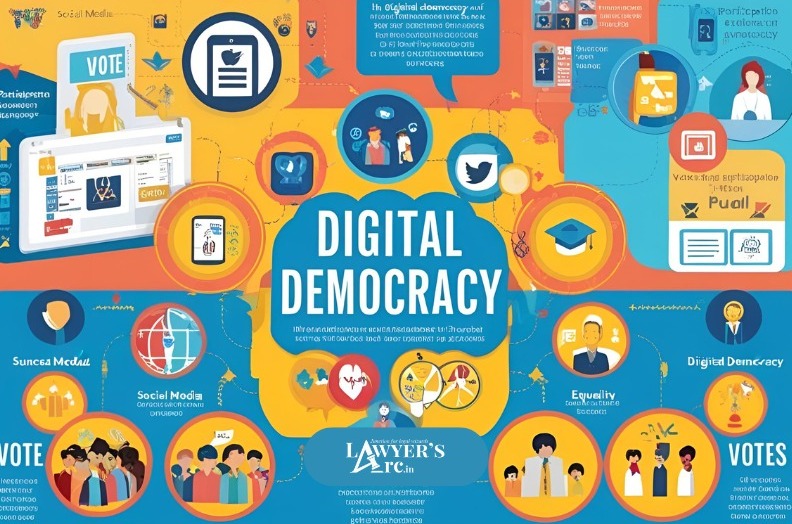
Democracy in India has always been mediated through institutions: Parliament, courts, and the Election Commission. But in the 21st century, digital platforms have become the new arenas of political participation. Citizens debate on social media, petitions circulate online, and governments experiment with e‑governance portals. This transformation raises profound constitutional questions: How does technology reshape democracy, and what safeguards are needed to protect rights in digital participation?
Readers interested in understanding the legal principles governing wills, succession disputes, and inheritance claims may explore the Supreme Court judgment in Vikrant Kapila and Another v. Pankaja Panda and Others , which discusses important issues concerning testamentary succession, property rights, and the adjudication of competing claims among legal heirs.
The Indian Constitution guarantees universal adult suffrage, freedom of speech (Article 19), and equality (Article 14). Yet digital democracy introduces new complexities:
- Algorithmic Politics: Platforms amplify certain voices, creating echo chambers.
- E‑Governance: Digital portals promise efficiency but risk excluding those without access.
- Online Speech: Balancing free expression with misinformation and hate speech.
Judicial Reasoning & Interpretations
Indian courts have already begun grappling with digital democracy:
- Shreya Singhal v. Union of India (2015): Struck down Section 66A of the IT Act, protecting online free speech.
- Anuradha Bhasin v. Union of India (2020): Recognized internet access as integral to freedom of speech and trade.
- Election Commission Cases: Courts scrutinize online campaigning and digital advertisements for fairness.
These rulings show how constitutional principles are being reinterpreted in the digital age.
Context in the Digital Era
Digital democracy is not just about voting—it’s about participation between elections.
- Social Media Movements: Hashtags mobilize citizens faster than traditional rallies.
- Digital Petitions: Online campaigns influence policy debates.
- E‑Governance Platforms: Citizens access services and file grievances digitally.
Yet challenges remain: digital divides exclude rural and marginalized communities, misinformation undermines trust, and surveillance threatens autonomy.
Comparative Perspectives
- Estonia: Pioneered e‑voting and digital citizenship.
- United States: Struggles with misinformation and platform accountability.
- China: Uses digital tools for state control rather than democratic participation.
India’s path must balance innovation with constitutional safeguards.
Sociological, Economic & Ethical Impacts
- Sociological: Digital democracy empowers youth and urban citizens but risks excluding the digitally illiterate.
- Economic: E‑governance reduces costs but requires investment in infrastructure.
- Ethical: Algorithmic bias and surveillance challenge fairness and autonomy.
Case Studies
- Shreya Singhal Case (2015): Protected online free speech.
- Anuradha Bhasin Case (2020): Linked internet access to constitutional freedoms.
- Election Commission Guidelines (2024): Regulated online campaigning and digital ads.
Extended FAQ: Digital Democracy & the Indian Constitution
- What is digital democracy?
It refers to the use of digital technologies to enhance citizen participation, representation, and governance. - How does the Indian Constitution relate to digital democracy?
Articles 14, 19, and 21 anchor digital participation in equality, free speech, and liberty. - What role does Article 19 play?
It protects online free speech, subject to reasonable restrictions. - What was the Shreya Singhal case (2015)?
The Supreme Court struck down Section 66A of the IT Act, safeguarding online expression. - What was the Anuradha Bhasin case (2020)?
The Court recognized internet access as integral to freedom of speech and trade. - How does Article 14 apply to digital democracy?
It ensures equal access to digital platforms and prevents exclusion. - What is e‑governance?
Delivery of government services and citizen engagement through digital platforms. - What are the benefits of e‑governance?
Efficiency, transparency, and reduced costs in service delivery. - What challenges does e‑governance face?
Digital divides, lack of infrastructure, and exclusion of marginalized groups. - What is algorithmic politics?
The influence of algorithms in shaping political discourse and amplifying certain voices. - Can algorithms affect democracy?
Yes, they can create echo chambers, spread misinformation, and bias participation. - What role does the Election Commission play in digital democracy?
It regulates online campaigning, advertisements, and digital voter outreach. - What are digital petitions?
Online campaigns that mobilize citizens and influence policy debates. - How does misinformation affect democracy?
It undermines trust, polarizes society, and distorts informed participation. - Can the State regulate online speech?
Yes, but only within the limits of reasonable restrictions under Article 19(2). - What is the role of PILs in digital democracy?
Citizens use PILs to challenge censorship, surveillance, and exclusion in digital participation. - How does surveillance affect digital democracy?
It chills free speech and undermines autonomy. - What safeguards exist against surveillance?
Judicial review, proportionality doctrine, and privacy rights under Article 21. - How does digital democracy empower youth?
Social media and online platforms amplify youth voices in political debates. - What is the digital divide?
The gap between those with access to digital technologies and those without. - How does the digital divide affect democracy?
It excludes rural and marginalized communities from participation. - What role does Article 21 play?
It anchors privacy and autonomy in digital participation. - Can private platforms be held accountable?
Yes, when their decisions affect fundamental rights, courts treat them as quasi‑state actors. - What global models exist?
Estonia’s e‑voting, U.S. platform regulation debates, and China’s state‑centric digital control. - How does India’s model differ?
India seeks a hybrid approach: rights‑centric but sovereignty‑conscious. - What ethical concerns dominate digital democracy?
Fairness, transparency, accountability, and protection from manipulation. - How does digital democracy affect elections?
Online campaigning and digital ads reshape voter outreach and influence. - Can courts regulate digital campaigning?
Yes, to ensure fairness and prevent misuse. - What role does transparency play?
Transparency ensures citizens understand how digital platforms shape participation. - Can individuals demand accountability from platforms?
Yes, through courts, regulatory bodies, and public pressure. - How does digital democracy affect freedom of association?
Online platforms enable new forms of collective action and mobilization. - What is the role of civil society?
NGOs and activists use digital tools to expand participation and accountability. - How does digital democracy affect marginalized communities?
It can empower them but also risks exclusion if access is unequal. - What reforms are expected?
A Digital Democracy Act, algorithmic transparency, and universal internet access. - Can courts strike down digital restrictions?
Yes, if they violate fundamental rights, as in Shreya Singhal and Anuradha Bhasin. - How does digital democracy affect governance?
It makes governance more participatory, but also more complex. - What is India’s global position on digital democracy?
India is emerging as a leader in rights‑centric digital governance. - Can digital democracy strengthen accountability?
Yes, by enabling citizens to monitor and critique government actions online. - What is the risk of algorithmic bias?
It can distort representation and undermine equality. - Why is digital democracy central today?
Because technology now shapes participation, representation, and the future of democracy itself.
Op‑Ed Style Closing Vision
Digital democracy is not a replacement for traditional institutions—it is their extension. The challenge is to ensure that technology strengthens representation rather than distorting it. India must legislate a Digital Democracy Act, mandating transparency in algorithms, protecting online speech, and ensuring universal access.
The vision is clear: democracy must evolve with technology, but constitutional values must remain its anchor. By embedding rights into digital governance, India can ensure that participation in the digital age is inclusive, fair, and accountable.
Conclusion: Digital Democracy and Future Trends
Digital democracy in India is no longer a distant aspiration—it is unfolding in real time. From online petitions and social media movements to e‑governance portals and algorithmic campaigning, technology is reshaping how citizens engage with the state and with each other. Yet this transformation is not without risks. The conclusion of our exploration is not a neat closure but a forward‑looking vision: how digital democracy will evolve, and what constitutional safeguards must accompany it.
1. Universal Internet Access as a Constitutional Imperative
The recognition of internet access as integral to free speech in Anuradha Bhasin v. Union of India (2020) was a turning point. Future trends will likely see courts and legislatures treating internet connectivity as a basic right, akin to education or healthcare. Universal access will become essential to ensure that digital democracy is inclusive, bridging the rural‑urban divide and empowering marginalized communities.
2. Algorithmic Transparency in Political Participation
Algorithms increasingly shape what citizens see, read, and believe. Echo chambers and misinformation distort democratic discourse. The next frontier will be algorithmic transparency—mandating that platforms disclose how content is curated, amplified, or suppressed. Courts may interpret Article 14 (equality) to require fairness in algorithmic design, ensuring that digital participation is not skewed by opaque systems.
3. AI in Elections and Campaigning
Artificial intelligence is already influencing voter outreach, targeted advertisements, and sentiment analysis. Future trends point toward AI‑driven campaigning, raising constitutional questions about fairness, manipulation, and privacy. The Election Commission may need to regulate AI tools, ensuring that electoral integrity is preserved. Judicial oversight will likely expand to scrutinize whether AI campaigning violates equality or free speech.
4. Digital Petitions and Participatory Governance
Online petitions and digital platforms for citizen feedback are becoming mainstream. Future governance may institutionalize digital referendums or participatory budgeting through e‑platforms. This trend will deepen democracy between elections, but it will also require safeguards against manipulation and exclusion. Courts may interpret constitutional rights to demand transparency and accountability in digital participation mechanisms.
5. Balancing Free Speech and Misinformation
The tension between free speech and misinformation will intensify. Article 19 protects online expression, but misinformation threatens democratic stability. Future trends will see courts refining the balance: protecting dissent while allowing regulation of harmful content. A Digital Democracy Act could codify principles for platform accountability, ensuring that restrictions are proportionate and rights‑respecting.
6. Surveillance and Privacy in Digital Participation
Surveillance technologies—facial recognition, data tracking, and predictive analytics—pose risks to autonomy. Future jurisprudence will likely extend the Puttaswamy privacy doctrine to digital democracy, ensuring that participation is free from coercion or monitoring. Citizens must be able to engage online without fear of surveillance chilling their speech.
7. Digital Literacy as a Constitutional Duty
Digital democracy requires not just access but literacy. Future trends will see education policies integrating digital literacy as a constitutional obligation, ensuring that citizens can navigate platforms responsibly. Courts may interpret the right to education (Article 21A) to include digital skills, making literacy a prerequisite for meaningful participation.
8. Global Influences on India’s Digital Democracy
India’s path will be shaped by global models:
- Estonia’s e‑voting shows how technology can streamline elections.
- U.S. debates on misinformation highlight the risks of platform dominance.
- China’s digital authoritarianism warns against state overreach.
India’s challenge is to craft a hybrid model—innovative yet rights‑centric, open yet sovereign. Future trends will see India positioning itself as a global leader in constitutional digital governance.
9. Civil Society and Digital Mobilization
Civil society will continue to harness digital tools for mobilization. Hashtag movements, online campaigns, and digital activism will shape policy debates. Courts may need to protect these forms of participation under Article 19, ensuring that digital activism is not arbitrarily curtailed. The future of democracy will be increasingly networked and decentralized.
10. Economic Dimensions of Digital Democracy
Digital participation reduces costs of governance but raises new economic challenges. Platforms monetize political engagement, creating risks of inequality. Future trends will see regulation of political advertising and data monetization, ensuring that economic power does not distort democratic participation. Transparency in funding and digital campaigning will become constitutional imperatives.
11. Judicial Oversight of Digital Platforms
Courts will play a central role in regulating digital platforms. Just as Shreya Singhal struck down Section 66A, future rulings may scrutinize platform policies, algorithmic bias, and censorship. Judicial oversight will ensure that platforms respect constitutional rights, even as they operate as private entities. This trend will blur the line between state and corporate accountability.
12. Future Legislative Innovations
Legislation will be essential to operationalize digital democracy. A Digital Democracy Act could:
- Mandate universal internet access.
- Require algorithmic transparency.
- Regulate AI in elections.
- Protect online free speech while addressing misinformation.
- Establish independent oversight bodies for digital governance.
Such legislation would embed constitutional values into the digital sphere, ensuring that democracy evolves with technology.
13. Ethical and Philosophical Shifts
Digital democracy is not just a technical change—it is a philosophical transformation. It redefines representation, participation, and accountability. Future trends will see debates about the meaning of citizenship in a digital age: Is online activism equivalent to traditional participation? How do we balance individual rights with collective digital responsibilities? These questions will shape the ethical foundation of democracy.
14. India’s Global Leadership Role
India’s constitutional approach to digital democracy positions it as a potential global leader. By embedding rights into digital governance, India can influence international norms on platform accountability, algorithmic transparency, and digital participation. Future trends may see India advocating for a global charter on digital democracy, aligning constitutional principles with global governance.
The future of democracy in India will be digital, but it must also be constitutional. Technology offers unprecedented opportunities for participation, but it also poses risks of exclusion, manipulation, and surveillance. The challenge is to ensure that digital democracy strengthens representation rather than distorting it.
India must legislate, regulate, and innovate with constitutional values at the center. Universal internet access, algorithmic transparency, AI regulation, and participatory governance must be embedded into law. Courts must continue to reinterpret rights for the digital age, ensuring that democracy evolves without losing its soul.
The vision is clear: digital democracy must serve liberty, equality, and dignity. By reimagining participation in the age of technology, India can lead globally in crafting a democracy that is both modern and moral, both digital and constitutional.