
Defending a Will in Court: Lessons from Supreme Court Precedents
Checklist for Lawyers Drafting Pleadings
Suspicion Must Be Addressed, Not Assumed
By Vishwas Kumar
New Delhi: April 11, 2026:
Indian succession law has evolved through a series of landmark judgments where the Supreme Court clarified how Wills must be proved and defended against challenges. From H. Venkatachala Iyengar v. B.N. Thimmajamma (1959) to Leela Rajagopal v. Kamala Menon Cocharan (2014), courts have consistently emphasized statutory compliance, judicial conscience, and the burden on the propounder. For lawyers, these rulings provide a roadmap to anticipate challenges and draft pleadings that withstand scrutiny.
Comprehensive Checklist for Defending a Will
- Attestation Proof
- Ensure at least one attesting witness is examined (Sec. 68 Evidence Act, Sec. 63 Succession Act).
- If witnesses are unavailable, secondary evidence must meet Sec. 69 standards.
- Testator’s Capacity
- Lead medical or credible evidence of sound mind if testator was aged or ill.
- Anticipate challenges based on infirmity or incapacity.
- Suspicious Circumstances
-
- Address issues like unnatural dispositions, exclusion of heirs, venue of execution, or active role of beneficiary.
- Provide explanations for each circumstance (e.g., heirs already settled, testator’s choice of venue).
- Registration & Documentation
- Clarify that registration is optional; non-registration is not suspicious.
- If original Will is lost, explain circumstances and rely on certified copies.
- Beneficiary Participation
- Show that presence or assistance of beneficiary does not equal coercion.
- Emphasize free volition of testator.
- Consistency of Witness Testimony
- Minor discrepancies are natural; highlight core consistency (testator signed in presence of witnesses).
- Revocation of Earlier Wills
- Argue that a later valid Will automatically revokes earlier ones, even without explicit clause.
- Delay in Disclosure
- Explain possession of original by testator or family circumstances; delay alone is not fatal.
- Judicial Conscience Test
- Pleadings must demonstrate that execution satisfies the conscience of the Court.
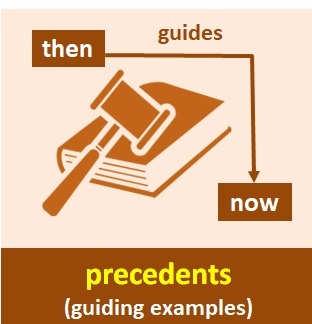
- Precedent Reliance
- Cite key cases:
- K. Laxmanan v. Thekkayil Padmini (2008) – strict proof of attestation.
- Balathandayutham v. Ezhilarasan (2010) – heavy burden in suspicious circumstances.
- Mahesh Kumar v. Vinod Kumar (2012) – suspicion must be real, not imagined.
- Leela Rajagopal v. Kamala Menon (2014) – holistic approach, beneficiary participation not suspicious.
- Cite key cases:
LEGAL RESEARCH RESOURCES:
Browse Supreme Court inheritance rulings here. Click the link here: https://www.courtkutchehry.com/pages/blog/123-supreme-court-judgments-on-wills/
EXTRACTS FROM BOOK, WILL WRITING SIMPLIFIED, By Dr Ravinder Kumar Anand. [📘 Buy Will Writing Simplified online: Amazon | Flipkart ]
Supreme Court’s Roadmap for Defending Wills
The jurisprudence on Wills in India reflects a delicate balance between protecting testamentary freedom and guarding against fraud. Each precedent has carved out principles that lawyers must internalize when defending a Will.
In K. Laxmanan (2008), the Court struck down a Will where attesting witnesses were not examined, underscoring that statutory proof cannot be bypassed. Balathandayutham (2010) reinforced that when suspicious circumstances exist—like illness, venue change, or late surfacing—the propounder bears a heavy burden to dispel doubts.
By contrast, Mahesh Kumar (2012) clarified that suspicion must be genuine, not speculative. The Court upheld an unregistered Will, rejecting the High Court’s surmise that witnesses must sign simultaneously. This ruling protects Wills from being invalidated by technical misreadings.
Finally, Leela Rajagopal (2014) emphasized a holistic approach. The Court explained that exclusion of heirs, beneficiary participation, or loss of original Will are not inherently suspicious if reasonable explanations exist. It reaffirmed that judicial conscience, not isolated doubts, determines validity.
Together, these rulings form a robust defense strategy: prove attestation, establish capacity, explain circumstances, and rely on precedent. Lawyers who anticipate challenges—whether based on exclusion of heirs, delay in disclosure, or beneficiary involvement—can craft pleadings that withstand attack.
The Supreme Court’s consistent message is clear: testamentary freedom must be respected, but only when statutory proof and judicial conscience are satisfied. This dual safeguard ensures fairness while preventing manipulation.
FAQs on Defending Wills
Q1: What is the most critical requirement to prove a Will?
Examination of at least one attesting witness under Section 68 Evidence Act.
Q2: Does non-registration make a Will invalid?
No. Registration is optional; non-registration is not suspicious.
Q3: How should lawyers address exclusion of heirs?
By showing reasons—such as heirs being settled or estranged—recorded in the Will or supported by evidence.
Q4: Is beneficiary participation in execution suspicious?
Not by itself. Suspicion arises only if coercion or undue influence is proved.
Q5: What if the original Will is lost?
Certified copies are admissible if loss is reasonably explained.
Q6: Must attesting witnesses sign simultaneously?
No. They must attest in presence of the testator, but not necessarily together.
Q7: How do courts evaluate suspicion?
Holistically, considering cumulative circumstances, not isolated features.
Q8: Why are these precedents still cited?
Because they provide clear guidance on proof, suspicion, and judicial conscience, forming the backbone of succession litigation.
FINAL NOTE:
In sum, defending a Will requires foresight, statutory compliance, and reliance on precedent. The Supreme Court’s rulings—from Laxmanan to Leela Rajagopal—equip lawyers with a checklist to anticipate challenges and uphold testamentary freedom against speculative doubts.