
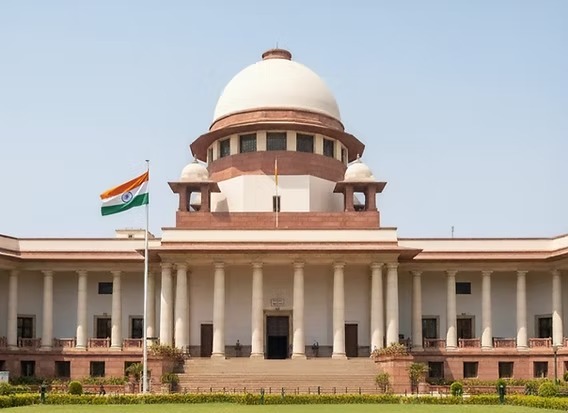
Supreme Court: Defendants Cannot Withdraw Pleadings Through Additional Written Statements
Judges Stress Integrity of Pleadings Under CPC
Contradictory Statements Undermine Judicial Process
By Legal Reporter
New Delhi: June 02, 2026:
The Supreme Court has ruled that a defendant cannot retract or contradict earlier pleadings by filing an additional written statement under the Code of Civil Procedure (CPC). This judgment reinforces the principle that pleadings must be consistent and truthful, and that courts cannot permit parties to change their stand midway to suit convenience.
For a deeper understanding of inheritance disputes, succession rights, and the legal principles governing family property claims, readers may explore the Supreme Court judgment in Raj Kumari & Others v. Surinder Pal Sharma , where the Court examined important questions relating to succession, the rights of legal heirs, and the resolution of competing claims over property and estate interests.
1. Case Background
The dispute arose when a defendant attempted to file an additional written statement contradicting admissions made in the original pleading. The trial court allowed it, but the matter reached the Supreme Court. The bench of Justices B.V. Nagarathna and Augustine George Masih clarified that while amendments may be permitted under Order VI Rule 17 CPC, additional written statements cannot be used to retract admissions or introduce contradictory pleas.
2. Supreme Court’s Observations
- Pleadings form the foundation of litigation; consistency is essential.
- Admissions made in pleadings are binding unless withdrawn with court’s permission and sufficient justification.
- Filing an additional written statement to retract admissions amounts to abuse of process.
- Courts must prevent defendants from shifting stands to delay proceedings or mislead.
3. Legal Framework
- Code of Civil Procedure, 1908 (CPC):
- Order VIII Rule 9: Additional written statements may be filed only with court’s leave.
- Order VI Rule 17: Amendments allowed if necessary for determining real questions in controversy, but not to retract admissions.
- Indian Evidence Act, 1872:
- Section 58: Facts admitted need not be proved.
- Judicial Precedents:
- Modi Spinning & Weaving Mills v. Ladha Ram (1976): Admissions cannot be withdrawn by amendment.
- Heeralal v. Kalyan Mal (1998): Additional written statements cannot contradict earlier admissions.
- Sushil Kumar v. Rakesh Kumar (2003): Courts must prevent abuse of procedural provisions.
4. Why Retraction Was Disallowed
- Admissions are substantive evidence.
- Allowing retraction undermines judicial efficiency.
- Contradictory pleadings confuse issues and prejudice the plaintiff.
- The defendant’s attempt was seen as dilatory and mala fide.
5. Broader Implications
- For Litigants: Encourages honesty and consistency in pleadings.
- For Courts: Provides clarity on handling additional written statements.
- For Legal System: Reinforces procedural discipline and prevents misuse of CPC provisions.
6. Comparative Perspective
- UK: Civil Procedure Rules allow amendments but not withdrawal of admissions without strong justification.
- US: Federal Rules of Civil Procedure permit amendments but admissions in pleadings remain binding unless formally withdrawn with leave of court.
7. Critical Analysis
The ruling strengthens the sanctity of pleadings. Courts must balance flexibility with discipline: while amendments may clarify issues, they cannot be used to retract admissions or mislead. This ensures fairness, prevents abuse, and upholds judicial integrity.
Detailed FAQ for Quick Understanding
Q1: What did the Supreme Court decide?
That defendants cannot retract or contradict earlier pleadings by filing additional written statements.
Q2: Which CPC provisions were discussed?
Order VIII Rule 9 (additional written statements) and Order VI Rule 17 (amendments).
Q3: Why are admissions important?
Because under Section 58 of the Evidence Act, admitted facts need not be proved, saving judicial time.
Q4: Can admissions ever be withdrawn?
Only with court’s permission and sufficient justification, not through contradictory pleadings.
Q5: What is the difference between amendment and additional written statement?
Amendment modifies existing pleadings; additional written statement supplements them but cannot contradict.
Q6: What happens if contradictory pleadings are allowed?
It confuses issues, delays proceedings, and prejudices the opposing party.
Q7: How does this ruling affect litigants?
It compels parties to be truthful and consistent in pleadings.
Q8: Does this principle apply to plaintiffs too?
Yes, both plaintiffs and defendants must maintain consistency in pleadings.