
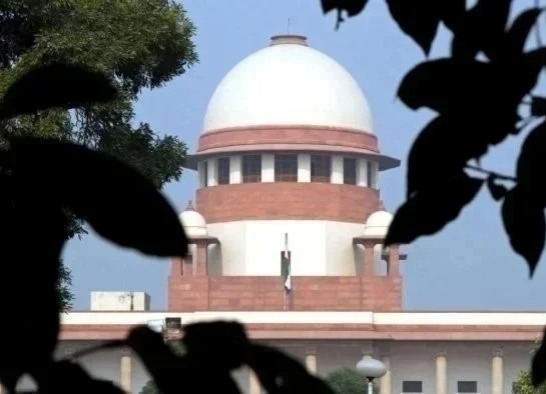
Landmark Supreme Court Judgments on Cross-Border Contractual Disputes
Indian Business Looking for Expansion in US Should Know the Laws
Interpretation of Clauses & Culture Could Led to Conflict
By Vishwas Kumar
New Delhi: 01, May 2026
Several landmark Supreme Court judgments in India and the U.S. have shaped the resolution of cross-border contractual disputes, particularly in arbitration. These rulings emphasize minimal judicial interference, enforceability of awards, and clarity in jurisdiction, aligning domestic law with international standards.
For a deeper understanding of how courts assess the validity of wills and deal with suspicious circumstances in succession disputes, this landmark ruling in Pentakota Satyanarayana vs Pentakota Seetharatnam is a key reference explaining proof of wills, burden of evidence, and judicial scrutiny in inheritance litigation.
India
- Central Organisation for Railway Electrification (CORE) v. ECI-SPIC-SMO-MCML (JV) (2025)
- Key Point: Adopted UNCITRAL Model Law Article 2A for internationalist interpretation.
- Impact: Ensures arbitration clauses are interpreted in line with global standards. Court Kutchehry
- Gayatri Balasamy v. ISG Novasoft Technologies Ltd. (2025, Five-Judge Bench)
- Issue: Whether courts can modify arbitral awards under Sections 34 & 37 of the Arbitration Act.
- Holding: Courts have limited powers—only clerical or severable errors can be corrected.
- Impact: Aligns Indian law with global practice, reducing judicial interference. LiveLaw
- Glencore International AG v. Shree Ganesh Metals (2025)
- Issue: Enforceability of unsigned arbitration agreements.
- Holding: Conduct and correspondence can establish acceptance of arbitration clauses.
- Impact: Expands enforceability, crucial for electronic communications in cross-border trade. indialaw.in
- Disortho S.A.S v. Meril Life Sciences Pvt. Ltd. (2025)
- Issue: Jurisdiction when contract clauses conflict.
- Holding: Clarified seat vs. venue distinction, applying UK precedents (Enka Insaat, Sulamérica).
- Impact: Indian courts retain supervisory jurisdiction even when arbitration is seated abroad. Law Web
- Hindustan Construction Company v. Bihar Rajya Pul Nirman Nigam (2025)
- Issue: Whether High Courts can recall their own order appointing arbitrators.
- Holding: Once arbitration begins, courts cannot interfere.
- Impact: Reinforces minimal judicial intervention, strengthening India’s arbitration credibility. Court Kutchehry
United States
- Morgan v. Sundance, Inc. (2022)
- Issue: Waiver of arbitration rights.
- Holding: No need to show prejudice; waiver depends on conduct.
- Impact: Reinforces equal treatment of arbitration agreements under the Federal Arbitration Act (FAA). Norton Rose Fulbright
- Kindred Nursing Centers LP v. Clark (2017)
- Issue: State law requiring explicit power of attorney for arbitration.
- Holding: Pre-empted by Federal Arbitration Act (FAA); arbitration agreements must be treated like other contracts. Norton Rose Fulbright
- Epic Systems Corp. v. Lewis (2018)
- Issue: Class action vs. individual arbitration under employment contracts.
- Holding: Federal Arbitration Act (FAA) requires enforcement of individual arbitration agreements; National Labor Relations Act (NLRA) does not override. Norton Rose Fulbright
- GE Energy Power Conversion v. Outokumpu Stainless (2020)
- Issue: Can non-signatories be compelled to arbitrate?
- Holding: Yes, under equitable estoppel doctrines; consistent with Federal Arbitration Act (FAA) and New York Convention. Norton Rose Fulbright
- CC/Devas (Mauritius) Ltd. v. Antrix Corp. Ltd. (Pending, 2025)
- Issue: Enforcement of foreign arbitral awards in U.S. courts under Foreign Sovereign Immunities Act (FSIA)
- Impact: Will clarify jurisdictional requirements for enforcing awards against foreign states. Sites at Penn State
FAQ: Quick Legal Guide
Q1: Why are these judgments significant for cross-border disputes?
They harmonize domestic arbitration law with international standards, ensuring predictability and enforceability globally.
Q2: Can unsigned contracts still enforce arbitration?
Yes. Both Indian (Glencore case) and U.S. courts (GE Energy case) recognize conduct and equitable doctrines to bind parties.
Q3: What is the difference between “seat” and “venue” in arbitration?
- Seat: Determines legal jurisdiction and supervisory court.
- Venue: Physical location of hearings.
Indian SC clarified this in Disortho v. Meril.
Q4: How do U.S. courts treat arbitration agreements under Federal Arbitration Act (FAA)?
They are treated like any other contract—no special hurdles, as reaffirmed in Morgan v. Sundance and Kindred Nursing.
Q5: What role does the New York Convention play?
It ensures arbitral awards are enforceable in over 170 countries, making arbitration the preferred mechanism for cross-border disputes.
Conclusion
Both Indian and U.S. Supreme Courts have progressively aligned arbitration law with international norms. These rulings reduce judicial interference, expand enforceability, and strengthen confidence in arbitration as the backbone of cross-border dispute resolution.