
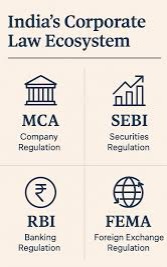
India’s Corporate Law Landscape: Navigating the Companies Act for Global Investors
Understanding the backbone of India’s corporate governance framework
Key compliance obligations for foreign and domestic enterprises
By Vishwas Kumar
New Delhi: June 08, 2026:
India today stands at the crossroads of rapid economic growth and global integration. Over the past two decades, the country has transformed from a largely domestic market into one of the most attractive destinations for foreign direct investment (FDI). Multinational corporations, private equity firms, and institutional investors are increasingly drawn to India’s vast consumer base, skilled workforce, and expanding infrastructure. Yet, beneath this promising landscape lies a critical foundation that determines the sustainability of such investments: corporate law and compliance.
Property disputes involving ownership rights, inheritance claims, mutation entries, and family succession frequently reach the courts when competing claims arise over valuable assets. The Supreme Court has consistently emphasized that revenue records and mutation entries do not by themselves confer title and that ownership must be established through legally admissible evidence. For a deeper understanding of these principles, readers may refer to Jagmail Singh & Another vs Karamjit Singh & Others, a significant judgment discussing property rights, title disputes, succession issues, and the evidentiary requirements in civil proceedings.
At the heart of India’s corporate governance framework is the Companies Act, 2013, a landmark piece of legislation that redefined how businesses are incorporated, managed, and regulated. For decades, India operated under the Companies Act of 1956, which, while comprehensive for its time, became outdated in the face of globalization, technological change, and rising investor expectations. The 2013 Act was introduced as a modern, forward-looking statute designed to align India’s corporate governance with international best practices.
Why Corporate Law Matters for Global Investors
For global investors, compliance is not merely a box-ticking exercise. It is a strategic necessity. In emerging markets like India, where regulatory frameworks are evolving and enforcement mechanisms are strengthening, understanding the nuances of corporate law can mean the difference between a successful investment and a costly misstep.
The Companies Act, 2013, is particularly significant because it integrates principles of transparency, accountability, and investor protection into the very DNA of corporate functioning. It mandates disclosures, enforces board responsibilities, and introduces mechanisms to prevent fraud and mismanagement. In doing so, it reassures investors that India is not only open for business but also serious about protecting capital and ensuring fair play.
The Global Context
India’s corporate law reforms cannot be viewed in isolation. They are part of a broader global trend where countries are tightening governance standards to attract responsible investment. The rise of environmental, social, and governance (ESG) considerations, the demand for corporate accountability, and the emphasis on sustainable growth have all influenced India’s legislative approach.
For instance, the mandatory Corporate Social Responsibility (CSR) provisions under the Companies Act, 2013, were among the first of their kind globally. They require qualifying companies to spend at least 2% of their average net profits on social development initiatives. This not only reflects India’s commitment to inclusive growth but also resonates with global investors who prioritize impact-driven investments.
Evolution Through Scandals and Reforms
The urgency for reform was underscored by high-profile corporate scandals. The Satyam Computer Services scandal of 2009, often dubbed “India’s Enron,” revealed massive accounting fraud and shook investor confidence. The fallout highlighted glaring weaknesses in the old corporate law framework, particularly around auditor accountability and disclosure norms.
The Companies Act, 2013, responded directly to these concerns. It introduced stricter audit requirements, mandatory rotation of auditors, and enhanced penalties for fraud. It also empowered regulatory bodies like the Serious Fraud Investigation Office (SFIO) and the National Company Law Tribunal (NCLT) to investigate and adjudicate corporate misconduct.
Key Features of the Companies Act, 2013
The Act is comprehensive, covering incorporation, share capital, board governance, financial reporting, CSR, investor protection, and winding up. Some of its most notable features include:
- Board Composition: Public companies must appoint independent directors to ensure impartial oversight.
- Audit & Disclosure: Mandatory statutory audits and digital filing systems enhance transparency.
- CSR Mandates: Companies meeting certain thresholds must invest in social development.
- Investor Safeguards: Mechanisms to protect minority shareholders and prevent oppression or mismanagement.
- Penalties: Heavy fines and even criminal liability for fraud or non-compliance.
Implications for Global Investors
For foreign investors, the Companies Act offers both reassurance and responsibility. On one hand, it signals India’s commitment to global governance standards. On the other, it requires investors and multinational corporations to navigate complex compliance obligations.
- Transparency: Enhanced disclosure norms reduce information asymmetry, making it easier for investors to assess risks.
- Accountability: Independent directors and audit committees align with international expectations.
- Risk Management: Strict penalties deter misconduct, protecting investor capital.
- Opportunity: CSR mandates create structured avenues for impact investment, aligning profit with purpose.
India’s Position in Global Capital Markets
India’s compliance environment is closely monitored by global investors, rating agencies, and international institutions. The country’s ability to enforce corporate law effectively is seen as a litmus test for its readiness to handle large-scale foreign capital inflows.
Recent years have seen India climb steadily in global rankings for ease of doing business, thanks in part to reforms in corporate law and digital compliance systems. The MCA21 portal, for instance, has digitized corporate filings, reducing bureaucratic delays and increasing transparency.
Looking Ahead: The Future of Compliance in India
The Companies Act, 2013, is not static. It continues to evolve through amendments, judicial interpretations, and regulatory updates. Future trends are likely to include:
- Digital Compliance Platforms: Greater reliance on AI and blockchain for monitoring compliance.
- ESG Integration: Linking corporate governance with sustainability and climate risk disclosures.
- Global Harmonization: Aligning Indian laws with OECD guidelines and FATF standards.
- Cross-Border Flexibility: Facilitating mergers and acquisitions involving foreign entities.
Conclusion
India’s corporate law landscape is both complex and dynamic. For global investors, mastering the Companies Act, 2013, is essential for navigating risks, ensuring compliance, and capitalizing on opportunities. The Act represents India’s commitment to transparency, accountability, and investor protection, positioning the country as a compliance-friendly destination for global capital.
As India continues to refine its corporate governance framework, the message to investors is clear: the country is not only open for business but also determined to uphold the highest standards of corporate responsibility. In this environment, compliance is not a burden—it is a gateway to sustainable growth and long-term success.
Evolution of Corporate Law in India
From 1956 to 2013: A Paradigm Shift
- Companies Act, 1956: For decades, this was the primary legislation governing corporate entities in India. It was criticized for being outdated, bureaucratic, and misaligned with global standards.
- Companies Act, 2013: Introduced after extensive consultation, it modernized India’s corporate framework, emphasizing transparency, accountability, and investor protection.
Key Drivers of Reform
- Globalization: India needed laws aligned with international best practices to attract foreign capital.
- Corporate Scandals: Cases like Satyam (2009) highlighted weaknesses in governance and disclosure.
- Investor Confidence: Strengthening compliance was critical to reassure global investors.
Structure of the Companies Act, 2013
The Act is divided into 29 chapters and 470 sections, covering every aspect of corporate functioning. Major areas include:
- Incorporation & Types of Companies: Private, public, one-person companies, and foreign subsidiaries.
- Share Capital & Debentures: Rules for issuance, transfer, and regulation of securities.
- Management & Administration: Board composition, meetings, and shareholder rights.
- Accounts & Audit: Mandatory audits, financial reporting, and disclosure norms.
- Corporate Social Responsibility (CSR): Mandatory CSR spending for qualifying companies.
- Investor Protection: Safeguards against oppression and mismanagement.
- Winding Up & Liquidation: Procedures for closure and insolvency.
Compliance Obligations for Companies
1. Incorporation & Registration
- Filing with the Registrar of Companies (RoC).
- Obtaining Digital Signature Certificates (DSC) and Director Identification Numbers (DIN).
- Drafting Memorandum of Association (MoA) and Articles of Association (AoA).
2. Board & Governance
- Minimum directors: 2 for private companies, 3 for public companies.
- Listed companies must appoint independent directors.
- Regular board meetings with proper quorum and documentation.
3. Financial Reporting
- Annual returns filed with the Ministry of Corporate Affairs (MCA).
- Mandatory statutory audits.
- Adoption of XBRL filing for digital transparency.
4. CSR Mandates
- Companies with net worth ≥ ₹500 crore, turnover ≥ ₹1000 crore, or net profit ≥ ₹5 crore must spend 2% of average net profits on CSR.
- Activities include education, healthcare, environment, and rural development.
5. Penalties & Enforcement
- Heavy fines for non-compliance.
- Criminal liability for fraud, misrepresentation, or wilful default.
- Directors can be held personally liable.
Implications for Global Investors
Transparency & Disclosure
The Act mandates detailed disclosures, enhancing investor confidence.
Accountability & Governance
Independent directors and audit committees align India with global governance standards.
Risk Management
Strict penalties deter fraud and mismanagement, reducing investor risk.
Opportunity for Impact Investment
CSR mandates create structured opportunities for socially responsible investments.
Case Law & Enforcement Examples in India’s Corporate Compliance
1. Satyam Computer Services Ltd. v. Union of India (2009)
- Background: The infamous Satyam scandal exposed massive accounting fraud, shaking investor confidence.
- Impact: It led to stricter provisions in the Companies Act, 2013, including enhanced auditor accountability and mandatory rotation of auditors.
- Lesson for Investors: Transparency in financial reporting is non-negotiable; due diligence must include forensic scrutiny of accounts.
2. Tata Consultancy Services (TCS) CSR Compliance (2015–2020)
- Background: TCS consistently met CSR obligations, investing in education, skill development, and healthcare.
- Impact: Demonstrated how CSR compliance can align with brand reputation and investor expectations.
- Lesson for Investors: CSR is not just a legal requirement but a strategic opportunity for impact-driven investment.
3. National Company Law Tribunal (NCLT) Rulings
- Case: Union of India v. Infrastructure Leasing & Financial Services (IL&FS) (2018)
- Background: IL&FS defaulted on debt repayments, triggering systemic risk.
- Impact: NCLT intervened, restructuring governance and protecting creditors.
- Lesson for Investors: NCLT plays a critical role in safeguarding investor interests during corporate crises.
4. SEBI Enforcement on Insider Trading
- Case: SEBI v. Reliance Industries Ltd. (2021)
- Background: SEBI penalized Reliance for alleged insider trading violations.
- Impact: Reinforced SEBI’s proactive stance on market integrity.
- Lesson for Investors: Listed companies face strict scrutiny; compliance lapses can lead to reputational and financial damage.
5. CSR Non-Compliance Penalties
- Case: Several mid-sized firms (2019–2021) faced penalties for failing to spend mandated CSR funds.
- Impact: MCA tightened monitoring, requiring detailed CSR disclosures in annual reports.
- Lesson for Investors: CSR compliance is monitored rigorously; lapses can affect credibility and investor relations.
6. Auditor Accountability – PwC Ban (2018)
- Background: The Securities and Exchange Board of India (SEBI) banned Price Waterhouse (PwC) from auditing listed companies for two years due to its role in the Satyam scandal.
- Impact: Highlighted the importance of auditor independence and accountability.
- Lesson for Investors: Auditor credibility is central to governance; global investors must assess audit quality before investing.
7. Cross-Border Merger Case – Gabs Investments v. Ajanta Pharma (2019)
- Background: Approved under Section 234 of the Companies Act, allowing cross-border mergers.
- Impact: Demonstrated India’s openness to global capital integration.
- Lesson for Investors: India’s legal framework supports international mergers, but compliance with FEMA and RBI rules is critical.
Compliance Reports & Trends
- MCA21 Portal Usage: Over 90% of corporate filings are now digital, reducing bureaucratic delays.
- CSR Spending (2020–2023): Indian companies spent over ₹25,000 crore on CSR, with education and healthcare as top sectors.
- NCLT Caseload: Rising number of insolvency cases under the Insolvency and Bankruptcy Code (IBC) shows proactive resolution of distressed assets.
- Global Investor Confidence: India ranked among the top 10 destinations for FDI in 2023, partly due to strengthened compliance frameworks.
Future Outlook
India’s corporate law is evolving toward:
- Digital Compliance Platforms: MCA21 portal for online filings.
- ESG Integration: Linking corporate governance with sustainability.
- Global Harmonization: Aligning with OECD and FATF standards.
- Technology in Compliance: AI-driven monitoring and blockchain-based transparency.
40 FAQs on the Companies Act, 2013
General Framework
- What is the Companies Act, 2013?
It is India’s primary legislation governing company formation, management, and compliance, replacing the Companies Act, 1956. - How does it differ from the Companies Act, 1956?
The 2013 Act modernized governance, introduced CSR mandates, stricter disclosure norms, and enhanced investor protection. - Who administers the Act?
The Ministry of Corporate Affairs (MCA) oversees implementation, supported by the Registrar of Companies (RoC). - What types of companies are recognized?
Private companies, public companies, one-person companies, small companies, and foreign subsidiaries. - What is the role of the Registrar of Companies?
The RoC registers companies, monitors compliance, and maintains statutory records.
Incorporation & Structure
- What documents are required for incorporation?
Memorandum of Association (MoA), Articles of Association (AoA), identity proofs, and statutory forms filed with RoC. - What is a Director Identification Number (DIN)?
A unique identification number issued to individuals intending to serve as directors in Indian companies. - Can foreign nationals be directors?
Yes, foreign nationals can be directors, subject to compliance with residency and regulatory requirements. - What is the minimum number of directors required?
Private companies need at least 2 directors, public companies 3, and one-person companies just 1. - What is the difference between a private and public company?
Private companies restrict share transfers and have fewer disclosure requirements, while public companies can raise capital from the public.
Governance & Board
- What are the duties of directors?
Directors must act in good faith, ensure compliance, protect shareholder interests, and avoid conflicts of interest. - What is an independent director?
An independent director is a non-executive board member who provides unbiased oversight and governance. - How often must board meetings be held?
At least four board meetings annually, with no more than 120 days between two meetings. - What is the quorum requirement?
One-third of the board or two directors, whichever is higher, must be present for valid proceedings. - What is the role of the audit committee?
It oversees financial reporting, internal controls, and compliance with statutory audit requirements.
Financial Reporting
- What are the requirements for annual returns?
Companies must file annual returns with details of directors, shareholders, and financial performance. - Who can be appointed as an auditor?
Qualified chartered accountants or audit firms registered with ICAI can serve as statutory auditors. - What is the statutory audit process?
Auditors examine financial statements, ensure accuracy, and certify compliance with accounting standards. - What is XBRL filing?
XBRL is a digital format for filing financial data with MCA, ensuring transparency and standardization. - What penalties exist for false reporting?
Penalties include fines, imprisonment, and disqualification of directors for fraudulent reporting.
CSR Mandates
- What is Corporate Social Responsibility (CSR)?
CSR requires qualifying companies to spend a portion of profits on social and environmental initiatives. - Which companies are required to spend on CSR?
Companies with net worth ≥ ₹500 crore, turnover ≥ ₹1000 crore, or net profit ≥ ₹5 crore. - What activities qualify as CSR?
Education, healthcare, environmental sustainability, rural development, and skill enhancement projects. - How is CSR spending monitored?
Companies must disclose CSR activities in annual reports and file compliance with MCA. - What happens if a company fails to spend on CSR?
Unspent amounts must be transferred to specified funds, and non-compliance attracts penalties.
Investor Protection
- How does the Act protect minority shareholders?
It provides remedies against oppression, mismanagement, and unfair practices by majority shareholders. - What is oppression and mismanagement?
Actions by majority shareholders or management that harm minority interests or company stability. - How can shareholders file complaints?
They can approach the National Company Law Tribunal (NCLT) for redressal. - What is the role of the National Company Law Tribunal (NCLT)?
NCLT adjudicates disputes, insolvency cases, and shareholder grievances under the Act. - What remedies are available to investors?
Remedies include compensation, reversal of unfair decisions, and protection of voting rights.
Penalties & Enforcement
- What are the penalties for non-compliance?
Penalties range from monetary fines to imprisonment, depending on the severity of violations. - Can directors be held personally liable?
Yes, directors can face personal liability for fraud, misrepresentation, or wilful default. - What is corporate fraud under the Act?
Fraud includes deliberate misstatements, concealment of facts, or misuse of company funds. - What is the role of the Serious Fraud Investigation Office (SFIO)?
SFIO investigates complex corporate frauds and prosecutes offenders. - How are disputes resolved?
Disputes are resolved through NCLT, appellate tribunals, or courts depending on the case.
Global Investor Concerns
- How does the Act align with global governance standards?
It incorporates independent directors, audit committees, and disclosure norms similar to OECD practices. - Can foreign companies operate in India under the Act?
Yes, foreign companies can establish subsidiaries or branch offices subject to compliance with Indian laws. - What are the compliance requirements for subsidiaries of foreign firms?
They must follow Indian accounting, governance, and disclosure norms like domestic companies. - How does the Act impact cross-border mergers?
It permits mergers between Indian and foreign companies, subject to FEMA and RBI approval. - What reforms are expected in the future?
Future reforms may include enhanced ESG reporting, digital compliance, and greater global harmonization.
Conclusion
The Companies Act, 2013 represents India’s commitment to transparency, accountability, and investor protection. For global investors, mastering its provisions is essential to navigating India’s dynamic corporate landscape. With ongoing reforms and digital innovations, India is positioning itself as a compliance-friendly destination for global capital.