
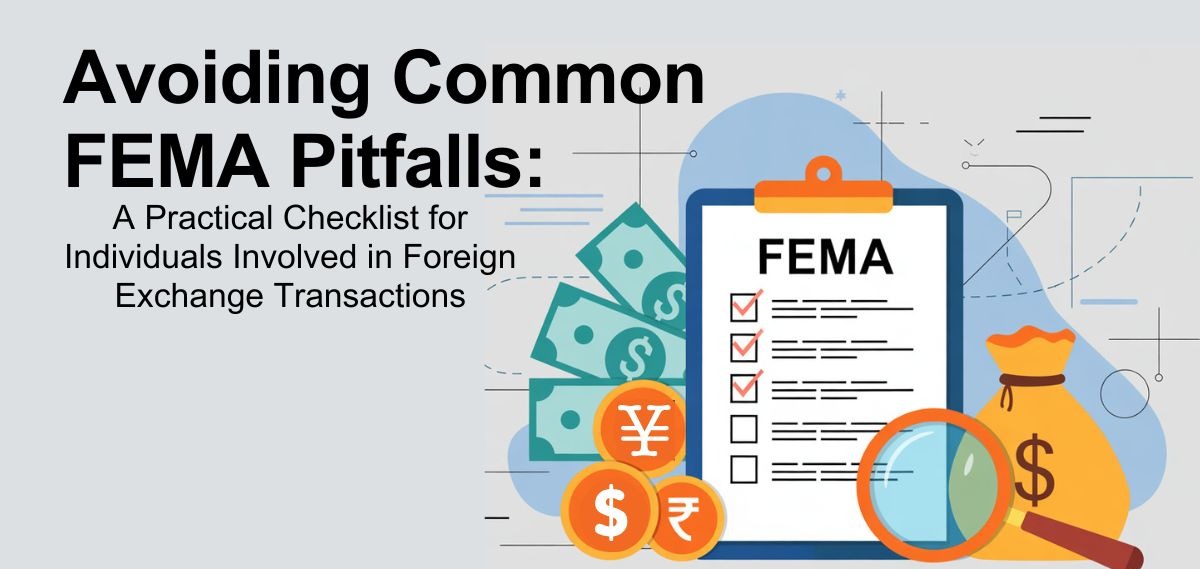
Common FEMA Mistakes Made by Indian Founders, rushing to do business in US
Why rushing into U.S. incorporation backfires
Discipline and documentation are the real safeguards
By Vishwas Kumar
New Delhi: April 10, 2026:
For many Indian entrepreneurs, registering a company in the United States—often an LLC—appears to be the fastest route to global markets. However, the excitement of incorporation often overshadows the critical compliance obligations under FEMA (Foreign Exchange Management Act). Founders who hasten into U.S. company formation without proper planning frequently encounter avoidable complications. The mistakes are not about the structure of the company itself but about how Indian residents handle remittances, disclosures, and tax filings once the entity is created.
Analytical Overview
1. Remittance Without LRS Permission
One of the most common errors is remitting funds abroad without using the Liberalized Remittance Scheme (LRS). FEMA requires Indian residents to remit money through authorized channels with proper documentation. Skipping this step may seem convenient initially but can lead to penalties and questions from regulators later.
2. Skipping RBI Disclosures
After incorporation, founders must report foreign investment to the Reserve Bank of India (RBI). Many overlook this requirement, assuming that registration in the U.S. is sufficient. In reality, RBI disclosures are mandatory to ensure transparency in outbound capital flows. Non-reporting can attract fines and complicate future transactions.
3. Ignoring Indian Tax Filings
Another frequent mistake is failing to disclose foreign assets and income in Indian tax returns. India taxes residents on global income, meaning profits from U.S. companies must be reported. Ignoring this obligation can trigger scrutiny under the Black Money Act and other tax provisions.
4. Misconception About LLC Registration
Founders often assume that registering an LLC in the U.S. eliminates compliance requirements in India. This is incorrect. LLC registration provides flexibility and pass-through taxation in the U.S., but FEMA obligations remain unchanged. Ownership, remittance, and reporting rules apply equally to LLCs and corporations.
5. Lack of Documentation Discipline
FEMA compliance is not just about filing forms—it requires meticulous documentation. Founders must keep records of remittances, RBI filings, and tax disclosures. Poor record-keeping is a recurring mistake that makes it difficult to prove compliance if questioned by authorities.
6. Why These Mistakes Matter
Each of these errors stems from a lack of planning. Entrepreneurs often focus on speed—getting the U.S. entity registered quickly—without considering the long-term compliance burden. The result is unnecessary legal exposure, reputational risk, and financial penalties. Proper planning, discipline, and documentation are the real safeguards for Indian residents owning U.S. companies.
FAQs
Q1. What is the biggest mistake Indian founders make under FEMA?
Remitting money abroad without using the Liberalized Remittance Scheme (LRS).
Q2. Is RBI disclosure mandatory after registering a U.S. company?
Yes. RBI must be informed of foreign investment to ensure compliance with FEMA.
Q3. Do Indian residents need to report U.S. income in India?
Yes. India taxes residents on global income, so U.S. profits must be disclosed in Indian tax returns.
Q4. Does LLC registration in the U.S. remove FEMA obligations?
No. FEMA rules apply equally to LLCs and corporations. Compliance is mandatory regardless of structure.
Q5. What records should founders maintain?
Remittance documents, RBI filings, tax disclosures, and ownership records.
Q6. What happens if RBI disclosures are skipped?
Non-reporting can attract penalties and complicate future transactions.
Q7. Why is documentation discipline important?
It provides proof of compliance and protects against regulatory scrutiny.
Q8. Can ignoring tax filings lead to penalties?
Yes. Non-disclosure of foreign income can trigger penalties under Indian tax laws.
Q9. Is FEMA compliance a one-time requirement?
No. Compliance continues annually through reporting and disclosures.
Q10. How can founders avoid these mistakes?
By planning remittances under LRS, filing RBI disclosures, reporting global income, and maintaining records.
Conclusion
The rush to form U.S. companies often blinds Indian founders to the realities of FEMA compliance. Remittance without LRS permission, skipping RBI disclosures, ignoring tax filings, and poor documentation are recurring mistakes that create unnecessary risks. LLC registration may offer flexibility in the U.S., but it does not exempt Indian residents from FEMA obligations. The lesson is clear: discipline and documentation are the true safeguards for global entrepreneurship. Careful planning ensures that international expansion remains both legal and sustainable.