
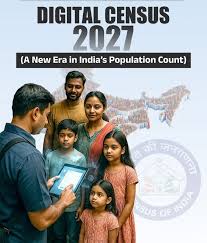
Census 2027 in India: Know How to Self-Enumerate
Digital Portal Empowers Citizens to Record Household Data
Legal Framework Ensures Accuracy and Accountability
By Legal Reporter
New Delhi: May 08, 2026:
India’s Census 2027 will be the first to allow citizens to self-enumerate online, under the legal framework of the Census Act, 1948 and Census Rules, 1990. The process introduces a secure web portal for households to submit data themselves, reinforcing Digital India initiatives while maintaining statutory safeguards.
The Supreme Court ruling in Dr K.S. Palanisami (Dead) vs Hindu Community in General and Citizens of Gobichettipalayam is an important reference for cases involving public trust property, religious endowments and community rights over temple-related assets. The judgment discusses how courts examine historical records, public usage and legal ownership claims in disputes concerning religious institutions and charitable properties under Indian law.
Constitutional and Legal Framework
The Census Act, 1948 provides the statutory basis for conducting the decennial census in India. It empowers the Registrar General and Census Commissioner to collect demographic and socio-economic data. The Census Rules, 1990 supplement this Act, detailing procedures, responsibilities of enumerators, and penalties for non-compliance.
Census 2027, the 16th Census overall and 8th after independence, will be conducted in two phases:
- House Listing and Housing Census (HLO) – April to September 2026.
- Population Enumeration (PE) – February 2027.
Introduction of Self-Enumeration
For the first time, households can participate via self-enumeration using a secure portal: se.census.gov.in (se.census.gov.in in Bing). This option will remain open for 15 days before enumerators begin house-to-house visits.
Key features:
- Available in English, Hindi, and 14 regional languages.
- Any household member can complete the process in 15–20 minutes.
- A Self-Enumeration ID (SE ID) is generated and must be shared with the enumerator for final confirmation.
Digital India Integration
The census will deploy a dedicated mobile application (HLO App) for enumerators and a web portal for citizens, aligning with the government’s Digital India mission. This ensures:
- Faster data collection.
- Reduced manual errors.
- Timely dissemination of results.
Safeguards and Compliance
- Verification by Enumerators: Even self-enumerated data must be validated during field visits.
- Legal Penalties: Under the Census Act, refusal to provide information or furnishing false data can attract fines or prosecution.
- Data Security: The portal uses secure authentication to protect household information.
Implications
- Citizen Empowerment: Households gain flexibility to provide data at their convenience.
- Efficiency: Digital submissions reduce workload for enumerators and speed up compilation.
- Challenges: Ensuring digital literacy and internet access across rural areas remains critical.
Detailed FAQ on Key Legal Points
Q1. What law governs the Census in India?
The Census Act, 1948 and Census Rules, 1990 provide the legal framework for conducting the census.
Q2. What is self-enumeration?
It is a process where households submit their census data online via a secure portal before enumerators visit.
Q3. How long is the self-enumeration window open?
For 15 days before house-to-house visits by enumerators.
Q4. What is the SE ID?
A unique Self-Enumeration ID generated after online submission, which must be shown to the enumerator for verification.
Q5. Can households skip enumerator visits if they self-enumerate?
No. Enumerators will still visit to confirm and finalize the data.
Q6. What happens if someone refuses to participate?
Under the Census Act, refusal or false information can lead to penalties, including fines.
Q7. How does this align with Digital India?
By introducing mobile apps and online portals, Census 2027 integrates technology to improve efficiency, accuracy, and citizen participation.
In conclusion, Census 2027 represents a landmark shift in India’s data collection process, blending statutory safeguards with digital innovation. Self-enumeration empowers citizens while ensuring accountability through legal oversight, setting a precedent for future governance reforms.