
Watch the Video
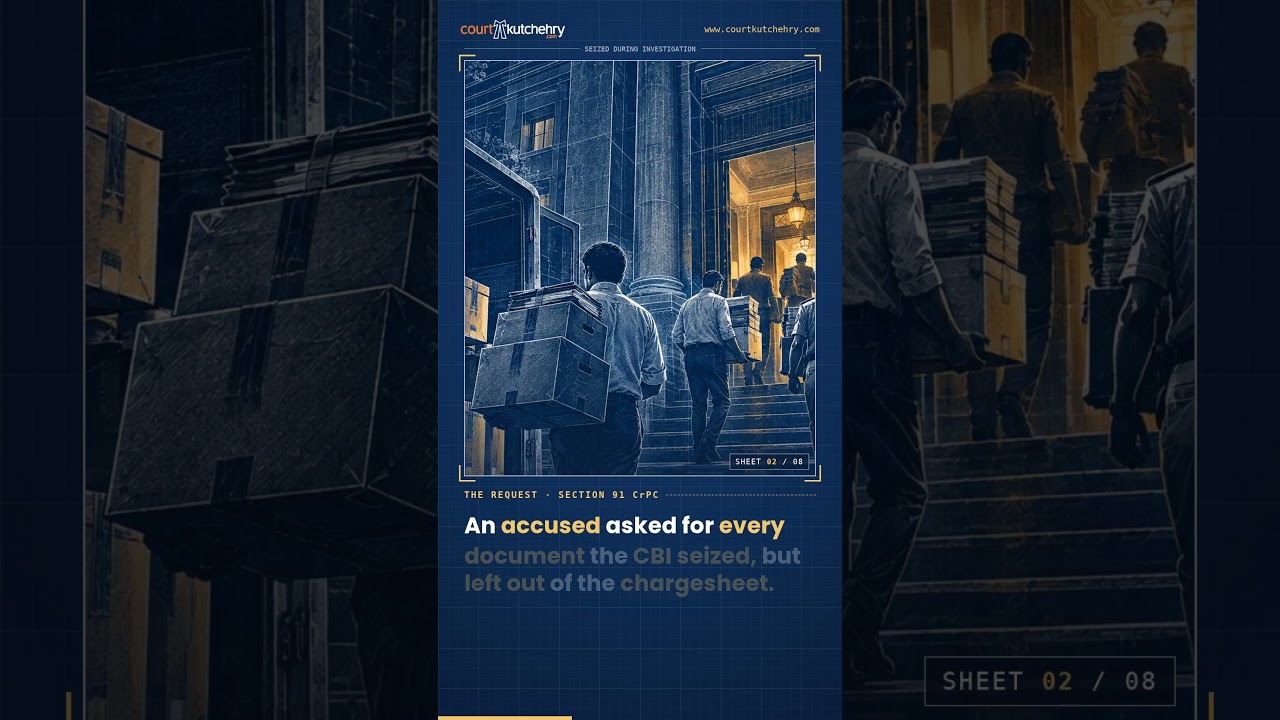
In this short video, CourtKutchehry explains the Supreme Court’s judgment of 25 September 2026 in CBI v. Anil Dixit, on an accused person’s request for documents that the CBI had seized but did not rely on in its chargesheet. This article explains the route the Court laid down and its limits.
▶ Watch on YouTube: The CBI seized documents but didn’t rely on them. Can the accused get them?
What Are “Unrelied” Documents?
When an agency files a chargesheet, the accused is given copies of the documents the prosecution relies on (Section 207 CrPC, now Section 230 BNSS). But investigators often seize far more material than they use. Those are the “unrelied” documents. Sometimes they may help the defence.
In Central Bureau of Investigation v. Anil Dixit, (2026) 09 SC CK 6988 (2026 INSC 1064), the accused in a CBI case before the Special Judge, CBI, Ranchi had applied under Section 91 CrPC (now Section 94 BNSS) for a long list of documents: seizure memos, CBI registers, source information, unrelied seized documents, committee minutes, bids and appointment files. The Special Court and the High Court directed production. The CBI appealed.
The Premise: The Accused Can Seek Material to Shape the Defence
The Bench of Justice J.B. Pardiwala and Justice K. Vinod Chandran proceeded on the premise that an accused is entitled to documents available with the prosecution to prepare the defence. The real question is when. The stage at which a document can be sought depends on what the document is and why it is needed.
The Practical Route for Voluminous Documents
- Inspection. Where unrelied documents are voluminous, the accused may inspect them instead of demanding copies at the stage of charge.
- A written list. During inspection, the accused can identify the specific documents needed. The list is reduced to writing and signed by both sides, and produced before the trial court.
- Kept ready for trial. The CBI must keep the files ready at the time of trial, and specific documents can be called for when the relevant witness is examined.
Remember this line: the right is real, but it is exercised at the right stage and for specific documents.
Documents the Agency Does Not Have
The CBI cannot be ordered to produce what it does not hold. For such documents, the Court said the accused may use the Right to Information Act, 2005, or produce a suitable witness at the stage of defence evidence. Their evidentiary value is then for the trial court to assess.
What Was Not Ordered, and What Was Left Open
- Source information and internal registers were not ordered to be disclosed. The CBI said these were confidential, and the accused did not press for them.
- The Padhi debate. In State of Orissa v. Debendra Nath Padhi, (2005) 1 SCC 568, a three-Judge Bench held that at the stage of framing charge the court looks only at the material produced by the prosecution. A 2025 decision, Sarla Gupta v. Directorate of Enforcement, read Padhi as concerning the “record of the case”. The Bench found it unnecessary to resolve that tension.
- An order on its facts. The Court set aside the orders below to facilitate an expeditious trial and decided the request item by item, on the facts of this case.
Key Takeaways
- An accused may seek documents held by the prosecution to prepare the defence, but the stage matters.
- Voluminous unrelied documents can be inspected; specific ones are listed in writing, signed by both sides and produced before the trial court.
- The CBI must keep the files ready at trial, so documents can be called for when the relevant witness is examined.
- Documents the agency does not hold can be sought through RTI or proved through a defence witness.
- Source information and internal registers were not ordered to be disclosed, and the Padhi / Sarla Gupta debate was left open.
Frequently Asked Questions
Which provision lets an accused seek documents from the prosecution?
Section 91 of the Code of Criminal Procedure, 1973, now Section 94 of the Bharatiya Nagarik Suraksha Sanhita, 2023, which lets a court summon a document needed for an inquiry or trial.
Does the accused get copies of all seized documents with the chargesheet?
No. Copies are given of the documents the prosecution relies on. Unrelied documents can be inspected and, where needed, called for at the appropriate stage.
What if the CBI does not have the document?
It cannot be ordered to produce it. The accused may use the RTI Act or examine a defence witness to bring it on record.
Did the Court order disclosure of source information?
No. Source information and internal registers were not ordered to be disclosed; the accused did not press for them.
Who decided the case?
Justice J.B. Pardiwala and Justice K. Vinod Chandran, in Criminal Appeal No. 4618 of 2026, on 25 September 2026.
Where can I watch the video?
Watch the short explainer on the CourtKutchehry YouTube channel: https://youtu.be/xeDsbf220Ug.
Conclusion
CBI v. Anil Dixit gives trial courts a workable method: inspect, list, sign, and call for the document when the witness is in the box.
It protects the accused’s ability to defend himself without turning the stage of charge into a document-production exercise that delays the trial.
▶ Watch the video: The CBI seized documents but didn’t rely on them. Can the accused get them?
📖 Read more: Unrelied Documents and the Accused: Supreme Court Sets a Practical Route for Section 91 Requests in a CBI Case
Research Judgments Like These on CourtKutchehry
Every judgment cited in this article, and lakhs more, can be searched and read on CourtKutchehry. Searching and reading judgments is free. A membership adds unlimited summaries, all related judgments, original court PDF downloads, bookmarks, notes and the CourtKutchehry AI assistant.
| Membership | Price | Works out to | AI credits |
|---|---|---|---|
| Monthly (1 month) | ₹599 | ₹599 / month | 1,000 / month |
| Quarterly (3 months) · Save 16% | ₹1,499 | ₹499.67 / month | 1,100 / month |
| Six-monthly (6 months) · Save 33% | ₹2,399 | ₹399.83 / month | 1,200 / month |
| Yearly (12 months) · Save 44% · Best value | ₹3,999 | ₹333.25 / month | 1,300 / month |
Every plan is a one-off purchase for a fixed period: nothing auto-renews and no card is kept on file. Prices are exclusive of applicable tax, which is added at checkout. Extra AI chat credits can be topped up from ₹99. A free verified account gets 5 summaries and 50 AI trial credits.
Prices are as displayed on courtkutchehry.com on 20 November 2026 and are subject to change without notice. Please check the pricing page for the current plans and offers.
For more judgments, legal opinions and case analysis, visit courtkutchehry.com
Visit CourtKutchehry →