
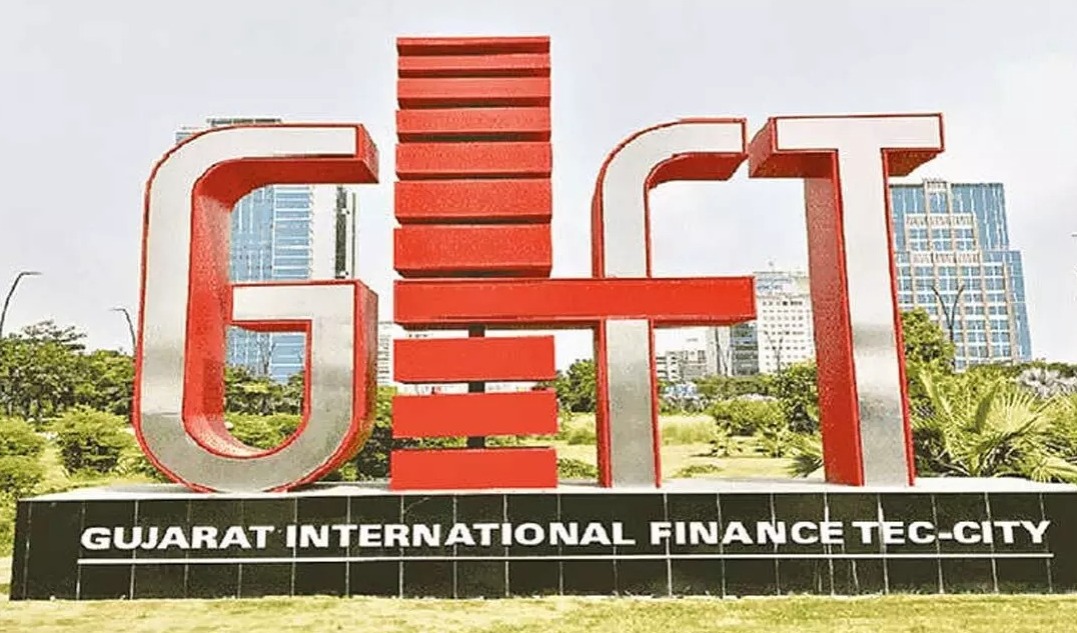
Capital Markets in IFSC: Building India’s Gateway to Global Finance
Creating a competitive platform for trading, listing, and raising capital
Balancing global standards with Indian oversight
By Vishwas Kumar
New Delhi: June 20, 2026:
Capital markets are the backbone of any international financial center, enabling companies to raise funds, investors to access opportunities, and economies to integrate with global finance. India’s International Financial Services Centre (IFSC) at GIFT City is positioning itself as a hub for capital market activity under the supervision of the International Financial Services Centres Authority (IFSCA).
Property ownership and inheritance disputes often involve complex questions of title, possession, and legal succession, as seen in the K. Naina Mohamed vs A.M. Vasudevan Chettiar judgment, where the court examined crucial principles relating to civil rights and property claims.
The IFSC framework allows for listing of securities, trading in foreign currencies, and access to global investors. Exchanges in GIFT City support equities, debt instruments, derivatives, and commodities, while offering exemptions from securities transaction tax (STT), commodity transaction tax (CTT), and stamp duty. This makes IFSC highly competitive compared to traditional Indian exchanges.
For corporates, IFSC provides a platform to raise capital offshore without the need to list in Singapore, London, or New York. For investors, it offers access to innovative products such as green bonds, masala bonds, and international derivatives. The ecosystem also supports fintech-driven trading platforms, digital securities, and sandbox pilots for blockchain-based exchanges.
Comparative Perspectives: Capital Markets in Global IFSCs
Singapore Singapore is Asia’s most established capital market hub, with deep liquidity and strong integration into global finance.
Strengths: Mature infrastructure, credibility, and access to global investors.
Weaknesses: High operating costs and intense competition.
Opportunities: Expansion into ESG-linked securities, green bonds, and digital exchanges.
Threats: Rising competition from emerging hubs like GIFT City offering similar incentives at lower costs.
Dubai DIFC Dubai International Financial Centre (DIFC) has positioned itself as a regional hub for capital flows, offering tax-free trading and English common law courts.
Strengths: Strategic location, tax-free operations, and strong government support.
Weaknesses: Limited domestic market depth and reliance on expatriate talent.
Opportunities: Blockchain-based trading platforms and regional expansion into Africa and South Asia.
Threats: Geopolitical instability in the Middle East affecting investor confidence.
Hong Kong Hong Kong has historically been strong as a gateway to China, with deep capital markets and investor networks.
Strengths: Established infrastructure, liquidity, and proximity to mainland China.
Weaknesses: Political uncertainty and regulatory shifts have eroded confidence.
Opportunities: Integration with China’s Greater Bay Area and RMB-denominated securities.
Threats: Investors relocating to Singapore or Dubai due to stability concerns.
India’s IFSC (GIFT City) India’s IFSC is building its capital market ecosystem with competitive tax incentives, exemptions from STT, CTT, and stamp duty, and simplified regulatory frameworks.
Strengths: Cost competitiveness, large domestic talent pool, and integration with Indian law.
Weaknesses: Infrastructure and recognition still developing compared to mature hubs.
Opportunities: Green bonds, masala bonds, digital securities, and ESG-linked instruments.
Threats: Skepticism from global investors who may prefer established hubs until IFSC proves its credibility.
India’s IFSC thus positions itself as a hybrid model—global competitiveness with domestic accountability. The challenge is building liquidity and investor confidence. If successful, GIFT City can reduce reliance on foreign hubs, attract responsible capital, and establish itself as a trusted global center for capital markets.
Sociological, Economic, and Ethical Impacts
Sociological: IFSC creates new career opportunities for traders, analysts, and compliance professionals.
Economic: Offshore listings and trading attract foreign capital, strengthen India’s financial system, and reduce reliance on foreign hubs.
Ethical: Oversight is crucial to prevent misuse of tax incentives and ensure transparency in trading practices.
Case Studies: Capital Markets in IFSC
1. Green Bond Listings Indian corporates have begun listing green bonds in IFSC to attract ESG-focused investors. These listings provide access to international capital pools while supporting India’s sustainability agenda. The tax incentives and simplified regulations make IFSC a natural hub for climate finance.
2. Masala Bonds Offshore rupee-denominated bonds, known as masala bonds, are being issued through IFSC exchanges. This allows global investors to gain exposure to the Indian currency while providing corporates with cost-effective access to foreign capital.
3. Global Exchange Partnerships International exchanges have partnered with IFSC to offer derivatives trading in foreign currencies. This integration reduces reliance on Singapore or London, positioning GIFT City as a competitive hub for global derivatives.
4. Digital Securities Pilots Sandbox projects in IFSC are testing blockchain-based securities trading platforms. These pilots aim to reduce settlement times, enhance transparency, and attract fintech-driven investors seeking innovative products.
5. Commodity Derivatives Trading IFSC exchanges support trading in commodities such as metals and energy, integrating India with global supply chains. This case highlights IFSC’s role in diversifying capital market offerings and strengthening India’s position in global trade finance.
Together, these case studies show that capital markets in IFSC are not just replicating traditional models but actively innovating—through green bonds, masala bonds, global partnerships, digital securities, and commodity derivatives. Each initiative strengthens India’s credibility as a global hub for capital flows, balancing competitiveness with accountability.
Extended FAQ Index: Capital Markets in IFSC
General Framework
1. Can companies list securities in IFSC? Yes, corporates can list equity, debt, and hybrid instruments in IFSC exchanges.
2. What tax incentives exist for capital market activity in IFSC? Exemptions from STT, CTT, and stamp duty make trading cost-effective.
3. How does IFSC compare with Singapore in capital markets? Singapore is mature; IFSC is emerging with competitive incentives and lower costs.
4. Are green bonds supported in IFSC? Yes, green bonds can be listed and traded to attract ESG-focused investors.
5. How do Indian corporates benefit from IFSC listings? They gain access to global investors without listing abroad.
6. What investor protections exist in IFSC capital markets? IFSCA mandates disclosures, compliance audits, and strict oversight.
7. Can digital securities be traded in IFSC? Yes, sandbox pilots allow blockchain-based securities trading.
8. Are derivatives traded in IFSC? Yes, exchanges support derivatives in equities, commodities, and currencies.
9. How does IFSC regulate debt instruments? IFSCA oversees issuance and trading of bonds and notes.
10. Are masala bonds supported in IFSC? Yes, rupee-denominated offshore bonds can be issued in IFSC.
Market Structures
11. Can ETFs be listed in IFSC? Yes, exchange-traded funds can be listed and traded globally.
12. Are commodities traded in IFSC? Yes, commodity derivatives are supported on IFSC exchanges.
13. How does IFSC regulate disclosures for listed companies? IFSCA requires strict disclosure norms for transparency.
14. Are REITs supported in IFSC? Yes, real estate investment trusts can be structured in IFSC.
15. Can IFSC exchanges trade in foreign currencies? Yes, trading can be conducted in USD, EUR, and other currencies.
16. How does IFSC compare with Dubai DIFC in capital markets? Dubai offers tax-free trading; IFSC provides similar incentives within Indian law.
17. Are offshore debt listings supported in IFSC? Yes, corporates can list debt instruments to attract global investors.
18. Can IFSC exchanges list Indian startups? Yes, startups can raise capital through offshore listings.
19. How does IFSC regulate brokers? IFSCA licenses brokers, ensuring compliance with global standards.
20. Are insurance-linked securities traded in IFSC? Yes, ILS are being piloted as innovative capital market products.
Operations & Compliance
21. Can IFSC exchanges operate in foreign time zones? Yes, trading hours align with global markets for accessibility.
22. Are capital market transactions exempt from GST in IFSC? Yes, trading activity in IFSC is GST-exempt.
23. How does IFSC regulate clearing and settlement? IFSCA oversees clearing corporations to ensure efficiency and security.
24. Are digital trading platforms tested in IFSC? Yes, fintechs pilot blockchain and AI-driven trading systems.
25. Can IFSC exchanges trade in global indices? Yes, global index derivatives can be listed and traded.
26. How does IFSC regulate taxation of capital gains? Capital gains enjoy exemptions, subject to compliance with Indian law.
27. Are offshore property securities supported in IFSC? Yes, property-backed securities can be listed in IFSC.
28. Can IFSC exchanges list ESG-linked securities? Yes, ESG-linked instruments are actively supported.
29. How does IFSC regulate custodians for securities? IFSCA licenses custodians to safeguard investor assets.
30. Are microfinance securities supported in IFSC? Yes, microfinance-linked instruments can be piloted under sandbox rules.
Innovation & Future Outlook
31. Can IFSC exchanges list aviation or shipping securities? Yes, specialized securities can target aviation and shipping sectors.
32. Are offshore pension securities supported in IFSC? Yes, pension-linked instruments can be structured in IFSC.
33. How does IFSC regulate arbitration in capital markets? Disputes in trading contracts can be resolved through IFSC arbitration centers.
34. Are blockchain-based securities tested in IFSC? Yes, blockchain pilots are permitted for securities trading.
35. Can IFSC exchanges list infrastructure bonds? Yes, infrastructure bonds are supported to attract global capital.
36. How does IFSC regulate timelines for disclosures? IFSCA sets strict timelines to ensure compliance.
37. Are offshore real estate securities supported in IFSC? Yes, real estate-backed securities can be listed in IFSC.
38. Can IFSC exchanges list renewable energy bonds? Yes, renewable energy projects are actively supported.
39. How does IFSC regulate arbitration clauses in listings? IFSCA supports arbitration clauses to resolve disputes efficiently.
40. What is the long-term vision for capital markets in IFSC? To become a global hub for listings, trading, and ESG finance, balancing competitiveness with accountability.
Op-Ed Style Closing Vision
Capital markets in IFSC are not just about trading—they are about positioning India as a credible global hub for finance. By offering tax exemptions, regulatory clarity, and innovative products, IFSC is attracting global investors while providing Indian corporates with direct access to international capital.
The challenge lies in building liquidity and trust. Global investors must be convinced that IFSC exchanges offer efficiency, transparency, and enforceability. India must ensure that trading platforms in GIFT City are supported by strong infrastructure, experienced professionals, and robust compliance frameworks.
Looking ahead, IFSC should expand into sustainable finance, AI-driven trading, and blockchain-based securities. By aligning capital markets with technology and ESG priorities, GIFT City can attract responsible capital and strengthen India’s global standing.
Ultimately, capital markets in IFSC are more than financial instruments—they are about building trust, credibility, and resilience. If managed well, GIFT City can become a global hub for trading and listings, cementing India’s role in the international financial system.