
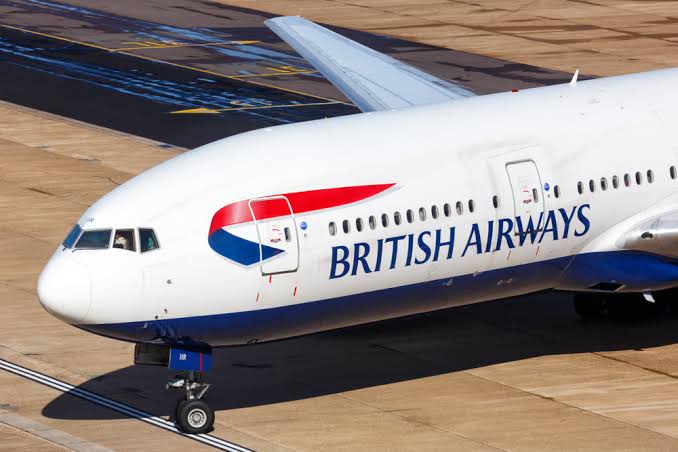
Taxing the Skies: Why British Airways Grounded Its Treaty Relief Hopes in India
ITAT Draws a Sharp Line Between Core Aircraft Operations and Independent Third-Party Commercial Aviation Services
Navigating the Contrasting Textual Nuances of India’s Bilateral Tax Pacts with the UK, Germany, and the Netherlands
By Legal Editor
New Delhi: July 18, 2026:
The complexities of international taxation frequently manifest in sectors that are inherently global, such as international aviation. The operating model of major commercial airlines depends on a highly complex web of core transport services and ancillary logistical tasks. These include ticketing, cargo handling, engineering support, and ground handling. When these activities cross borders, determining which jurisdiction possesses the right to tax the resulting revenue becomes an intricate legal battleground.
A prime example of this legal friction is the recent ruling by the Delhi Bench of the . The tribunal determined that cannot claim tax treaty protection on income derived from providing ground handling and engineering services to other airlines within India. This decision reinforces that tax treaty interpretation remains fundamentally text-driven and jurisdiction-specific. It underlines the principle that international consensus, like the OECD guidelines, cannot override the precise, bilaterally negotiated terms of a Double Taxation Avoidance Agreement (DTAA).
The decision highlights a critical operational reality. While an airline may view all its on-ground infrastructure as part of its unified global business, tax authorities see a clear distinction. They differentiate between activities essential to flying the airline's own aircraft and independent commercial ventures carried out for third parties. By classifying ground handling and engineering services provided to external entities as independent commercial operations, the ITAT has established a significant precedent. This ruling will alter how foreign aviation companies structure their technical and logistical operations in India.
Demystifying Article 8 of the India-UK DTAA
The central legal issue in this dispute is Article 8 of the India-UK Double Taxation Avoidance Agreement. Article 8 is a standard provision in many bilateral tax treaties designed to allocate taxing rights over the profits of shipping and air transport enterprises. The policy goal behind Article 8 is to avoid double taxation on international transport activities. Taxing an airline in every single country it touches would create an administrative nightmare. Therefore, Article 8 typically grants the country of residence the exclusive right to tax profits derived from the "operation of aircraft in international traffic."
During the assessment years 2009-10 and 2011-12, British Airways earned substantial revenue by providing technical ground handling and engineering services to third-party airlines operating at Indian airports. The airline argued that these receipts should be exempt from Indian income tax under Article 8. Their core argument was that these ground operations were ancillary to its primary business of operating aircraft internationally. They contended that maintaining engineering teams and ground handling infrastructure is a prerequisites for running its own flights. Therefore, utilizing temporary idle capacity to service other airlines should be viewed as an integrated extension of its international traffic operations.
However, the Indian tax authorities took a stricter approach. They argued that the phrase "operation of aircraft in international traffic" refers to the transport of passengers, mail, or cargo by the enterprise itself. When an airline steps into the shoes of a service provider to offer technical or logistics support to its competitors, it departs from the scope of international transport. Instead, it enters the domain of domestic commercial service providers. The ITAT agreed with this strict interpretation. It ruled that the text of Article 8 in the India-UK treaty is narrow. It does not contain language expanding the exemption to third-party support services.
The Doctrine of Consistency vs. Res Judicata in Tax Law
An interesting procedural element of this case is its long judicial history. The ITAT noted that this exact issue had been litigated in British Airways' own case starting in the assessment year 1996-97. For nearly three decades, the Indian tax administration and the tribunal have consistently held that the airline’s third-party ground handling income is taxable under Indian domestic law.
In Indian jurisprudence, the principle of res judicata—which prevents the same parties from re-litigating an issue that has already been decided—does not strictly apply to income tax proceedings. Each assessment year is legally viewed as a separate, self-contained unit of time. However, this flexibility is balanced by the judicial "Doctrine of Consistency." This doctrine states that if a specific legal view or factual interpretation has been accepted over multiple years, tax authorities should not change it without a compelling reason or a change in the law.
+--------------------------------------------------------------------------+
| THE DOCTRINE OF CONSISTENCY |
| If a legal interpretation has been consistently maintained over time, |
| it should not be modified without a material shift in facts or law. |
+--------------------------------------------------------------------------+
In this matter, the Doctrine of Consistency worked against the taxpayer. The ITAT observed that British Airways had consistently lost this argument in previous years. Because the airline failed to show that any higher judicial authority, such as the Delhi High Court or the Supreme Court of India, had overturned those past rulings, the tribunal saw no reason to change its position. This highlights the risk for multinational corporations when choosing to continuously litigate a settled point of law without presenting new facts or demonstrating a shift in legal circumstances.
Comparative Analysis: The Text-Driven Divergence of Bilateral Treaties
To support its position, British Airways relied on previous rulings from the Delhi High Court involving KLM Royal Dutch Airlines and Lufthansa German Airlines. In those cases, the court allowed treaty exemptions for ground handling and technical pooling activities. The airline argued that British Airways should receive the same tax treatment to ensure a level playing field among European carriers operating in India.
However, the ITAT rejected this comparison. It emphasized that tax treaties are bilateral contracts, and their terms depend on the specific negotiations between the two sovereign nations. The tribunal noted that the India-Netherlands and India-Germany DTAAs feature a broader version of Article 8. Those treaties explicitly include profits from "pooling arrangements" or activities directly connected to the maintenance of aircraft operated by other enterprises within their scope of exemptions.
As shown above, the India-UK DTAA lacks this broader language. It does not mention pooling mechanisms or third-party service exemptions. The ITAT's refusal to read these broader provisions into the India-UK treaty underscores that courts must interpret the law as written. They cannot insert terms that the contracting states chose to omit. Consequently, while German and Dutch carriers can protect their ground handling revenue using their broader treaty shields, UK carriers remain exposed to Indian tax on identical activities.
The Supremacy of Bilateral Text over OECD Commentaries
Another major pillar of British Airways' defence was the Organisation for Economic Co-operation and Development (OECD) Model Tax Convention commentary. The OECD commentary suggests that modern aviation involves collaborative frameworks, such as ground-handling alliances and technical pooling. It argues that these activities should be treated as ancillary to the operation of aircraft in international traffic, meaning they should qualify for treaty benefits.
The ITAT acknowledged the persuasive value of the OECD commentary but clarified its position within Indian jurisprudence. The tribunal ruled that while international commentaries are useful for understanding intent, they cannot override the plain text of a bilaterally negotiated treaty or binding domestic precedents.
The OECD Model Tax Convention serves as a template, but countries often modify it during bilateral negotiations. When two nations sign a DTAA with narrower language than the OECD model, they are intentionally limiting the scope of those exemptions. The ITAT emphasized that international consensus cannot substitute for the text agreed upon by the contracting states. Since the India-UK treaty lacks text covering third-party commercial services, the broader definitions in the OECD commentary could not be used to expand the treaty's scope.
Broad Commercial and Economic Implications
The ITAT's ruling extends beyond British Airways, carrying significant implications for the broader aviation and logistics industries. As India's aviation sector grows, many international airlines have expanded their ground presence, creating hub-and-spoke networks and setting up sophisticated engineering divisions. To offset the high capital costs of these facilities, airlines often lease their equipment or offer technical services to other carriers.
Following this ruling, foreign airlines operating under narrowly worded treaties must re-evaluate the tax exposure of these ancillary activities. Revenue generated from providing ground assistance, line maintenance, baggage handling, or refuelling services to other airlines will likely face Indian income tax. This could increase operational costs and require airlines to restructure their domestic business models.
[Foreign Airline Infrastructure in India]
│
┌─────────────┴─────────────┐
▼ ▼
[Core Own-Flight Ops] [Third-Party Services]
│ │
(Exempt under Art. 8) (Subject to Indian Tax)
Furthermore, this decision creates a competitive imbalance in the Indian aviation market. Carriers from jurisdictions with broader treaty protections, like Germany or the Netherlands, can provide these shared services more cost-effectively since their returns are shielded from domestic tax. In contrast, airlines from countries with narrower treaties, like the United Kingdom, must account for a significant tax drag on their service revenue. This disparity may prompt foreign airlines to separate their core transport operations from their commercial ground support businesses, potentially shifting the latter into separate Indian corporate entities.
Detailed FAQ Index for Quick Legal Reference
Searchable Reference Guide
FAQ 1: The Core Legal Dispute
FAQ 2: Understanding Article 8 Protection
FAQ 3: The Concept of Ancillary Aviation Revenue
FAQ 4: The Nature of Aviation "Pooling" Arrangements
FAQ 5: Distinguishing the Lufthansa and KLM Precedents
FAQ 6: Treaty Text Disparities (UK vs. Germany/Netherlands)
FAQ 7: The Authority of OECD Commentaries in India
FAQ 8: Application of the Doctrine of Consistency
FAQ 9: Available Judicial Recourse and Appellate Options
FAQ 10: Operational Adjustments for Foreign Carriers
FAQ 1: What was the primary legal issue in the British Airways ITAT case?
The primary issue was whether the income earned by British Airways from providing ground handling and engineering services to third-party airlines in India qualified for tax exemption under Article 8 of the India-UK Double Taxation Avoidance Agreement (DTAA). The tax authorities argued it was a taxable commercial activity, while the airline contended it was an exempt activity ancillary to international air traffic.
FAQ 2: What specific tax protection does Article 8 of the India-UK DTAA provide?
Article 8 of the India-UK DTAA provides that profits derived by an enterprise of a contracting state (such as the UK) from the "operation of aircraft in international traffic" shall be taxable only in that state. This prevents the source country (such as India) from taxing the core transportation revenues generated by foreign airlines.
FAQ 3: Why did British Airways argue that its ground handling revenues should be exempt?
British Airways argued that its ground handling and technical engineering operations were integrated with its core business of running an international airline. The airline asserted that these activities constituted "pooling" or ancillary operations necessary for its own flights and utilizing excess capacity to service other airlines should not change their tax-exempt status under the treaty.
FAQ 4: What are "pooling arrangements" in international aviation taxation?
Pooling arrangements occur when multiple airlines share resources, such as ground handling equipment, maintenance facilities, and flight crews, at international airports to lower operational costs. Some bilateral tax treaties explicitly include profits from these cooperative arrangements within their international traffic tax exemptions.
FAQ 5: Why did the ITAT reject the legal precedents set by the Lufthansa and KLM cases?
The ITAT rejected these precedents because they were decided under different treaties—specifically, the India-Germany and India-Netherlands DTAAs. Those agreements contain explicit, broader language that protects pooling arrangements and third-party support services, whereas the India-UK treaty features a narrower framework that lacks those terms.
FAQ 6: How exactly does the text of the India-UK DTAA differ from the German and Dutch treaties?
The India-Germany and India-Netherlands DTAAs explicitly extend Article 8 tax exemptions to profits from participation in pooling arrangements and joint businesses. In contrast, the India-UK DTAA limits its exemption strictly to the direct operation of aircraft in international traffic, making no mention of shared commercial services or pooling setups.
FAQ 7: Can OECD Model Tax Convention commentaries override a signed bilateral treaty in India?
No. The ITAT confirmed that while OECD commentaries hold significant persuasive value for understanding international tax concepts, they cannot override the plain text of a bilaterally negotiated DTAA or binding domestic judicial precedents. The specific wording agreed to by the sovereign nations takes legal precedence.
FAQ 8: How did the "Doctrine of Consistency" influence the outcome of this dispute?
The Indian tax authorities and the ITAT had consistently ruled against British Airways on this identical issue for every assessment year dating back to 1996-97. Under the Doctrine of Consistency, since the underlying facts and treaty text remained unchanged, and no higher court had overturned those earlier decisions, the tribunal maintained its long-standing position against the taxpayer.
FAQ 9: Does British Airways have further legal recourse after this ITAT ruling?
Yes. British Airways can appeal the ITAT's decision to the Delhi High Court, provided they can demonstrate that the case involves a "substantial question of law." If the High Court admits the appeal, it will re-examine the tribunal's legal interpretations regarding the scope of Article 8.
FAQ 10: How should other foreign airlines alter their operations in light of this judgment?
Foreign airlines operating under narrowly worded tax treaties should review their technical and ground support arrangements in India. To manage potential tax liabilities, they may need to factor Indian corporate tax into their third-party service contracts or consider spinning off their commercial ground handling and engineering divisions into distinct domestic corporate entities.
Bilateral Agreement — Article 8 Scope & Wording — Tax Status of Third-Party Services
India-UK DTAA — Narrow; restricts relief strictly to profits from the direct operation of aircraft in international traffic. — Taxable (Classified as independent commercial revenue)
India-Germany DTAA — Broad; explicitly includes pooling arrangements and ancillary support services within international traffic exemptions. — Exempt (Protected under treaty provisions)
India-Netherlands DTAA — Broad; provides specific textual shields for cooperative technical operations and ground assistance. — Exempt (Protected under treaty provisions)