
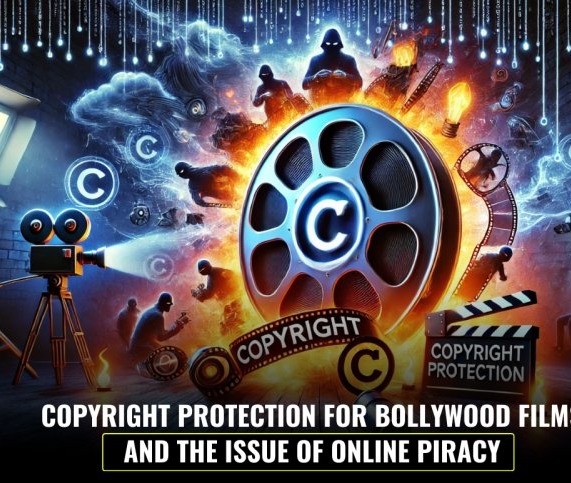
Bollywood Meets Netflix: Copyright Battles on India’s OTT Platforms
Streaming Rights, Piracy, and Platform Liability in the Digital Age
Global Lessons for India’s Online Entertainment Economy
By Vishwas Kumar
New Delhi: June 09, 2026:
India’s OTT (Over‑the‑Top) platforms—Netflix, Amazon Prime Video, Disney+ Hotstar, Zee5, SonyLIV, and a growing number of regional services—have transformed the way audiences consume entertainment. Unlike traditional cinema halls or cable television, OTT platforms deliver content directly to viewers via the internet, offering convenience, personalization, and a vast library of films, series, and documentaries. This digital revolution has expanded India’s entertainment market, attracted millions of subscribers and generating billions in revenue. It has also created new opportunities for independent filmmakers and regional storytellers, who now have a global stage to showcase their work.
However, this rapid growth has intensified legal and regulatory challenges, particularly in the realm of copyright. The streaming boom has triggered disputes over licensing agreements, revenue sharing, and ownership of digital rights. Producers and distributors often clash with platforms over how royalties are calculated and whether traditional copyright models adequately cover digital streaming. Piracy remains a persistent threat: films and shows released on OTT platforms are frequently leaked on torrent sites within hours, undermining revenues and discouraging investment in original content. Courts have responded with innovative measures such as John Doe orders, which allow producers to block unknown infringers pre‑emptively, but enforcement remains uneven.
The legal framework governing OTT platforms is anchored in the Copyright Act, 1957, which protects cinematographic works, sound recordings, and literary scripts. Amendments in 2012 strengthened authors’ rights and aligned India with international treaties like the Berne Convention and TRIPS Agreement. Yet, the law struggles to keep pace with digital realities. Questions of intermediary liability—whether platforms should be held accountable for user‑uploaded infringing content—remain unresolved. Judicial precedents such as Tips Industries v. Wynk Music (2019) and Super Cassettes v. MySpace (2011) highlight the tension between platform liability and user freedom, foreshadowing ongoing debates around OTT regulation.
Comparatively, the United States relies on the DMCA, which provides safe‑harbour protections for platforms but requires them to act on takedown notices. The European Union has adopted a more creator‑centric approach, imposing proactive monitoring obligations through its 2019 Directive on Copyright in the Digital Single Market. India sits somewhere in between, with narrower “fair dealing” exceptions and evolving judicial innovation. The challenge is to balance creators’ rights with consumer access, ensuring that the digital economy thrives without stifling creativity or affordability.
Sociologically, OTT platforms have democratized access to entertainment, bringing diverse stories into households across urban and rural India. Economically, they represent a multi‑billion‑dollar industry that attracts global investment. Ethically, they raise questions about fair compensation for artists, equitable access for consumers, and the ownership of AI‑generated content. As India’s entertainment industry embraces digital transformation, copyright law and enforcement will determine whether this revolution strengthens creativity or succumbs to piracy and exploitation.
Key Laws Governing OTT Copyright
- Copyright Act, 1957 (amended 2012): Protects films, sound recordings, and literary works streamed online.
- Information Technology Act, 2000: Governs intermediary liability for platforms hosting user‑generated content.
- Cinematograph Act, 1952: Regulates film exhibition, now extended to digital releases.
- Constitutional Provisions:
- Article 19(1)(a): Freedom of speech and expression.
- Article 21: Right to privacy, relevant for user data and celebrity rights.
- Article 300A: Right to property, indirectly supporting IP rights.
Judicial Precedents
Expanded Judicial Precedents in OTT Copyright Law (Approx. 500 Words)
Indian courts have played a pivotal role in shaping the legal framework for copyright enforcement in the entertainment industry, particularly as OTT platforms have become dominant. Several landmark cases illustrate how judicial innovation has responded to piracy, licensing disputes, and intermediary liability in the digital age.
Tips Industries v. Wynk Music (2019)
This case clarified licensing obligations for streaming platforms. Wynk Music argued that statutory licenses under Section 31D of the Copyright Act allowed them to stream music without negotiating individual contracts. The Bombay High Court disagreed, ruling that statutory licensing provisions applied to radio and television, not to on‑demand streaming services. The judgment reinforced that OTT platforms must secure proper licenses, ensuring fair compensation for rights holders.
Super Cassettes v. MySpace (2011)
This case tested intermediary liability for user‑uploaded infringing content. Super Cassettes (T‑Series) alleged that MySpace facilitated copyright infringement by hosting unauthorized music and videos. The Delhi High Court initially held MySpace liable, emphasizing that platforms cannot turn a blind eye to infringement. Though later appeals moderated the ruling, the case highlighted the tension between platform liability and user freedom, foreshadowing similar disputes involving YouTube and OTT platforms.
YRF v. Sri Sai Ganesh Productions (2011)
In this case, Yash Raj Films successfully protected its film Band Baaja Baarat against an unauthorized Telugu remake. The Delhi High Court ruled that remakes without authorization constitute infringement, reinforcing the principle that cinematic works are protected as original expressions. This precedent is highly relevant for OTT adaptations, where remakes and spin‑offs are common.
John Doe Orders
Indian courts pioneered the use of John Doe orders, granting injunctions against unknown infringers to pre‑empt piracy. These orders have become a standard tool in protecting films during release, allowing producers to block websites suspected of distributing pirated copies. OTT platforms frequently rely on such orders to safeguard digital premieres, especially during high‑profile releases.
Phonographic Performance Ltd. v. Hotel Gold Regency (2006)
The Delhi High Court ruled that hotels playing recorded music without licenses infringed copyright. This case reinforced the importance of licensing and royalties, principles that extend to OTT platforms streaming music and performances.
Indian Performing Right Society v. Aditya Pandey (2011)
This case clarified the scope of performers’ rights and royalties in music. The Delhi High Court held that broadcasters must obtain licenses from copyright societies, strengthening collective management of rights. For OTT platforms, this precedent underscores the need to respect collective licensing arrangements.
Shree Venkatesh Films v. Vipul Amrutlal Shah (2010)
The Calcutta High Court restrained the release of a Bengali film that closely resembled Namastey London. The ruling reinforced the protection of storylines and character development as original expressions, discouraging unauthorized adaptations—a principle directly applicable to OTT remakes.
R.G. Anand v. Deluxe Films (1978)
Though predating OTT, this Supreme Court case remains foundational. It established that while ideas are not protected, the expression of those ideas is. This principle continues to guide disputes over adaptations and remakes in cinema and streaming.
Conclusion
Together, these precedents illustrate the judiciary’s evolving role in protecting intellectual property in the entertainment industry. From licensing disputes and intermediary liability to piracy and remakes, Indian courts have expanded the scope of protection while balancing public interest. For OTT platforms, these rulings provide a roadmap: secure proper licenses, respect collective rights, and proactively combat piracy. Judicial innovation, particularly through John Doe orders, has ensured that India’s entertainment industry remains resilient in the digital age.
Comparative Perspectives
- United States: DMCA provides safe‑harbour protections but requires platforms to act on takedown notices.
- European Union: The 2019 Directive imposes proactive monitoring obligations on platforms.
- India: Narrower “fair dealing” exceptions, evolving intermediary liability, and growing reliance on John Doe orders.
Sociological, Economic & Ethical Impacts
- Sociological: OTT platforms democratize access to films and series, but piracy undermines creators’ livelihoods.
- Economic: Billions lost annually to illegal streaming; stronger enforcement boosts investor confidence in India’s digital economy.
- Ethical: Balancing creators’ rights with affordable access for consumers remains contentious, especially in education and regional cinema.
Case Studies
- Disney+ Hotstar vs. Piracy Sites: Courts blocked hundreds of domains during IPL streaming.
- Netflix Licensing Disputes: Indian producers have challenged unfair revenue sharing models.
- Regional OTT Platforms: Smaller players face rampant piracy, threatening sustainability.
Extended FAQ
- What is an OTT platform?
An OTT platform delivers films, shows, and music directly over the internet, bypassing traditional cable or cinema distribution. - How does copyright apply to OTT content?
Copyright protects films, music, and scripts streamed online, ensuring creators control reproduction and distribution. - What is intermediary liability?
It refers to the responsibility of platforms for infringing content uploaded or streamed by users. - What is a John Doe order?
A broad injunction against unknown infringers, often used to block piracy websites during OTT releases. - How does piracy affect OTT platforms?
Piracy reduces subscription revenues and discourages investment in original content. - What is the DMCA?
The US Digital Millennium Copyright Act provides safe‑harbour protections for platforms and a takedown framework. - How does EU law differ?
EU law requires proactive monitoring and licensing, placing heavier obligations on platforms. - What is “fair dealing” in India?
It allows limited use of copyrighted works for research, criticism, or reporting. - How is “fair use” different in the US?
Fair use is broader, covering transformative uses like parody and education. - Can OTT platforms be sued for piracy?
Yes, if they knowingly host or distribute infringing content without licenses. - What is compulsory licensing?
It allows use of copyrighted works under certain conditions without direct permission. - Can AI‑generated shows be copyrighted?
Currently, Indian law requires human authorship, leaving AI works in a grey area. - What is DRM?
Digital Rights Management restricts unauthorized copying or sharing of digital works. - What is a takedown notice?
A request to remove infringing content from a platform, often under DMCA or Indian law. - How do Indian courts enforce OTT copyright?
Through injunctions, damages, and blocking orders against piracy websites. - What is parallel importation?
Importing genuine copyrighted goods without authorization, raising market control issues. - Can subtitles be copyrighted?
Yes, translations and subtitles are considered derivative works. - What is originality in law?
Originality requires independent effort and creativity, not mere copying. - How do copyright societies function?
They manage licensing and royalties on behalf of authors and performers. - What is the role of police in enforcement?
Police can investigate and prosecute copyright infringement under criminal law. - Can unpublished OTT content be protected?
Yes, copyright applies from the moment of creation. - What is the Berne Convention?
An international treaty ensuring automatic copyright protection across member countries. - What is TRIPS?
The WTO’s agreement setting minimum standards for IP protection globally. - What is the Rome Convention?
It protects performers, producers of phonograms, and broadcasters internationally. - How does copyright differ from trademark?
Copyright protects creative works; trademarks protect brand identifiers. - How does copyright differ from patent?
Copyright covers expression; patents protect inventions. - What is “work for hire”?
Works created under employment belong to the employer, not the employee. - Can government works be copyrighted?
Yes, though many are made freely available for public use. - What is the penalty for infringement?
Penalties include fines, imprisonment, and damages. - What is “orphan works”?
Works whose rights holders cannot be identified, complicating licensing. - How does copyright affect education?
It balances access to learning materials with authors’ rights. - What is Creative Commons licensing?
A flexible system allowing creators to permit certain uses freely. - Can OTT trailers be copyrighted?
Yes, trailers are protected as cinematographic works. - Can photographs on OTT be copyrighted?
Yes, photographs are artistic works protected by law. - What is the role of arbitration in disputes?
Arbitration offers faster, private resolution of copyright conflicts. - How does copyright affect startups?
Startups must respect copyright in software and content, but protection boosts innovation. - Can music streaming be copyrighted?
Yes, streaming requires licenses from copyright holders. - What is licensing in OTT?
It is the contractual right to stream films, shows, or music legally. - What is piracy economics?
The study of how piracy impacts revenues, jobs, and investment in creative industries. - How does copyright affect regional OTT platforms?
Piracy disproportionately harms smaller platforms, threatening their survival.
Op‑Ed Closing Vision
India’s OTT revolution is both exhilarating and precarious. Platforms have democratized access to entertainment, bringing cinema and series into every household. Yet, piracy, licensing disputes, and unclear liability threaten to undermine this progress. The Copyright Act of 1957, though amended, struggles to address digital realities. Courts have innovated with John Doe orders, but legislative clarity is urgently needed.
Comparisons with the US and EU show India’s unique position. The US model fosters innovation through broad fair use and safe harbours, while the EU prioritizes creators’ remuneration. India must chart a middle path—protecting creators without stifling access. The sociological dimension is critical: affordable access to culture must coexist with fair compensation for artists. Economically, stronger enforcement will attract investment in OTT platforms and original content. Ethically, AI‑generated works raise profound questions about authorship and creativity.
The way forward lies in clarity, collaboration, and creativity. Clarity in law—defining intermediary liability, codifying licensing rules, and addressing AI authorship. Collaboration with global partners—harmonizing standards with WIPO and TRIPS. Creativity in enforcement—using blockchain to track ownership, AI to detect piracy, and ADR to resolve disputes. India’s entertainment industry, with its scale and diversity, has the opportunity to set global benchmarks.
OTT platforms are not just distributors; they are cultural institutions shaping narratives and identities. Protecting intellectual property is therefore not only a legal necessity but also a cultural imperative. The challenge is immense, but so is the promise: to make India not just a hub of streaming content, but also a beacon of balanced copyright governance. Intellectual property is the scaffolding of creativity; without it, the edifice of India’s entertainment industry risks collapse. With it, India can build a future where creators thrive, consumers are respected, and culture flourishes in the digital age.