

COURTKUTCHEHRY EXCLUSIVE: EXTRACTS FROM BEST SELLING BOOK: WILL WRITING SIMPLIFIED
Beneficiaries in Indian Will Law: Rights, Duties, and Common Challenges Explained
From Family Members to Charities, Beneficiaries Shape the Distribution of Estates
Executor Administers, But Beneficiaries Hold the Right to Receive Assets
By Vishwas Kumar
New Delhi: March 31, 2026:
When a person passes away, their Will becomes the guiding document for how their estate is distributed. At the heart of this process are the beneficiaries—the individuals or entities who receive property, money, or other benefits as specified in the Will. Yet, many families misunderstand the role of beneficiaries, often confusing them with executors or assuming that nomination alone is enough to secure inheritance.
The extract from Will Writing Simplified by Dr. Ravinder Kumar Anand [📘 Buy Will Writing Simplified online on Amazon | Flipkart ] provides a clear explanation of beneficiaries in Indian law. This article expands on that extract, explaining in plain language who beneficiaries are, how they are recognized under law, and what challenges often arise in courts.
Detailed Explanation of the Extract
The extract states:
- “Beneficiary is not expressly defined in the Indian Succession Act, 1925 but in general, a ‘Beneficiary’ is the person or entity who receives assets or other benefits from the deceased person's estate as specified in the Will.”
→ Meaning: The law does not formally define the term, but beneficiaries are those named in the Will to receive property or benefits. - “Beneficiaries may include family members, relatives, friends, trusts, charities, religious bodies, or even unborn children subject to law.”
→ Meaning: Beneficiaries are not limited to family. They can include organizations or even unborn children, provided the law allows. - “A Will may contain specific bequests, residuary bequests, or conditional bequests.”
→ Meaning: Beneficiaries may receive particular items, the remainder of the estate, or benefits subject to conditions. - “Beneficiaries are entitled to receive what is left to them, though administration rests entirely with the executor.”
→ Meaning: Beneficiaries have the right to inherit, but the executor manages the process.
Legal Context
Indian Succession Act, 1925
- Section 59: Only persons of sound mind can make Wills.
- Section 63: Requires signature of the Testator and attestation by two witnesses.
- Beneficiaries are recognized through bequests in the Will, though the Act does not define them expressly.
Hindu Succession Act, 1956
- Applies when there is no Will. Property devolves by intestate succession to heirs.
- A valid Will overrides these default rules, allowing beneficiaries to be chosen freely.
Judicial Principles
Courts emphasize:
- Beneficiaries must be clearly named.
- Conditional bequests must be legally enforceable.
- Executors administer estates; beneficiaries cannot bypass them.
Examples and Case Studies
- Hypothetical Example:
A father leaves his house to his daughter, his savings to his son, and the remainder to a charity. The daughter, son, and charity are all beneficiaries. - Hypothetical Example:
A Will states that property goes to “my children,” but does not specify names. Courts must interpret who qualifies. Lesson: clarity is essential. - Hypothetical Example:
A Will leaves money to an unborn grandchild. The law allows such bequests if the child is born within a legally recognized timeframe.
Historical and Comparative Context
- Colonial Legacy: The Indian Succession Act, 1925, consolidated testamentary law but left terms like “beneficiary” undefined.
- UK Law: Beneficiaries are recognized explicitly in probate practice.
- US Law: Beneficiaries include individuals and organizations, with strong emphasis on charitable bequests.
- Evolution in India: Courts have expanded recognition to trusts, charities, and even unborn children, provided conditions are lawful.
Implications for Society, Families, and Courts
- Families: Beneficiaries must be clearly identified to avoid disputes.
- Courts: Ambiguous beneficiary clauses increase litigation.
- Society: Recognizing charities and trusts as beneficiaries strengthens philanthropy and social welfare.
FAQ Section
1. Who is a beneficiary in a Will?
The person or entity named to receive property or benefits.
2. Can charities or trusts be beneficiaries?
Yes, if specified in the Will.
3. Can unborn children be beneficiaries?
Yes, subject to legal conditions.
4. What types of bequests exist?
Specific (particular items), residuary (remainder of estate), and conditional (subject to conditions).
5. Do beneficiaries administer the estate?
No. The executor manages administration; beneficiaries only receive.
6. What if beneficiaries are not clearly named?
Courts interpret, but ambiguity often leads to disputes.
7. Can beneficiaries challenge the executor?
Yes, if the executor mismanages the estate.
Conclusion
The extract from Will Writing Simplified makes one principle clear: beneficiaries are the ultimate recipients of a Will, but their rights depend on clarity and compliance with law. Whether family members, charities, or unborn children, beneficiaries must be named unambiguously. Executors administer estates, but beneficiaries hold the right to inherit.
For families, clear beneficiary clauses prevent disputes. For courts, they reduce litigation. For society, they enable philanthropy and protect heirs. The lesson is simple: a Will must identify beneficiaries clearly and lawfully to ensure the Testator’s wishes are respected.
Book Reference
Will Writing Simplified
Sentences Used from Extract
- “Beneficiary is not expressly defined in the Indian Succession Act, 1925 but in general, a ‘Beneficiary’ is the person or entity who receives assets or other benefits from the deceased person's estate as specified in the Will.”
- “Beneficiaries may include family members, relatives, friends, trusts, charities, religious bodies, or even unborn children subject to law.”
- “A Will may contain specific bequests, residuary bequests, or conditional bequests.”
- “Beneficiaries are entitled to receive what is left to them, though administration rests entirely with the executor.”
You Can Also Purchase the Book from here on: Buy online: Amazon | Flipkart
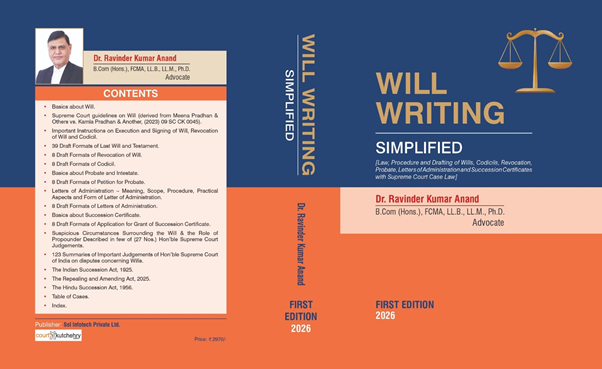
LEGAL RESEARCH RESOURCES: Check out 123 Key Judgements, as highlighted in the book, WILL WRITING SIMPLIFIED, for the quick research and reference purposes. Click the link here: https://www.courtkutchehry.com/pages/blog/123-supreme-court-judgments-on-wills/
Suggested Keywords
- Beneficiary in Indian Will law
- Indian Succession Act beneficiary rules
- Hindu Succession Act intestate succession
- Specific bequest beneficiary India
- Residuary bequest beneficiary India
- Conditional bequest beneficiary India
- Executor vs beneficiary India
- Probate disputes beneficiaries India