
Banking and Capital Markets in IFSC: Building India’s Offshore Gateway
Global banks, capital flows, and regulatory clarity converge in GIFT City
How IFSC is positioning itself as a hub for international finance
By Vishwas Kumar
New Delhi: June 17, 2026:
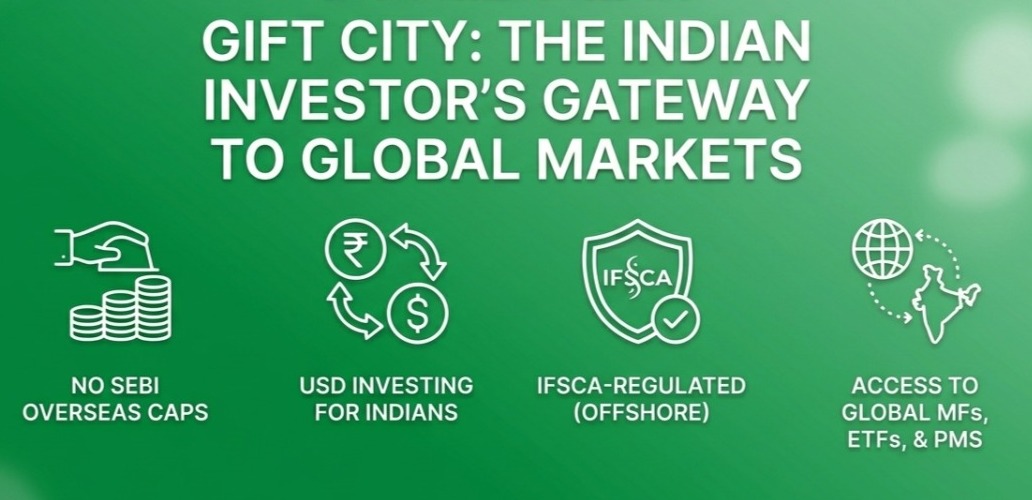
Banking and capital markets form the backbone of any international financial center, and India’s International Financial Services Centre (IFSC) at GIFT City is no exception. These sectors are evolving rapidly to attract global institutions, investors, and corporates, positioning India as a credible player in the global financial ecosystem.
The framework allows banks to operate in foreign currencies, provide offshore loans, and facilitate derivatives trading—all under the oversight of the International Financial Services Centres Authority (IFSCA). This regulatory clarity ensures that IFSC operates within India’s legal framework while offering global competitiveness.
Global banks have already opened branches in IFSC, offering services such as foreign currency lending, clearing, and settlement. This enables Indian corporates to raise capital offshore without navigating complex domestic regulations. By accessing foreign currency loans directly through IFSC, companies reduce costs and gain flexibility in structuring international deals.
On the capital markets side, IFSC exchanges provide trading in equities, bonds, derivatives, and commodities. These trades are exempt from securities transaction tax (STT), commodity transaction tax (CTT), and stamp duty, making IFSC highly competitive compared to other hubs like Singapore, Dubai, and Hong Kong. Such exemptions lower transaction costs and encourage liquidity, drawing both domestic and foreign investors.
The presence of mutual funds, venture capital funds, and hedge funds in IFSC further strengthens its capital markets ecosystem. These funds benefit from tax incentives and regulatory support, enabling them to attract global investors. Additionally, IFSC is piloting innovative instruments such as tokenized bonds and ESG-compliant securities, aligning with global trends in sustainable finance.
Comparatively, Singapore offers deep capital markets and strong fintech integration, while Dubai DIFC provides tax-free banking supported by independent courts. Hong Kong has historically been strong in IPOs and liquidity but faces geopolitical uncertainty. India’s IFSC blends global competitiveness with domestic accountability, offering a hybrid model that balances innovation with oversight.
The sociological impact is evident in the influx of global talent—bankers, traders, and compliance professionals—creating a cosmopolitan workforce in GIFT City. Economically, offshore capital flows strengthen India’s financial system, reduce reliance on foreign hubs, and enhance the country’s global standing. Ethically, however, oversight is crucial to prevent misuse of offshore banking for tax avoidance or opaque transactions.
Looking ahead, IFSC’s banking and capital markets are expected to expand into green bonds, ESG funds, and AI-driven trading platforms, aligning with global priorities. By integrating sustainability and technology, GIFT City can attract responsible capital and establish itself as a hub for future-ready finance.
Ultimately, banking and capital markets in IFSC are more than infrastructure—they represent India’s ambition to compete globally, not as a peripheral player but as a central hub of capital, innovation, and integrity.
Comparative Perspectives: Banking & Capital Markets in Global IFSCs
Singapore Singapore has long been recognized as Asia’s premier financial hub, with deep capital markets and a strong regulatory framework. Its banking sector is highly integrated with global finance, offering sophisticated derivatives, asset management, and fintech-driven trading platforms. The Monetary Authority of Singapore (MAS) ensures transparency and investor protection, which has built trust among global institutions. Strengths include mature infrastructure and credibility, though high operating costs and intense competition can be limiting factors. Opportunities lie in expanding ESG-compliant securities and green finance, while threats include rising competition from emerging hubs like India’s IFSC.
Dubai DIFC Dubai’s International Financial Centre (DIFC) offers tax-free banking and robust capital markets infrastructure, supported by independent courts applying English common law. This legal predictability makes DIFC attractive for global banks and investors. Strengths include strong government backing, strategic location, and long-term tax holidays. Weaknesses involve reliance on expatriate talent and limited domestic market depth. Opportunities lie in blockchain-based trade finance and fintech integration, while regional geopolitical risks remain a threat.
Hong Kong Hong Kong has historically been a powerhouse in capital markets, particularly in IPOs and liquidity. Its proximity to mainland China gave it a unique advantage as a gateway for global capital. However, political uncertainty and regulatory shifts have eroded investor confidence in recent years. Strengths remain in its established infrastructure and deep liquidity pools. Weaknesses stem from instability and shifting policies. Opportunities exist in integration with China’s Greater Bay Area, but threats include firms relocating to Singapore or Dubai for stability.
India’s IFSC (GIFT City) India’s IFSC offers a hybrid model—offshore banking and capital markets within the framework of Indian law. Strengths include competitive tax exemptions, exemptions from STT, CTT, and stamp duty, and a large domestic talent pool. Weaknesses involve evolving regulatory clarity and infrastructure still in development compared to mature hubs. Opportunities lie in offshore bond issuances, derivatives trading, and ESG-compliant securities. Threats include global competition and the risk of being perceived as overly cautious or bureaucratic.
India’s IFSC thus stands at a crossroads. By blending global competitiveness with domestic accountability, it aims to position itself as a credible alternative to Singapore, Dubai, and Hong Kong. The challenge will be to scale infrastructure and regulatory agility while maintaining transparency, ensuring that GIFT City becomes not just a tax-efficient hub but a trusted center for global capital flows.
Sociological, Economic, and Ethical Impacts
Sociological: IFSC is attracting global talent in banking and trading, creating a cosmopolitan workforce.
Economic: Offshore capital flows strengthen India’s financial system and reduce reliance on foreign hubs.
Ethical: Oversight is crucial to prevent misuse of offshore banking for tax avoidance or opaque transactions.
Case Studies
Global Bank Entry: Leading international banks have set up branches to offer foreign currency loans and clearing services.
Derivatives Trading: IFSC exchanges allow trading in derivatives exempt from transaction taxes, boosting liquidity.
Bond Issuances: Indian corporates are raising capital through offshore bonds listed in IFSC.
Commodity Markets: IFSC is emerging as a hub for commodity trading, leveraging exemptions from CTT and stamp duty.
Extended FAQ Index: Banking & Capital Markets in IFSC
1. Can foreign banks operate in IFSC?
Yes, foreign banks can set up branches in IFSC to provide offshore loans, clearing, and settlement services.
2. What capital market instruments are traded in IFSC?
Equities, bonds, derivatives, commodities, and foreign currency instruments are traded on IFSC exchanges.
3. How does IFSC banking compare with Singapore?
Singapore has mature capital markets; IFSC is emerging with tax exemptions and offshore banking flexibility.
4. Are derivatives taxed in IFSC?
No, derivatives traded on IFSC exchanges are exempt from securities transaction tax (STT).
5. How do Indian corporates raise capital in IFSC?
They issue offshore bonds, list securities, and access foreign currency loans through IFSC banks.
6. What investor protections exist in IFSC capital markets?
IFSCA mandates disclosures, compliance audits, and strict oversight to safeguard investors.
7. How does IFSC balance offshore banking with domestic oversight?
It allows global transactions under Indian law, ensuring competitiveness with accountability.
8. Are commodity trades taxed in IFSC?
No, commodity trades are exempt from commodity transaction tax (CTT) and stamp duty.
9. Can IFSC banks lend in foreign currencies?
Yes, IFSC banks provide loans in USD, EUR, and other currencies to Indian and global clients.
10. Are mutual funds allowed in IFSC?
Yes, mutual funds can be registered in IFSC, enjoying tax exemptions and global investor access.
11. How does IFSC compare with Dubai DIFC in banking?
Dubai offers long-term tax holidays; IFSC provides shorter but competitive exemptions within Indian law.
12. Are clearing services available in IFSC?
Yes, global banks in IFSC provide clearing and settlement for cross-border trades.
13. Can IFSC banks issue offshore loans?
Yes, they structure loans in foreign currencies, exempt from withholding taxes.
14. Are IPOs allowed in IFSC?
Yes, companies can list offshore IPOs on IFSC exchanges to attract global investors.
15. How does IFSC regulate capital markets?
IFSCA overseas exchanges, ensuring compliance with global standards and investor protection.
16. Are green bonds issued in IFSC?
Yes, green bonds are piloted in IFSC, exempt from certain taxes to promote ESG finance.
17. Can IFSC banks handle cross-border payments?
Yes, fintechs and banks in IFSC provide faster, cheaper remittance solutions.
18. Are ETFs traded in IFSC?
Yes, exchange-traded funds can be listed and traded on IFSC exchanges.
19. How does IFSC compare with Hong Kong in capital markets?
Hong Kong has deep liquidity but faces uncertainty; IFSC offers clarity with incentives.
20. Are securitization deals allowed in IFSC?
Yes, securitization transactions are exempt from stamp duty, boosting liquidity.
21. Can IFSC banks serve global clients?
Yes, services to offshore clients are GST-exempt, making IFSC attractive for global banking.
22. Are family offices allowed in IFSC?
Yes, family offices can manage wealth and investments through IFSC banks and funds.
23. How does IFSC regulate derivatives trading?
IFSCA licenses exchanges and exempts trades from STT, ensuring compliance with global norms.
24. Are reinsurance contracts supported in IFSC capital markets?
Yes, insurers use IFSC for reinsurance treaties, supported by legal and banking services.
25. Can IFSC banks issue letters of credit?
Yes, they provide trade finance instruments like letters of credit for global commerce.
26. Are offshore debt instruments issued in IFSC?
Yes, corporates issue offshore bonds and debt instruments through IFSC exchanges.
27. How does IFSC regulate investor disclosures?
IFSCA mandates strict disclosure norms for listed securities to protect investors.
28. Are fintech-driven trading platforms allowed in IFSC?
Yes, fintechs pilot AI and blockchain trading systems under sandbox rules.
29. Can IFSC banks manage foreign exchange?
Yes, they provide forex services, hedging, and derivatives trading for global clients.
30. Are venture capital funds supported in IFSC capital markets?
Yes, VC funds can register in IFSC, benefiting from tax exemptions and global access.
31. How does IFSC regulate offshore lending?
IFSCA oversees foreign currency loans, exempting them from withholding taxes.
32. Are arbitration services linked to capital markets in IFSC?
Yes, disputes in capital markets can be resolved through IFSC arbitration centers.
33. Can IFSC banks issue digital bonds?
Yes, tokenized digital bonds are piloted under sandbox rules.
34. Are custodians required for IFSC securities?
Yes, licensed custodians manage securities to ensure investor safety.
35. How does IFSC regulate commodity exchanges?
IFSCA licenses commodity exchanges, exempting trades from CTT and stamp duty.
36. Are hedge funds allowed in IFSC?
Yes, hedge funds can operate in IFSC with tax incentives and global investor access.
37. Can IFSC banks provide offshore derivatives clearing?
Yes, they offer clearing services for derivatives traded in foreign currencies.
38. Are ESG-compliant funds supported in IFSC capital markets?
Yes, ESG funds enjoy tax incentives and regulatory support in IFSC.
39. How does IFSC regulate offshore IPOs?
IFSCA sets disclosure and compliance rules for IPOs listed on IFSC exchanges.
40. What is the long-term vision for banking and capital markets in IFSC?
To become a global hub for offshore banking, derivatives, ESG finance, and capital flows, balancing innovation with accountability.
Op-Ed Style Closing Vision
Banking and capital markets in IFSC are not just about transactions—they are about positioning India as a credible global hub. By allowing offshore banking and exempting capital market trades from taxes, IFSC is creating a competitive environment that rivals Singapore and Dubai.
The challenge lies in oversight. Offshore banking can be misused if not carefully regulated. India must ensure transparency and accountability, while still offering flexibility to global investors. The ethical dimension is critical: IFSC must avoid being perceived as a tax haven, instead positioning itself as a hub for legitimate capital flows.
Looking ahead, IFSC should expand into green bonds, ESG-compliant securities, and AI-driven trading platforms. By aligning banking and capital markets with sustainable finance, GIFT City can attract responsible capital and strengthen India’s global financial identity.
Ultimately, IFSC’s banking and capital markets are more than infrastructure—they are India’s declaration that it is ready to compete globally, not as a peripheral player but as a central hub of capital, innovation, and integrity.