
COURTKUTCHEHRY SPECIAL ON INDIA’s LANDMARKS JUDGEMENTS ON WILL, PROBATE, CODICIL
Supreme Court Clarifies Proof Requirements for Wills
Proper execution and attestation under Succession Act essential for validity.
Ruling strengthens inheritance law and reduces disputes over property succession.
COURTKUTCHEHRY LEGAL NOTE:
Summary Note of FAQs
The FAQs highlight that proving a Will requires compliance with Section 63 of the Indian Succession Act, including execution by the testator and attestation by witnesses. The Supreme Court in Ashutosh Samanta vs. Ranjan Bala Dasi clarified evidentiary standards, ensuring that genuine Wills are upheld and reducing ambiguity in property disputes. (For deeper understanding of the judgement, read here: https://www.courtkutchehry.com/pages/blog/ashutosh-samanta-vs-ranjan-bala-dasi-will-proof-case/#google_vignette
ALSO CHECK OUT FOLLOWING LINKS FOR THE KEY LEGAL ISSUES CLARIFIED IN THE SUPREME COURT OF INDIA’s JUDGEMENT IN CASE TITLE: Ashutosh Samanta vs. Ranjan Bala Dasi – Will Proof Case:
- Proof of Will Supreme Court Case
- Ashutosh Samanta vs. Ranjan Bala Dasi Case Summary
- Valid Will under Indian Succession Act
- Supreme Court Judgement on Will Proof
- Inheritance Law and Will Disputes
- Attestation of Wills in India
- Indian Succession Act Section 63 Explained
- Property Disputes and Will Proof
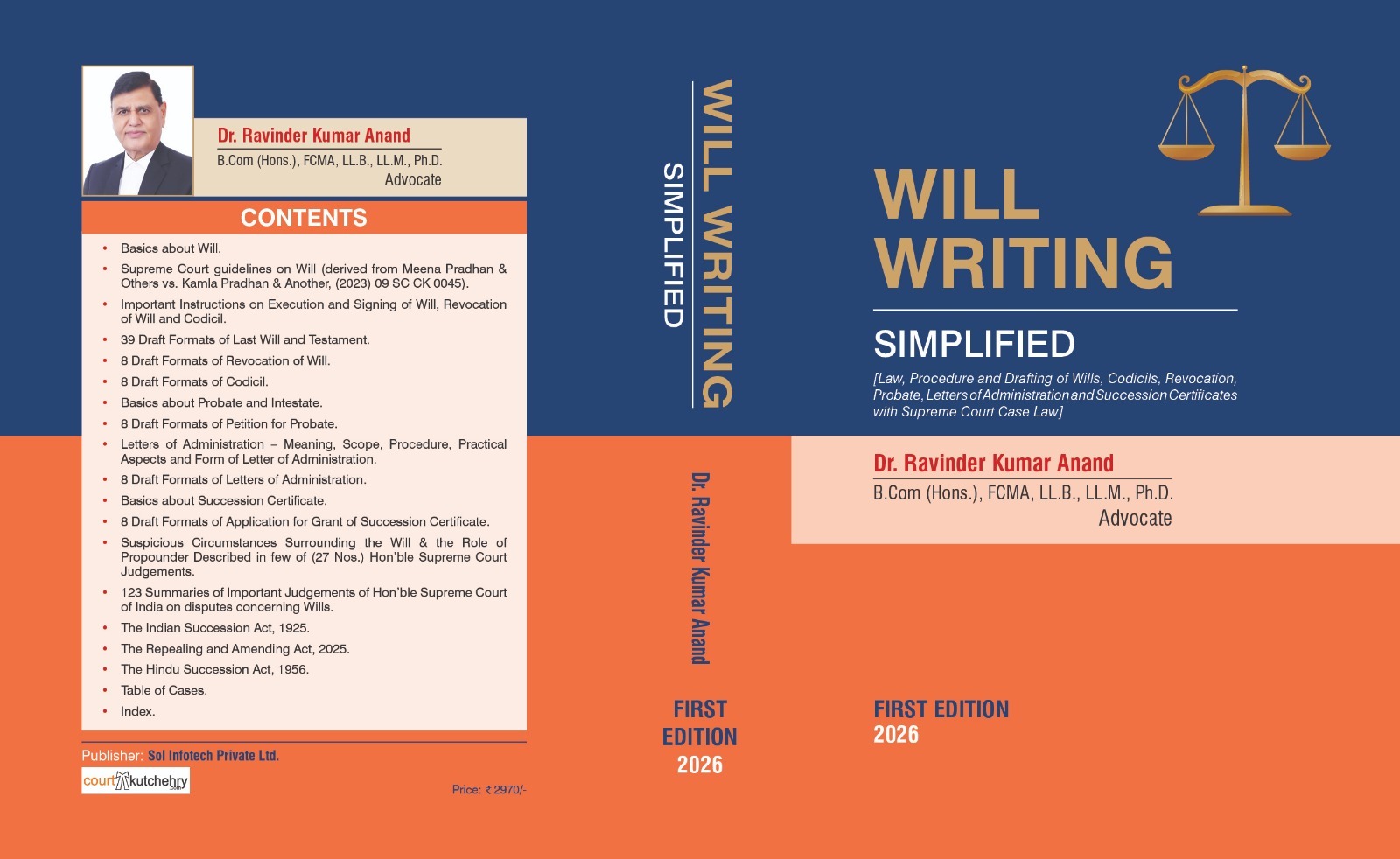
OUR SUGGESTION: Check out 123 Key Judgements, as highlighted in the book, WILL WRITING SIMPLIFIED, for the quick research and reference purposes. Click the link here: https://www.courtkutchehry.com/pages/blog/123-supreme-court-judgments-on-wills/
You Can Also Purchase the Book from here on: Buy online: Amazon | Flipkart
FREQUENTLY ASKED QUESTIONS: FAQs
Q1. What makes a Will valid under Indian law?
A Will is valid if executed by the testator with free consent and attested by two witnesses as per Section 63 of the Indian Succession Act.
Q2. What was decided in Ashutosh Samanta vs. Ranjan Bala Dasi?
The Supreme Court clarified proof requirements for Wills, emphasizing compliance with execution and attestation rules.
Q3. Who bears the burden of proof in Will disputes?
The propounder of the Will must prove its authenticity and compliance with legal requirements.
Q4. Which law governs Will execution and attestation in India?
The Indian Succession Act, 1925, particularly Section 63, governs the execution and attestation of Wills.
Q5. How does this ruling affect property disputes?
It ensures rightful ownership is protected by validating properly executed Wills, reducing scope for fraudulent claims.
Q6. Can a Will be challenged in court?
Yes, but challenges must be based on valid grounds such as fraud, coercion, or suspicious circumstances.