
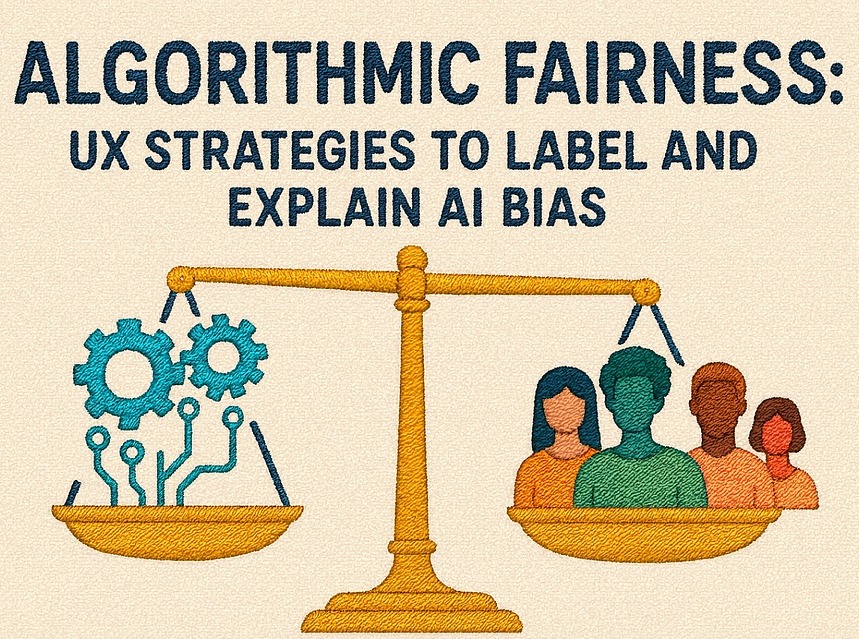
Algorithmic Equality on Trial: How Article 14 Confronts Bias in AI Systems
Courts Extend Constitutional Protections Against Algorithmic Discrimination
Why India’s Equality Jurisprudence Is Central to the Future of Technology
By Vishwas Kumar
New Delhi: June 02, 2026:
Artificial intelligence is no longer confined to labs or tech firms; it now shapes decisions in finance, healthcare, policing, and employment. But with this expansion comes a pressing constitutional question: Can algorithms discriminate, and if so, how should the law respond?
Those researching inheritance disputes, testamentary succession, and the legal validity of claims arising after a person's death may find the Supreme Court judgment in A. Wilson Prince v. Nazar & Others particularly useful, as it addresses important issues concerning succession rights, property disputes, and the interpretation of legal claims among heirs and beneficiaries.
In India, the answer is increasingly framed through Article 14 of the Constitution, which guarantees equality before law and equal protection of laws. Recent cases have challenged AI‑driven credit scoring, recruitment platforms, and predictive policing tools, arguing that opaque algorithms perpetuate bias against marginalized communities.
The judiciary has begun to respond. In 2026, the Delhi High Court struck down discriminatory lending practices by a fintech platform, holding that algorithmic opacity cannot shield violations of equality. Similarly, PILs against predictive policing in Hyderabad highlight how AI systems disproportionately target minority neighbourhoods, raising liberty and equality concerns.
Algorithmic Equality on Trial: Article 14 and the Challenge of Bias in AI Systems
Artificial intelligence has become the invisible hand shaping decisions in finance, healthcare, education, and policing. Algorithms now determine who gets a loan, who is shortlisted for a job, which patient receives priority treatment, and even which neighbourhood is flagged for “predictive policing.” While these systems promise efficiency and objectivity, they also raise a profound constitutional question: What happens when algorithms discriminate?
In India, the answer increasingly lies in Article 14 of the Constitution, which guarantees equality before law and equal protection of laws. Traditionally invoked against state action, Article 14 is now being extended to scrutinize private AI platforms whose decisions affect fundamental rights. This shift reflects the judiciary’s recognition that in a digital society, private actors wield powers comparable to the state.
The Constitutional Bedrock of Equality
Article 14 has long been the cornerstone of India’s equality jurisprudence. It prohibits arbitrary classification and mandates fairness in state action. Over decades, the Supreme Court developed doctrines like “reasonable classification” and “non‑arbitrariness” to test laws and policies. In the AI era, these doctrines are being reinterpreted to evaluate algorithmic systems.
For instance, if a credit scoring algorithm disproportionately denies loans to applicants from certain socio‑economic backgrounds, courts may treat this as a violation of Article 14. Similarly, if predictive policing tools disproportionately target minority neighborhoods, they may be struck down as discriminatory.
Judicial Reasoning in the AI Context
Courts have begun to articulate how constitutional equality applies to algorithms:
- Equality Before Law: AI systems must not produce discriminatory outcomes, whether intentional or inadvertent.
- Transparency & Accountability: Individuals must understand how AI decisions are made; opacity cannot shield bias.
- Extension to Private Actors: When private platforms wield quasi‑state power, they are subject to constitutional scrutiny.
- Proportionality Doctrine: Borrowed from Puttaswamy, it requires that AI intrusions into rights be necessary, proportionate, and safeguarded.
This reasoning reflects a broader judicial trend: adapting constitutional principles to new technological realities.
Case Studies Illustrating Article 14 in Action
- Delhi Credit Scoring Case (2026): The High Court struck down discriminatory lending practices by a fintech platform, holding that algorithmic opacity cannot justify inequality.
- Hyderabad Predictive Policing PIL: Civil liberties groups challenged AI tools that disproportionately targeted minority neighborhoods, raising equality and liberty concerns.
- Healthcare AI in Mumbai: PILs highlighted misdiagnoses by AI diagnostic tools, raising questions about liability and equal access to healthcare.
These cases demonstrate how Article 14 is being mobilized to confront algorithmic bias across sectors.
Comparative Perspectives
Globally, India’s approach is distinctive.
- EU AI Act (2024): Classifies AI systems by risk, banning those with unacceptable bias.
- U.S. Approach: Relies on civil rights litigation and sectoral regulation, lacking a unified framework.
- China: Prioritizes state control, with less emphasis on individual equality.
India’s rights‑centric model, rooted in constitutional equality, is ambitious but fragile. Without explicit AI legislation, courts bear the burden of regulating technology through constitutional interpretation.
Sociological, Economic, and Ethical Dimensions
The implications of algorithmic bias are profound:
- Sociological: Bias can entrench caste, gender, and class inequalities, undermining social justice.
- Economic: Businesses face compliance costs but gain consumer trust by ensuring fairness.
- Ethical: Transparency and accountability are essential to prevent harm and uphold dignity.
In a diverse society like India, where historical inequalities persist, algorithmic bias can amplify injustice if left unchecked.
The Role of the DPDP Act
The Digital Personal Data Protection Act (2023–25) provides statutory safeguards, emphasizing consent, transparency, and accountability. While not explicitly an AI law, courts interpret its provisions to cover algorithmic systems. Together with Article 14, it creates a hybrid framework: statutory compliance plus constitutional accountability.
The Future of Equality in the AI Era
The judiciary’s willingness to extend Article 14 protections to AI systems is both bold and necessary. But challenges remain:
- Transparency is elusive: Many AI systems are “black boxes,” making it difficult to identify bias.
- Liability is unclear: Should developers, deployers, or regulators be held responsible for biased outcomes?
- Legislative gaps: Without explicit AI regulation, courts risk overburdening themselves with policy questions.
Parliament must act, crafting laws that mandate fairness audits, establish liability frameworks, and create independent oversight bodies.
Why Article 14 Matters Today
In an era where algorithms decide who gets opportunities and who is excluded, equality is not abstract. It is the constitutional shield against arbitrary digital power. Article 14 ensures that technology serves justice, not bias. By embedding equality into AI governance, India can lead globally in rights‑centric regulation.
Context in the Data Privacy & AI Era
The Digital Personal Data Protection Act (DPDP, 2023–25) provides statutory safeguards, but courts are filling gaps by applying constitutional principles. Together, they create a hybrid framework: statutory compliance plus constitutional accountability.
- Credit Scoring: Algorithms must avoid bias based on caste, gender, or socio‑economic background.
- Employment Platforms: AI recruitment tools must ensure fairness and transparency.
- Healthcare AI: Misdiagnoses raise questions of liability and equality in access to treatment.
- Predictive Policing: Courts scrutinize whether AI tools reinforce stereotypes and violate liberty.
Sociological, Economic & Ethical Impacts
- Sociological: Algorithmic bias can entrench caste and gender inequalities.
- Economic: Businesses face compliance costs but gain trust by ensuring fairness.
- Ethical: Transparency and accountability are essential to prevent harm and uphold dignity.
Case Studies
- Delhi Credit Scoring Case (2026): Court ruled that opaque algorithms violated Article 14.
- Hyderabad Predictive Policing PIL: Civil liberties groups argue AI tools disproportionately target minorities.
- Healthcare AI in Mumbai: PILs challenge liability for misdiagnoses, raising equality concerns in access to healthcare.
Extended FAQ: Article 14 & Algorithmic Bias in AI
- What does Article 14 of the Indian Constitution guarantee?
It guarantees equality before law and equal protection of laws, prohibiting arbitrary discrimination. - How is Article 14 relevant to AI systems?
AI decisions must not produce discriminatory outcomes; otherwise, they violate equality principles. - Can algorithms be discriminatory?
Yes, biased training data or flawed design can lead to unfair results against certain groups. - What is algorithmic bias?
It refers to systematic unfairness in AI outputs due to skewed data or discriminatory logic. - Has any Indian court addressed algorithmic bias?
Yes, the Delhi High Court (2026) struck down discriminatory lending practices by a fintech platform. - How does Article 14 apply to private companies using AI?
Courts treat them as quasi‑state actors when their decisions affect fundamental rights. - What is the proportionality test’s role here?
Borrowed from Puttaswamy, it ensures AI intrusions are necessary, proportionate, and safeguarded. - Can individuals challenge AI decisions in court?
Yes, through writ petitions or PILs alleging violation of equality rights. - What remedies exist for victims of algorithmic bias?
Judicial review, compensation, and regulatory penalties under DPDP Act. - How does predictive policing raise Article 14 concerns?
It can disproportionately target minority communities, violating equality and liberty. - What role does transparency play in equality?
Transparency ensures individuals understand how AI decisions are made, preventing hidden bias. - Can individuals demand explanations of AI decisions?
Courts increasingly recognize a “right to explanation” under equality and privacy principles. - How does Article 14 protect against caste bias in AI?
It prohibits discriminatory profiling based on caste or socio‑economic background. - What about gender bias in AI recruitment?
AI hiring tools must ensure fairness; discriminatory outcomes can be struck down under Article 14. - How does Article 14 intersect with healthcare AI?
Misdiagnoses or unequal access to treatment raise equality concerns. - What is the judiciary’s role in AI governance?
Courts interpret constitutional rights to regulate AI, filling legislative gaps. - Can Parliament legislate to address algorithmic bias?
Yes, by amending DPDP or enacting a dedicated AI law with fairness mandates. - How does India’s approach compare with the EU?
EU’s AI Act bans high‑risk biased systems; India relies on constitutional equality plus DPDP. - How does it compare with the U.S.?
U.S. relies on civil rights litigation and sectoral rules, lacking a unified framework. - How does China handle algorithmic bias?
China emphasizes state control, with less focus on individual equality. - What ethical concerns dominate AI equality debates?
Fairness, accountability, transparency, and preventing harm to vulnerable groups. - How does algorithmic bias affect marginalized communities?
It can reinforce existing inequalities in jobs, policing, and services. - What is the economic impact of enforcing equality in AI?
Compliance costs rise, but consumer trust and fairness improve. - How does sociological context matter?
In diverse societies like India, bias can amplify caste, gender, and class inequalities. - What safeguards can prevent bias?
Fairness audits, diverse datasets, and independent oversight bodies. - Can AI bias be unintentional?
Yes, but even unintended bias violates equality principles. - What role do PILs play in AI equality?
PILs allow citizens to challenge systemic harms caused by biased algorithms. - Can algorithmic bias affect free speech?
Yes, AI moderation tools can disproportionately censor certain groups, raising Article 19 concerns. - How does Article 14 interact with Article 21 in AI cases?
Equality and liberty together protect against discriminatory and intrusive AI practices. - What liability exists for biased AI outcomes?
Developers, deployers, and platforms may be held liable under constitutional and statutory law. - Can small businesses be exempt from equality obligations?
No, fundamental rights apply universally, though compliance burdens may be lighter. - What penalties exist for violations?
Fines under DPDP plus judicial remedies for constitutional breaches. - How does Article 14 affect AI in education?
Admission algorithms must avoid discriminatory profiling of students. - What is the role of the Data Protection Board?
It enforces compliance, investigates bias, and imposes penalties. - Can algorithmic bias be challenged internationally?
Yes, global trade partners demand fairness compliance, aligning with GDPR standards. - How does Article 14 protect against biometric bias?
It ensures facial recognition and biometric tools do not discriminate. - What reforms are expected in India?
Explicit AI regulation, fairness audits, liability frameworks, and stronger enforcement. - Can courts strike down entire AI systems?
Yes, if they produce systemic discriminatory outcomes violating equality. - What is India’s global position on AI equality?
India advocates a rights‑centric approach, emphasizing fairness and dignity. - Why is Article 14 central to AI governance?
Because equality is the constitutional bedrock ensuring technology serves justice, not bias.
Op‑Ed Style Closing Vision
India’s constitutional promise of equality is being tested in the digital age. Algorithms, once thought neutral, often replicate human biases embedded in data. The judiciary’s willingness to extend Article 14 protections to AI systems is both bold and necessary.
Yet challenges remain. Transparency is elusive, liability is unclear, and legislative frameworks are incomplete. Without explicit AI regulation, courts risk overburdening themselves with policy questions. Parliament must act, crafting laws that mandate fairness audits, establish liability frameworks, and create independent oversight bodies.
The vision is clear: technology must serve equality, not undermine it. By embedding Article 14 into AI governance, India can lead globally in rights‑centric regulation. The challenge is daunting, but the stakes—human dignity, fairness, and liberty—could not be higher.