
Arbitration and Dispute Resolution in IFSC: Building India’s Neutral Forum
Creating a credible alternative to Singapore and London
Balancing global standards with Indian legal oversight
By Vishwas Kumar
New Delhi: June 17, 2026:
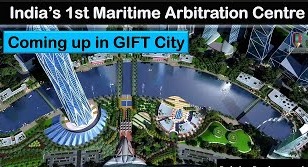
Arbitration and dispute resolution are essential components of any international financial center. Businesses and investors require predictable, efficient, and neutral mechanisms to resolve disputes, especially in cross-border transactions. India’s International Financial Services Centre (IFSC) at GIFT City is actively developing its arbitration ecosystem under the oversight of the International Financial Services Centres Authority (IFSCA).
The primary objective is to reduce reliance on foreign hubs such as the Singapore International Arbitration Centre (SIAC) or the London Court of International Arbitration (LCIA). For decades, Indian corporates and investors have looked abroad for arbitration, incurring significant costs and delays. By establishing arbitration centers in IFSC, India aims to provide international-standard facilities, specialized arbitrators, and enforceable awards within its jurisdiction.
Contracts drafted in IFSC increasingly include arbitration clauses specifying GIFT City as the seat of arbitration. This shift reflects growing confidence in India’s ability to deliver neutral and credible dispute resolution. The framework ensures disputes can be resolved quickly, cost-effectively, and with transparency, while still maintaining credibility with global investors.
Comparatively, Singapore remains a global leader in arbitration, offering neutrality and efficiency, while Dubai DIFC provides English common law predictability. Hong Kong has historically been strong but faces challenges due to political uncertainty. India’s IFSC offers a hybrid model—international-standard arbitration centers backed by Indian courts, combining global competitiveness with domestic accountability.
The sociological impact is significant: IFSC arbitration creates new opportunities for Indian lawyers, arbitrators, and legal professionals to participate in global-standard proceedings. Economically, it reduces costs for corporates by avoiding foreign arbitration hubs and keeps capital flows within India. Ethically, it ensures fairness and transparency, avoiding perceptions of bias or misuse of arbitration clauses.
Looking ahead, IFSC is expected to integrate digital arbitration platforms, AI-driven case management, and ESG-linked dispute resolution frameworks. By aligning arbitration with technology and sustainability, GIFT City can attract responsible capital and strengthen its global standing.
Ultimately, arbitration in IFSC is more than a legal mechanism—it is India’s declaration that it can provide a neutral, credible, and efficient forum for global disputes. If successful, GIFT City will not only host financial services but also resolve the conflicts that inevitably arise from them, cementing its role as a trusted global hub.
Comparative Perspectives: Arbitration & Dispute Resolution in Global IFSCs
Singapore Singapore International Arbitration Centre (SIAC) is widely regarded as one of the most efficient and neutral arbitration forums globally. Its awards are recognized under the New York Convention, giving them enforceability across jurisdictions. Strengths include credibility, speed, and neutrality. Weaknesses involve high costs and reliance on foreign arbitrators. Opportunities lie in expanding digital arbitration and ESG-linked dispute resolution. Threats include rising competition from emerging hubs like GIFT City, which offer similar services at lower costs.
Dubai DIFC Dubai International Financial Centre (DIFC) combines arbitration with English common law courts, offering predictability and neutrality for global investors. Strengths include strong government support, tax-free operations, and strategic location. Weaknesses involve limited domestic legal talent and reliance on expatriates. Opportunities lie in blockchain-based arbitration platforms and regional dispute resolution. Threats include geopolitical instability, which can affect investor confidence in long-term contracts.
Hong Kong Hong Kong International Arbitration Centre (HKIAC) has historically been strong, particularly for disputes involving China and global capital markets. Strengths include deep experience, established infrastructure, and proximity to mainland China. Weaknesses stem from political uncertainty and shifting regulatory policies, which have eroded confidence. Opportunities exist in integration with China’s Greater Bay Area, but threats include firms relocating arbitration clauses to Singapore or Dubai for stability.
India’s IFSC (GIFT City) India’s IFSC is building arbitration centers to provide international-standard facilities, specialized arbitrators, and enforceable awards under Indian law. Strengths include competitive costs, exemptions from GST and stamp duty, and integration with Indian courts. Weaknesses involve evolving recognition and infrastructure still in development compared to mature hubs. Opportunities lie in digital arbitration platforms, AI-driven case management, and ESG-linked dispute resolution. Threats include skepticism from global investors who may still prefer established hubs like SIAC or LCIA.
India’s IFSC thus positions itself as a hybrid model—international-standard arbitration backed by Indian legal oversight. The challenge is perception: global investors must be convinced of neutrality, efficiency, and enforceability. If successful, GIFT City can reduce reliance on foreign hubs, keep capital flows within India, and establish itself as a trusted global forum for dispute resolution.
Sociological, Economic, and Ethical Impacts
Sociological: IFSC arbitration creates new opportunities for Indian lawyers, arbitrators, and legal professionals.
Economic: Reduces costs for corporates by avoiding foreign arbitration hubs, keeping capital flows within India.
Ethical: Ensures transparency and fairness, avoiding perceptions of bias or misuse of arbitration clauses.
Case Studies: Arbitration & Dispute Resolution in IFSC
1. Cross-Border M&A Disputes A major Indian corporate entering into a merger with a European partner structured its contract with an arbitration clause specifying IFSC as the seat. This allowed disputes over valuation and compliance to be resolved domestically, saving millions in legal costs compared to arbitration in Singapore or London.
2. Insurance Treaty Disputes Global reinsurers operating in IFSC now include arbitration clauses in their treaties. When disagreements arise over claim settlements or treaty terms, arbitration in GIFT City provides a neutral forum, reducing delays and ensuring enforceability under Indian law.
3. Fintech Sandbox Disputes Startups testing blockchain and AI-driven compliance tools in IFSC’s sandbox often face disagreements with regulators or partners. Arbitration clauses specifying IFSC ensure disputes are resolved quickly, allowing innovation to continue without prolonged litigation.
4. Commodity Trading Disputes IFSC exchanges dealing in derivatives and commodities integrate arbitration mechanisms directly into their trading frameworks. This ensures disputes over contracts, pricing, or settlement are resolved efficiently, boosting investor confidence in IFSC markets.
5. Banking and Loan Agreement Disputes Offshore loan agreements structured in IFSC often include arbitration clauses. When disputes arise over repayment terms or interest calculations, arbitration in GIFT City provides a cost-effective resolution, avoiding lengthy litigation abroad.
These case studies highlight how arbitration in IFSC is not just theoretical but already being embedded into contracts across sectors—M&A, insurance, fintech, commodities, and banking. Each example demonstrates the practical benefits of resolving disputes within India’s jurisdiction while maintaining international credibility.
Extended FAQ Index: Arbitration & Dispute Resolution in IFSC
1. Can arbitration be conducted in IFSC?
Yes, IFSC hosts arbitration centers where disputes can be resolved under international-standard rules.
2. Are IFSC arbitration awards enforceable in India?
Yes, awards are enforceable in Indian courts under the Arbitration and Conciliation Act.
3. How do IFSC arbitration awards compare with SIAC awards?
They follow global standards, but enforcement is tied to Indian jurisdiction.
4. Can foreign parties choose IFSC as the seat of arbitration?
Yes, contracts can specify IFSC as the seat, making it a neutral forum.
5. What role do law firms play in IFSC arbitration?
They draft clauses, represent clients, and ensure compliance with IFSCA rules.
6. How does IFSC arbitration reduce costs for corporates?
It avoids foreign hubs like Singapore, cutting travel and legal expenses.
7. Are IFSC arbitration centers internationally recognized?
They are designed to meet global standards, though recognition is still evolving.
8. Can insurance disputes be resolved in IFSC?
Yes, reinsurance treaties often include IFSC arbitration clauses.
9. Are fintech disputes handled in IFSC?
Yes, sandbox participants use IFSC arbitration for compliance disagreements.
10. How does IFSC compare with Dubai DIFC arbitration?
Dubai offers English common law courts; IFSC blends global standards with Indian law.
11. Are commodity trading disputes resolved in IFSC?
Yes, IFSC exchanges integrate arbitration for derivatives and commodities.
12. Can IFSC arbitration awards be enforced abroad?
Yes, under the New York Convention, awards can be recognized internationally.
13. How does IFSC regulate arbitration centers?
IFSCA oversees centers to ensure transparency and neutrality.
14. Are mediation services offered in IFSC?
Yes, mediation is supported alongside arbitration for faster resolution.
15. Can IFSC arbitration handle cross-border M&A disputes?
Yes, contracts involving global investors specify IFSC arbitration clauses.
16. Are arbitration clauses mandatory in IFSC contracts?
Not mandatory, but increasingly common in financial agreements.
17. How does IFSC ensure neutrality in arbitration?
By appointing independent arbitrators and following global best practices.
18. Are digital arbitration platforms tested in IFSC?
Yes, pilots use AI-driven case management and blockchain records.
19. Can IFSC arbitration handle ESG disputes?
Yes, ESG-linked contracts can specify IFSC arbitration.
20. How does IFSC compare with Hong Kong arbitration?
Hong Kong has deep experience, but IFSC offers stability and incentives.
21. Are arbitration awards exempt from stamp duty in IFSC?
Yes, awards and contracts in IFSC enjoy exemptions.
22. Can IFSC arbitration handle banking disputes?
Yes, offshore loan agreements often include IFSC arbitration clauses.
23. Are arbitration hearings conducted in English in IFSC?
Yes, English is the primary language for proceedings.
24. How does IFSC regulate arbitrator appointments?
IFSCA sets guidelines for independent, qualified arbitrators.
25. Can IFSC arbitration awards be appealed?
Awards are final, but enforcement may involve Indian courts.
26. Are arbitration centers physically located in GIFT City?
Yes, dedicated facilities are being developed in GIFT City.
27. How does IFSC arbitration compare with LCIA?
LCIA has global recognition; IFSC is emerging with competitive incentives.
28. Can IFSC arbitration handle trade finance disputes?
Yes, letters of credit and trade contracts can specify IFSC arbitration.
29. Are arbitration fees lower in IFSC?
Yes, costs are lower compared to Singapore or London.
30. How does IFSC regulate confidentiality in arbitration?
IFSCA mandates strict confidentiality in proceedings.
31. Can IFSC arbitration handle cross-border fintech partnerships?
Yes, joint ventures often include IFSC arbitration clauses.
32. Are arbitration awards recognized under Indian law?
Yes, awards are enforceable under the Arbitration and Conciliation Act.
33. How does IFSC arbitration support investor protection?
By ensuring transparent rules and enforceable outcomes.
34. Can IFSC arbitration handle cyber disputes?
Yes, cyber insurance and digital contracts can specify IFSC arbitration.
35. Are arbitration hearings hybrid or virtual in IFSC?
Yes, hearings can be conducted virtually or in hybrid formats.
36. How does IFSC regulate arbitration timelines?
IFSCA sets strict timelines to avoid delays.
37. Can IFSC arbitration handle property disputes?
Yes, offshore property contracts can specify IFSC arbitration.
38. Are arbitration awards exempt from GST in IFSC?
Yes, arbitration services in IFSC are GST-exempt.
39. How does IFSC arbitration compare with SIAC in efficiency?
SIAC is established; IFSC is building efficiency with digital platforms.
40. What is the long-term vision for arbitration in IFSC?
To become a globally recognized neutral forum, reducing reliance on foreign hubs.
Op-Ed Style Closing Vision
Arbitration in IFSC is not just about resolving disputes—it is about building trust. By offering international-standard facilities and enforceable awards, GIFT City is positioning itself as a credible alternative to Singapore and London.
The challenge lies in perception. Global investors must be convinced that IFSC arbitration is neutral, efficient, and enforceable. India must ensure that arbitration centers in GIFT City are staffed with experienced arbitrators, supported by transparent rules, and backed by judicial oversight.
Looking ahead, IFSC should integrate digital arbitration platforms, AI-driven case management, and ESG-linked dispute resolution frameworks. By aligning arbitration with technology and sustainability, GIFT City can attract responsible capital and strengthen its global standing.
Ultimately, arbitration in IFSC is more than a legal mechanism—it is India’s declaration that it can provide a neutral, credible, and efficient forum for global disputes. If successful, GIFT City will not only host financial services but also resolve the conflicts that inevitably arise from them, cementing its role as a trusted global hub.