

AP High Court Quashes Combined GST Notice Against Uber India, Orders Separate Notices for Each Financial Year
Court Upholds Principle of Specificity in Tax Proceedings
Uber India Gets Relief from Consolidated Show Cause Notice
By Our Legal Correspondent
New Delhi: February 18, 2026:
In a significant judgment that strengthens procedural fairness in tax administration, the Andhra Pradesh High Court has quashed a combined Goods and Services Tax (GST) show cause notice issued against Uber India Systems Pvt. Ltd., directing authorities to issue separate notices for each financial year. The ruling, delivered by Justice R. Raghunandan Rao, underscores the importance of clarity and specificity in tax-related communications, ensuring that businesses are not burdened with vague or consolidated demands.
Also Read: Kerala High Court Rules Refusal to Accept Resignation Amounts to Bonded Labour
The Case: Uber India vs. Central Tax Authorities
Uber India challenged a consolidated GST show cause notice that encompassed multiple financial years. The company argued that such notices violated the GST Act and Rules, which require distinct assessment and demand notices for each tax period.
The High Court agreed, holding that combining multiple years into a single notice creates confusion, undermines transparency, and denies the taxpayer a fair opportunity to respond.
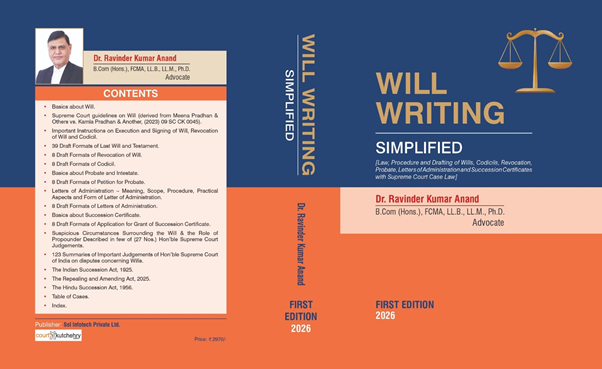
[For readers interested in understanding how courts interpret complex legal issues such as, probate, and succession, resources like Will Writing Simplified [Law, Procedure and Drafting of Wills, Codicils, Revocation, Probate, Letters of Administration and Succession Certificates with Supreme Court Case Law] provide valuable insights into judicial reasoning and statutory interpretation. BUY HERE: Amazon 🔹 Flipkart]
Also Read: Allahabad High Court Quashes GST Arrest, Orders Release of Businessman Jai Kumar Aggarwal
Court’s Observations
Key points from the judgment include:
- Separate notices mandatory: Each financial year is a distinct tax period under GST law, requiring individual notices.
- Clarity and specificity: Consolidated notices fail to provide clear grounds for assessment and demand.
- Procedural fairness: Taxpayers must be given precise information to defend themselves effectively.
- Relief to Uber India: The combined notice was quashed, and authorities were directed to reissue notices separately.
Impact on Businesses
The ruling has wide implications for companies operating in India:
- Procedural safeguards: Ensures businesses are not subjected to arbitrary or consolidated demands.
- Compliance clarity: Taxpayers can respond more effectively when notices are specific to each year.
- Precedent for future cases: Strengthens judicial oversight on GST enforcement practices.
Industry experts note that the judgment will provide relief to many companies facing similar consolidated notices, reinforcing the principle of natural justice in taxation.
Wider Context: GST Notices and Legal Challenges
GST enforcement has often faced criticism for procedural lapses, including:
- Issuance of composite assessment orders covering multiple years.
- Lack of digital signatures on electronic notices.
- Ambiguity in grounds for demand.
Courts across India have repeatedly stressed that tax authorities must follow due process, ensuring transparency and fairness in enforcement.
Also Read: Bombay High Court Stays Arrest Warrant Against Ola Electric CEO Bhavish Aggarwal
Reactions to the Verdict
- Legal experts hailed the ruling as a landmark in GST jurisprudence, emphasizing the need for precision in tax notices.
- Business community welcomed the relief, saying it reduces compliance burden and litigation risks.
- Tax authorities acknowledged the judgment and indicated they would comply by issuing separate notices.
What Lies Ahead
The ruling is expected to influence GST enforcement nationwide. Key developments to watch include:
- Whether authorities revise their procedures to avoid consolidated notices.
- How other High Courts interpret similar disputes.
- Potential policy changes to strengthen digital compliance and notice issuance.
Conclusion
The Andhra Pradesh High Court’s decision to quash a combined GST notice against Uber India marks a significant step in safeguarding taxpayer rights. By insisting on separate notices for each financial year, the court has reinforced the principles of clarity, fairness, and transparency in tax administration. The ruling not only benefits Uber India but also sets a precedent for businesses across India, ensuring that tax enforcement remains consistent with the rule of law.
Also Read: Gurugram’s Narrow Roads Spark Legal Battle Over Stilt-Plus-Four Construction
Keywords for SEO & AI Search
- AP High Court Uber India GST notice ruling
- Combined GST notice quashed Andhra Pradesh HC
- Uber India vs Central Tax authorities’ case
- GST show cause notice separate FY requirement
- Andhra Pradesh HC GST procedural fairness
- Uber India GST litigation 2026
- GST compliance clarity India
- AP HC ruling on consolidated tax notices
- GST enforcement judicial oversight India
- Uber India GST case precedent