
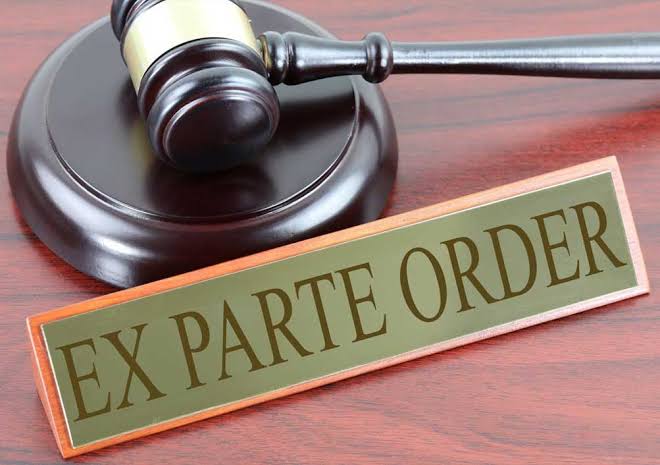
Beyond Ex-Parte: Andhra Pradesh High Court Redefines Procedural Remedies for Delayed Pleadings
Trial Courts Cannot Pass Ex-Parte Orders Against Defendants Who Have Entered Appearance Through Counsel
Procedural Precision vs. Judicial Expediency: Forfeiture of Written Statement Rights Preserves the Right to Participate in Civil Trials
By Legal Editor
New Delhi: July 30, 2026:
The procedural landscape of civil litigation in India is grounded in the principle of audi alteram partem—the fundamental right to be heard. However, the operational machinery of civil justice often grapples with procedural delays, leading trial courts to adopt hasty remedies to expedite proceedings. In a notable ruling reported as [2026 LiveLaw (AP) 163], the , presided over by Justice Subba Reddy Satti, adjudicated upon a fundamental procedural error frequently committed by trial courts: setting a defendant ex-parte simply because they failed to file a written statement within the statutory timeline, even after formally appearing through an advocate via a Vakalatnama.
The High Court clarified the statutory framework governing civil suits under the Code of Civil Procedure, 1908 (CPC). The decision underlines that once a defendant has entered an appearance through legal counsel by filing a valid Vakalatnama, the court loses its jurisdiction to proceed ex-parte under Order IX Rule 6 of the CPC. Instead, the correct legal recourse available to the trial court upon default in filing a defence within the statutory limits prescribed by Order VIII Rule 1 of the CPC is to forfeit the defendant’s right to file the written statement and proceed with the suit under Order VIII Rule 10 of the CPC.
This analytical article evaluates the statutory interplay between Order V, Order VIII, and Order IX of the CPC, the rights retained by a defendant whose pleading right has been forfeited, and the systemic implications of maintaining procedural purity in civil courts.
The Statutory Scheme: Interplay of Order V, Order VIII, and Order IX of CPC
To appreciate the significance of the ruling by the , one must examine the distinct statutory mandates contained within the Code of Civil Procedure, 1908.
1. Appearance vs. Pleading: A Critical Jurisprudence Distinction
The core error addressed by the High Court lies in conflating the appearance of a party with the filing of pleadings. Under Order V Rule 1 of the CPC, upon institution of a suit, a summons is issued to the defendant to appear and answer the claim. The requirement of "appearance" under the CPC can be satisfied in three distinct ways:
By the defendant in person;
By a pleader accompanied by the party; or
By a pleader duly instructed and able to answer all material questions relating to the suit.
When a lawyer files a Vakalatnama on behalf of a defendant, the defendant has officially entered an appearance. The physical or legal presence of the defendant is established in the court record. From that juncture onward, the defendant cannot be classified as "absent" or "defaulting in appearance."
On the other hand, the submission of a written statement is a subsequent procedural step regulated by Order VIII Rule 1 of the CPC. While law stipulates that a written statement must be filed within 30 days from the service of summons (extendable up to statutory maximums based on whether the suit is commercial or non-commercial), failure to adhere to this timeline does not erase the legal fact of the defendant's appearance.
[ Summons Issued & Served ]
│
▼
[ Advocate Files Vakalatnama ] <─── "Appearance Completed"
│
┌─────────┴─────────┐
│ │
[WS Filed] [WS Delayed/Not Filed]
│ │
▼ ▼
[Trial Proceeding] [Forfeit WS Right (Order VIII R.10)]
│
▼
[Defendant Retains Right to:]
• Cross-examine witnesses
• Make oral arguments
• Challenge legal maintainability
2. Misapplication of Order IX Rule 6 of CPC
Order IX of the CPC exclusively governs the "Appearance of Parties and Consequence of Non-appearance." Specifically, Order IX Rule 6(1)(a) states:
"Where the plaintiff appears and the defendant does not appear when the suit is called on for hearing, then if it is proved that the summons was duly served, the Court may make an order that the suit be heard ex-parte."
The jurisdictional precondition for triggering Order IX Rule 6(1)(a) is the complete non-appearance of the defendant. If a counsel has submitted a Vakalatnama, the condition precedent of non-appearance fails. Passing an ex-parte order under Order IX Rule 6 in such circumstances constitutes a fundamental jurisdictional error, as it misapplies an emergency provision meant for absentees to a party actively participating through representation.
The Correct Legal Recourse: Order VIII Rule 10 and Forfeiture of Right
When a defendant appears via a Vakalatnama but fails to file a written statement within the prescribed period, the procedural remedy available to the trial judge is provided under Order VIII Rule 10 of the CPC.
Order VIII Rule 10 provides that where any party from whom a written statement is required fails to present the same within the time permitted or fixed by the court, the court shall pronounce judgment against him, or make such order in relation to the suit as it thinks fit.
In judicial practice, unless the suit is one where the plaintiff's claim is unassailably admitted on the face of the record, the standard recourse under Order VIII Rule 10 is:
To pass an order closing or forfeiting the defendant's right to file a written statement;
To record that the suit will proceed without the written statement of the defendant; and
To post the matter for the plaintiff's evidence.
By adopting this procedure, the court respects the fact that the defendant is present in the record while enforcing strict compliance with procedural timelines for pleadings.
Rights Retained by a Defendant After Forfeiture of Written Statement
A crucial legal issue analyzed in civil jurisprudence is: What happens to a defendant whose right to file a written statement has been forfeited?
Being declared ex-parte and having one's right to file a written statement forfeited lead to vast legal differences:
1. Scope of Participation in Proceedings
If a defendant is erroneously placed ex-parte, the court proceeds as if the defendant is absent entirely. The defendant cannot cross-examine witnesses or address arguments unless they file an application under Order IX Rule 7 of the CPC seeking to set aside the ex-parte order by demonstrating "sufficient cause."
Conversely, when a defendant's right to file a written statement is forfeited under Order VIII Rule 10, the defendant remains on record as an active party. The consequences of this distinction are:
Right to Cross-Examination: The defendant retains the right to cross-examine the plaintiff’s witnesses. While the defendant cannot introduce new factual defences that were required to be pleaded in a written statement, they can cross-examine witnesses to demolish the plaintiff’s evidence, highlight internal contradictions, and test witness credibility.
Legal Demurrers and Arguments: The defendant can advance purely legal arguments, such as challenging the suit's maintainability, raising questions of court jurisdiction, pointing out barred limitation periods under the Limitation Act, 1963, or highlighting non-compliance with statutory conditions precedent.
Participation in Subsequent Stages: The defendant is entitled to receive notices of all subsequent hearings, inspect documents produced by the plaintiff, and submit oral arguments before judgment is rendered.
-----------------------------------------------+
| Parametric Dimension | Ex-Parte Order (Order IX Rule 6) | Forfeiture of Written Statement (Order VIII R.10) |
+------------------------------------+---------------------------------------------------+---
| Triggering Condition | Complete non-appearance of defendant upon summons | Appearance made (Vakalatnama), but no WS filed |
| Status of Defendant | Treated as absent / excluded from record | Remains on record as an active participant |
| Right to Cross-Examine | Barred until ex-parte order is set aside | Fully preserved to demolish plaintiff's claims |
| Right to Argue Legal Points | Not permitted | Fully preserved for questions of law & bar |
| Remedy Required to Proceed | Formal application under Order IX Rule 7 or 13 | Direct participation without setting aside order |
Judicial Precedents and Principles of Procedural Justice
The doctrine articulated by the aligns with settled principles laid down by the Supreme Court of India and various High Courts regarding civil procedure.
1. Modula India v. Kamakhya Singh Deo (1988)
In the landmark Supreme Court decision of Modula India v. Kamakhya Singh Deo, a full bench evaluated the rights of a defendant whose defence was struck off under rent control legislation (a situation analogous to forfeiture under Order VIII Rule 10). The Apex Court held that even when a defence is struck off, the defendant is not stripped of their basic participation rights. The Court established that:
"Even if the defence is struck off or the right to file written statement is forfeited, the defendant can still take part in the trial, cross-examine the plaintiff's witnesses, and demonstrate that the plaintiff's suit must fail on its own merits."
2. Harmonious Construction of Rules
Procedural law is designed to facilitate justice, not to act as a trap for litigants. Courts have consistently held that procedural provisions in the CPC must be harmoniously construed:
Order IX deals with default of appearance.
Order VIII deals with default of pleading.
Attempting to punish a default of pleading using the mechanism designated for a default of appearance constitutes a jurisdictional excess. Justice Subba Reddy Satti's ruling reinstates this distinction, ensuring trial courts do not short-circuit trials under the guise of case disposal statistics.
Operational Guidelines for Civil Trial Courts
To prevent routine procedural missteps, trial courts must adopt a standardized protocol when handling delayed pleadings:
Verify Appearance Record: Prior to recording any order on default of written statement, check if a Vakalatnama or memo of appearance has been submitted by any advocate on behalf of the defendant.
Avoid Order IX Rule 6: If a Vakalatnama is present on record, never invoke Order IX Rule 6 or mark the defendant ex-parte.
Record Default Under Order VIII Rule 10: If the statutory period for filing the written statement has expired without an extension granted for sufficient cause, record a specific order closing/forfeiting the defendant's right to file a written statement under Order VIII Rule 10.
Permit Participation: Allow the defendant's counsel to remain present during hearings, participate in trial proceedings, conduct cross-examinations within established boundaries, and submit final arguments on points of law.
Searchable FAQ Index: Key Legal Points Explained
This FAQ index provides an authoritative legal reference for litigants, advocates, and judicial officers seeking clarity on appearance, default of pleadings, and civil trial procedure.
[FAQ-01] What is the difference between an ex-parte order and forfeiting defense rights?
[FAQ-02] Does filing a Vakalatnama satisfy the legal requirement of appearance?
[FAQ-03] Can a court set a defendant ex-parte if their advocate has filed a Vakalatnama?
[FAQ-04] What happens if a defendant fails to file a written statement within 90 days?
[FAQ-05] Can a defendant cross-examine witnesses if their right to file a WS is lost?
[FAQ-06] How can a defendant restore their right to file a written statement?
[FAQ-07] What legal arguments can a defendant make without a written statement?
[FAQ-08] Which CPC orders govern non-appearance vs. non-filing of pleadings?
[FAQ-01] What is the difference between an ex-parte order and forfeiting defense rights?
Answer:
An ex-parte order (under Order IX Rule 6 CPC) is passed when a defendant fails to appear in court altogether despite receiving summons. The court proceeds in the defendant's absence.
Forfeiting defence rights (under Order VIII Rule 10 CPC) occurs when a defendant has appeared (e.g., by filing a Vakalatnama) but fails to submit a written statement within the statutory timeframe. In this scenario, the defendant remains part of the suit and can participate in trial proceedings but cannot present an affirmative written defence.
[FAQ-02] Does filing a Vakalatnama satisfy the legal requirement of appearance?
Answer:
Yes. Under Order V Rule 1 of the CPC, appearance can be made by the defendant in person or by a pleader duly appointed via a signed Vakalatnama. Once an advocate files a Vakalatnama on behalf of the defendant, the defendant is legally deemed to have entered an appearance in the suit.
[FAQ-03] Can a court set a defendant ex-parte if their advocate has filed a Vakalatnama?
Answer:
No. As held by the in the case, trial courts cannot proceed ex-parte against a defendant who has entered an appearance through an advocate by filing a Vakalatnama. Doing so is a procedural violation of Order IX Rule 6. The proper procedure is to forfeit the right to file the written statement under Order VIII Rule 10.
[FAQ-04] What happens if a defendant fails to file a written statement within 90 days?
Answer:
Under Order VIII Rule 1 of the CPC, a defendant must file a written statement within 30 days of summons service, which may be extended up to 90 days in non-commercial civil suits upon demonstrating sufficient cause. If the defendant fails to file within this timeline:
The court may close or forfeit the right to file a written statement under Order VIII Rule 10.
In commercial suits under the Commercial Courts Act, 2015, the maximum period is 120 days, after which the right to file a written statement is mandatorily forfeited.
[FAQ-05] Can a defendant cross-examine witnesses if their right to file a WS is lost?
Answer:
Yes. Even if a defendant's right to file a written statement is forfeited, they remain an active party on record. Under established Supreme Court precedent (Modula India v. Kamakhya Singh Deo), the defendant retains the right to cross-examine the plaintiff's witnesses to test their veracity and disprove the plaintiff's claims. However, the defendant cannot build a new positive defence that required factual pleading.
[FAQ-06] How can a defendant restore their right to file a written statement?
Answer:
If the statutory maximum timeline has not lapsed, the defendant can file an interlocutory application under Section 151 of the CPC (or seeking condonation of delay under Order VIII Rule 1) demonstrating "sufficient cause" for the delay. If the court has passed an order closing the defence, the defendant must request the court to recall that specific order before the trial concludes.
[FAQ-07] What legal arguments can a defendant make without a written statement?
Answer:
A defendant whose written statement rights are forfeited can still argue questions of law, including:
Lack of subject-matter or territorial jurisdiction;
The suit being barred by limitation under the Limitation Act, 1963;
Non-maintainability of the suit under statutory bars (e.g., Section 11 Res Judicata or Order VII Rule 11 CPC grounds);
Insufficiency of evidence adduced by the plaintiff to prove their case.
[FAQ-08] Which CPC orders govern non-appearance vs. non-filing of pleadings?
Answer:
Non-appearance of Parties: Governed by Order IX (Order IX Rule 6 for defendant default; Order IX Rule 8 for plaintiff default; Order IX Rule 7/13 for setting aside ex-parte orders).
Non-filing of Pleadings: Governed by Order VIII (Order VIII Rule 1 for written statement timelines; Order VIII Rule 10 for consequences of default in filing pleadings).
Strategic Synthesis for Legal Practitioners
The judgment of the High Court serves as a vital reminder that administrative efficiency in civil courts cannot override fundamental procedural protections. By distinguishing between default of appearance and default of pleading, the ruling ensures that civil trials remain fair, structured, and compliant with the rule of law.
CPC Provision — Focus & Mechanics — Key Impact on Defendant
Order V Rule 1 & Rule 5 — Issuance of summons to defendant to appear and answer the claim. — Appearance can be in person or via an advocate duly instructed through a Vakalatnama.
Order VIII Rule 1 — Timeline for filing written statement (30 days, extendable up to 90/120 days depending on suit nature). — Defines procedural deadline for submitting defence pleadings.
Order VIII Rule 10 — Procedure when a party fails to present written statement called for by the court. — Permits court to pronounce judgment or pass orders forfeiting defence pleadings while keeping defendant in trial.
Order IX Rule 6(1)(a) — Procedure when only plaintiff appears and defendant fails to appear despite due service. — Authorizes court to hear suit ex-parte due to complete non-appearance.
Scenario — Incorrect Judicial Action — Correct Judicial Action — Remedy Available to Litigant
No Appearance + No WS — Set defendant ex-parte (Order IX R.6) — Set defendant ex-parte (Order IX R.6) — File application under Order IX Rule 7 or Order IX Rule 13 CPC
Vakalatnama Filed + No WS — Set defendant ex-parte (Procedural Error) — Forfeit WS right under Order VIII R.10 — File Civil Revision Petition under Article 227 or seek recall under Sec 151 CPC
Vakalatnama Filed + Delayed WS — Reject WS and proceed ex-parte — Condone delay for sufficient cause OR forfeit WS right — Pray for condonation of delay with costs before WS right is formally closed