
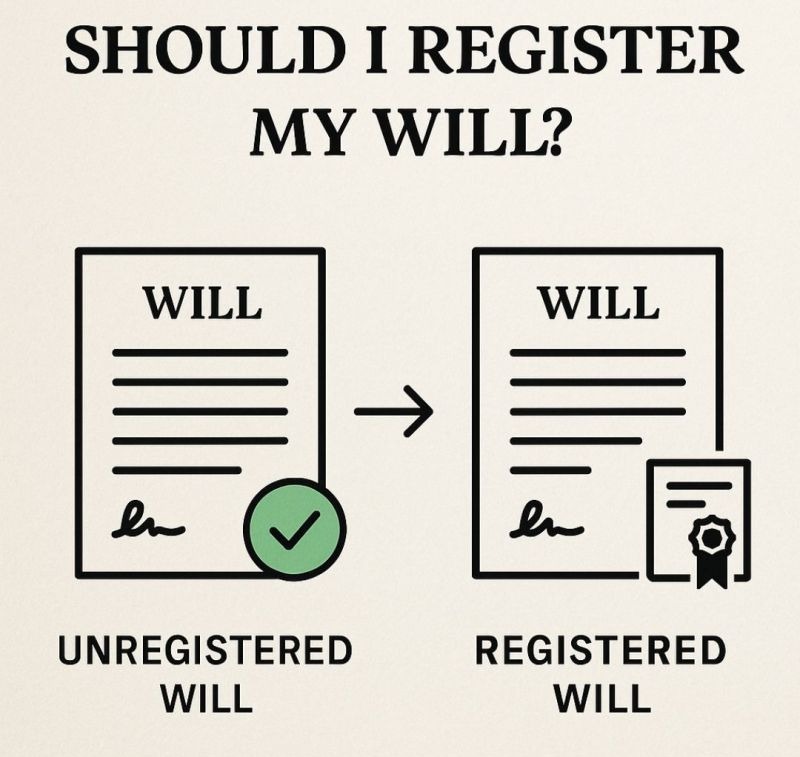
Registered vs. Unregistered Wills: Andhra Pradesh High Court’s Landmark Ruling Redefines Succession Law
Suspicion Can Outweigh Registration in Testamentary Disputes
Comparative Lessons from Global Probate Jurisprudence
By Vishwas Kumar
New Delhi: June 23, 2026:
The recent ruling of the Andhra Pradesh High Court has reignited a fundamental debate in Indian succession law: does the mere registration of a Will guarantee its authenticity? The Court’s emphatic answer—no—underscores a principle deeply embedded in jurisprudence: the genuineness of a Will must be proved in accordance with law, not presumed from its registration. This decision is significant because it touches upon the delicate balance between formality and substance in testamentary succession, a balance that directly affects property rights under Article 300A of the Constitution of India.
Under the Indian Succession Act, 1925, a Will is defined as the legal declaration of a person’s intention regarding the distribution of their property after death. Section 63 of the Act prescribes the formal requirements: the testator must sign or affix their mark, and the Will must be attested by at least two witnesses. Complementing this, Section 68 of the Indian Evidence Act, 1872 requires that at least one attesting witness be examined in court to prove the Will. These provisions highlight that the law prioritizes proof of free intention and proper execution over mere procedural formalities like registration.
Registration of Wills, though permitted under the Registration Act, 1908, is not mandatory. Courts have consistently held that registration may lend credibility but cannot substitute for proof of due execution. The Supreme Court in H. Venkatachala Iyengar v. B.N. Thimmajamma (1959) laid down the doctrine of “suspicious circumstances,” requiring the propounder of a Will to dispel doubts such as unnatural bequests, exclusion of natural heirs, or questionable signatures. This doctrine ensures that Wills are not instruments of fraud or coercion, but genuine reflections of a person’s last wishes.
The Andhra Pradesh High Court’s ruling fits squarely within this framework. By holding that a registered Will does not automatically prevail over an unregistered one when suspicious circumstances exist, the Court reaffirmed that substance outweighs formality. This principle protects vulnerable testators—often elderly or infirm—from exploitation, while ensuring that property rights are adjudicated fairly. It also aligns India with global probate jurisprudence, where courts in jurisdictions like the UK, US, and Australia emphasize authenticity, capacity, and freedom of choice over procedural trappings.
In essence, the ruling is a reminder that Wills are not mere documents but the final voice of a person. That voice must be heard clearly, without distortion from fraud or undue influence. Registration may amplify the voice, but it cannot replace the need for truth.
The Case at Hand
The dispute arose over immovable properties in Guntur District, where the plaintiff relied on a registered Will dated 1990 allegedly executed by Anasuyamma. The defendants contested this, producing a later unregistered Will from 1997, executed shortly before her death. The High Court found the registered Will surrounded by suspicious circumstances and upheld the unregistered Will.
Key Legal Principles
Section 63 of the Indian Succession Act, 1925: Governs execution of Wills, requiring signature by the testator and attestation by two witnesses.
Section 68 of the Indian Evidence Act, 1872: Mandates examination of at least one attesting witness to prove a Will.
Burden of Proof: Lies on the propounder of the Will. Registration alone does not discharge this burden.
Suspicious Circumstances Doctrine: Courts must be satisfied that the Will reflects the free and genuine intention of the testator.
Constitutional Dimensions
Article 300A of the Constitution guarantees the right to property. Testamentary succession is a key mode of exercising this right. The judgment reinforces that property rights must be adjudicated with strict adherence to evidentiary standards.
Judicial Precedents
Supreme Court in Metpalli Lasum Bai v. Metapalli Muthaih (2025): Held that registration creates a presumption of genuineness but does not make a Will conclusive.
H. Venkatachala Iyengar v. B.N. Thimmajamma (1959): Established that suspicious circumstances must be dispelled by the propounder.
Rani Purnima Debi v. Kumar Khagendra Narayan Deb (1962): Clarified that registration is a factor but not decisive.
Comparative Perspectives
United Kingdom: Wills need not be registered; authenticity depends on compliance with the Wills Act 1837. Courts emphasize free will and absence of undue influence.
United States: Probate courts scrutinize Wills for fraud, coercion, or incapacity. Registration is not a concept; notarization may help but is not conclusive.
Australia: Similar to UK, with emphasis on attestation and mental capacity. Suspicious circumstances doctrine is robust.
Case Studies & Narratives
Family Feud in Guntur: The plaintiff’s reliance on a registered Will failed because he could not prove its execution. The defendants succeeded with an unregistered Will backed by credible circumstances.
Lasum Bai Case: A widow’s claim under a registered Will was upheld by the Supreme Court, showing that registration can help but is not decisive.
Rayachoty v. Ramachandra Reddy (2023): Plaintiffs relying on an unregistered Will failed as they did not examine attesting witnesses.
Extended FAQ Index on Wills in India
What is a Will under Indian law? A Will is a legal declaration of a person’s intention regarding the distribution of their property after death, governed by the Indian Succession Act, 1925.
Is registration of a Will mandatory? No, registration is optional. An unregistered Will can still be valid if properly executed and attested.
Does registration make a Will genuine? Registration creates a presumption of authenticity but does not guarantee genuineness; suspicious circumstances can override it.
What is Section 63 of the Succession Act? It lays down the formal requirements for execution of a Will: signature by the testator and attestation by two witnesses.
What is Section 68 of the Evidence Act? It requires at least one attesting witness to testify in court to prove the Will’s validity.
Who bears the burden of proof in Will disputes? The person propounding the Will must prove its due execution and authenticity.
What are “suspicious circumstances”? Situations like unnatural bequests, doubtful signatures, or exclusion of close heirs that raise doubts about the Will’s validity.
Can an unregistered Will be valid? Yes, if it meets legal requirements of execution and attestation, it is enforceable.
What role do attesting witnesses play? They confirm the testator signed the Will voluntarily and in sound mind.
What if witnesses are unavailable? Other evidence, such as handwriting experts or circumstantial proof, may be used, but courts scrutinize carefully.
How does Article 300A relate to Wills? It protects property rights, and Wills are a lawful means of exercising those rights.
What is probate? Probate is judicial certification of a Will’s validity by a competent court.
Is probate mandatory in India? It is mandatory in certain jurisdictions like Mumbai, Chennai, and Kolkata, but not everywhere.
How do courts test mental capacity of the testator? By examining medical records, witness testimony, and circumstances at the time of execution.
Can oral Wills be valid? Generally no, except in rare cases like soldiers in active service under special provisions.
What is undue influence in Will-making? When someone coerces or manipulates the testator into making dispositions against their free will.
How do courts treat forged Wills? Forged Wills are void and can lead to criminal liability for fraud.
What if two Wills conflict? The later Will usually prevails, provided it is validly executed.
Which Will prevails—earlier or later? The most recent valid Will supersedes earlier ones.
Can a registered Will be challenged? Yes, on grounds of fraud, coercion, incapacity, or suspicious circumstances.
What is the evidentiary value of registration? It supports authenticity but is not conclusive proof of validity.
How do courts resolve family disputes over Wills? By examining evidence, witnesses, and circumstances to determine the genuine intention of the testator.
What is the role of notaries in Wills? Notaries may witness signatures but are not mandatory for validity.
Can Wills be revoked? Yes, by executing a new Will or expressly revoking the old one.
What is a codicil? A codicil is a supplementary document that modifies or adds to a Will.
How do Hindu succession laws interact with Wills? Hindus can freely dispose of property through Wills, overriding intestate succession rules.
Can Muslims make Wills? Yes, but subject to Islamic law restrictions.
What is the limit for Muslim Wills? A Muslim can bequeath only up to one-third of their estate without heirs’ consent.
How do Christian succession laws treat Wills? Christians follow the Indian Succession Act, allowing full testamentary freedom.
What is the difference between testamentary and intestate succession? Testamentary succession is through a Will; intestate succession occurs when no Will exists.
Can minors make Wills? No, only persons above 18 (or 21 under guardianship) can make Wills.
Can Wills be made on deathbeds? Yes, if the testator is of sound mind and the Will is properly attested.
How do courts treat medical evidence in Will disputes? Medical records help establish mental capacity and absence of undue influence.
What is the role of handwriting experts? They verify signatures and handwriting to confirm authenticity.
How do courts treat digital Wills? Currently, Indian law does not formally recognize digital Wills, but debates are ongoing.
Are video-recorded Wills valid? Not legally recognized yet, but they may serve as supporting evidence.
What is the role of family settlement agreements? They can resolve disputes amicably, sometimes overriding contentious Wills.
Can Wills be challenged after probate? Yes, but only on limited grounds like fraud or forgery.
What remedies exist for disinherited heirs? They can challenge the Will or seek relief under maintenance laws.
How do foreign Wills operate in India? Foreign Wills can be recognized if executed validly under local law and comply with Indian succession rules.
Op-Ed Style Closing Vision
The Andhra Pradesh High Court’s ruling is more than a technical interpretation of succession law—it is a reaffirmation of the principle that justice must rest on truth, not formality. In a society where property disputes often fracture families, the Court’s insistence on dispelling suspicious circumstances before accepting a Will is a safeguard against manipulation.
The case highlights a paradox: registration, often seen as a shield against fraud, can itself be a cloak for deceit if not backed by genuine execution. The law wisely refuses to elevate registration into a talisman. Instead, it demands proof—witnesses, circumstances, and credibility. This insistence protects the vulnerable, especially the elderly, from exploitation.
Comparative jurisprudence shows that India is aligned with global principles. In the UK, US, and Australia, courts emphasize free will, capacity, and absence of undue influence. Registration is not central; authenticity is. India’s dual approach—allowing registration but not making it decisive—balances administrative convenience with substantive justice.
The human dimension cannot be ignored. Wills are not mere documents; they are the final voice of a person. To silence that voice through fraud or coercion is to rob them of dignity. Courts must therefore act as guardians of that voice, ensuring it is heard clearly and truthfully. The doctrine of suspicious circumstances is the judicial ear that listens for distortion.
Looking ahead, technology may reshape succession law. Digital Wills, video attestations, and blockchain registration are emerging. Yet the core principle will remain: genuineness must be proved. No technology can replace the need for human credibility. Courts must adapt, but they must not abandon the insistence on truth.
The judgment also has social implications. In India, property disputes often escalate into prolonged litigation, draining families emotionally and financially. Clear judicial standards reduce uncertainty and encourage settlements. By clarifying that registration is not conclusive, the Court discourages frivolous reliance on mere paperwork and compels parties to present substantive proof.
Ultimately, succession law is about trust. A Will is a trust reposed by the dead in the living. Courts must honor that trust by ensuring that only genuine Wills prevail. The Andhra Pradesh High Court has done precisely that—reminding us that law is not about documents, but about justice.
This ruling should inspire legislative and judicial reforms:
Encourage video-recorded attestations to reduce disputes.
Mandate witness examination in probate proceedings.
Create awareness about proper Will-making to prevent exploitation.
In conclusion, the judgment is a beacon. It tells us that truth outweighs formality, substance outweighs appearance, and justice outweighs convenience. As families navigate the delicate terrain of inheritance, they can take solace in knowing that courts will protect the genuine voice of their loved ones, even against the weight of registration.