
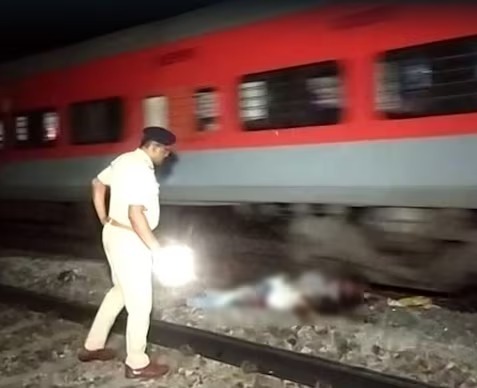
Missing Ticket Not Grounds to Deny Compensation: Allahabad High Court Orders Railways to Pay ₹8 Lakh Compensation to Victim’s Family
Court Rules Non-Recovery of Physical Journey Ticket Cannot Defeat Bona Fide Passenger Claim Under Welfare Legislation
Bench Rejects Speculative Arguments on Train Over-Run, Reinforcing Strict Liability and Burden-Shifting Doctrines
By Legal Editor
New Delhi: August 19, 2026:
In a crucial judicial ruling reaffirming the social welfare mandate of statutory accident remedies, the Lucknow Bench of the Allahabad High Court ruled that the mere non-recovery of a train journey ticket from a deceased victim’s body or belongings cannot serve as an absolute ground to deny compensation. Overturning a prior dismissal by the Railway Claims Tribunal (RCT), the High Court awarded statutory compensation of ₹8,00,000 to Lali, the widow of Shiv Narayan Singh, who lost his life after falling from a moving train in November 2011.
The judgment, authored by Justice Syed Qamar Hasan Rizvi, addresses a recurring challenge in railway compensation litigation across India: the strict evidentiary burden placed on grief-stricken claimants when physical travel passes or tickets are lost, destroyed, or stolen during violent accidents.
Legislative Framework: Strict Liability and Untoward Incidents
The legal core of the judgment rests on the interpretation of Section 123(c) and Section 124A of the Railways Act, 1989.
Under Section 123(c)(2) of the Act, an "untoward incident" specifically includes the accidental falling of any passenger from a train carrying passengers. Complementing this definition, Section 124A establishes a strict liability ("no-fault") compensation scheme. This provision mandates that when an untoward incident occurs, the Railway Administration is liable to pay compensation to the victim or their dependents regardless of whether there was any wrongful act, neglect, or default on the part of the Railways.
┌─────────────────────────────┐
│ Railways Act, 1989 Statutory Structure │
─────────────────────────────┤
│ Provision │ Key Legal Mandate │
├────────────────────────────────┼────────────────────────────────────────┤
│ Section 123(c)(2) │ Defines "untoward incident" to include │
│ │ accidental falling from a moving train │
├────────────────────────────────┼────────────────────────────────────────┤
│ Section 124A │ Imposes strict "no-fault" liability │
│ │ on Railways for untoward incidents │
├────────────────────────────────┼────────────────────────────────────────┤
│ Section 124A Proviso Exceptions│ Disentitles claims ONLY in cases of │
│ │ suicide, self-inflicted injury, criminal│
│ │ acts, or natural death. │
The statutory liability is restricted only under specific exceptions outlined in the proviso to Section 124A, such as suicide or attempted suicide, self-inflicted injury, intentional criminal acts, or death resulting from natural causes or intoxication. Where none of these exceptions apply, the duty to pay compensation remains strict and absolute.
Factual Background and Tribunal Dispute
The case traces back to November 21, 2011, when Shiv Narayan Singh boarded the Lal Qila Express at Etawah station bound for Delhi. En route, Singh accidentally fell from the moving carriage near the Sarai Bhupat railway station and succumbed to fatal injuries.
Following the tragedy, his widow, Lali, approached the Railway Claims Tribunal seeking statutory compensation. However, in 2017, the RCT dismissed the claim on two primary grounds:
Absence of Ticket: No physical journey ticket was recovered from the body of the deceased or from the accident site by police during the inquest.
Body Condition Inference: The Tribunal concluded that because the body was recovered in three pieces, the deceased must have been run over while illegally trespassing on the tracks, rather than falling from a train.
Dissatisfied with the tribunal's rejection, the widow filed an appeal before the Allahabad High Court.
Evidentiary Standards: Preponderance of Probabilities vs. Beyond Reasonable Doubt
Reevaluating the Tribunal's findings, the High Court observed that proceedings under Section 124A of the Railways Act are civil in nature and originate from a beneficial social welfare statute. Consequently, courts must apply the standard of preponderance of probabilities, rather than the strict criminal standard of proof beyond reasonable doubt.
EVIDENTIARY BURDEN FRAMEWORK
┌───────────────────────────────┐ ┌───────────────────────────────┐
│ CLAIMANT'S BURDEN │ │ RAILWAYS' REBUTTAL │
│ Files sworn affidavit/oral │───────>│ Must produce concrete evidence│
│ testimony of valid travel │ Shift │ (e.g., ticket registers, │
│ (Prima Facie Discharge) │ │ eyewitnesses) to disprove it │
└───────────────────────────────┘
The High Court held that the initial burden rests on the claimant to demonstrate bona fide travel. This initial burden can be validly discharged through a sworn affidavit or clear oral testimony stating that the passenger purchased a ticket and boarded the train. In this case, the victim's widow and an accompanying witness provided sworn statements confirming that Singh had purchased a valid second-class passenger ticket at Etawah station before boarding.
Once the claimant discharges this initial threshold, the evidentiary burden shifts completely to the Railway Administration to rebut the presumption with affirmative evidence. The High Court noted that the Railways failed to produce ticket sale logs, booking counter records, or TTE verification registers to disprove the purchase. In the absence of counter-evidence, the claimant's sworn testimony must be accepted.
Rejection of Speculative Inferences Regarding Injury Nature
Addressing the RCT's deduction regarding the condition of the body, Justice Rizvi observed that inferring track trespassing purely because the body was severed into multiple pieces was completely speculative.
The court pointed out that when a passenger falls from a high-speed moving train, secondary impacts with tracks, wheels, or oncoming traffic are known physical occurrences. Inferring illegal track crossing without independent expert medical evidence, forensic reconstruction, or eyewitness accounts violates basic principles of evidence. Technical or speculative assumptions cannot be used to undermine a beneficial claim.
Precedential Foundations: The Landmark Rina Devi Rule
The legal principles articulated by the Allahabad High Court align directly with established jurisprudence laid down by the Supreme Court of India. In the landmark judgment Union of India v. Rina Devi (2019 3 SCC 572), the Supreme Court addressed the issue of missing tickets in railway accident claims.
The Supreme Court ruled:
Loss of Ticket in Accidents: Physical tickets are frequently displaced, destroyed, lost during impact, or stolen by bystanders during fatal rail accidents.
No Automatic Rejection: Mere non-recovery of a ticket from the body of an injured or deceased passenger cannot lead to an automatic inference that the person was a ticketless traveller.
Affidavit Sufficiency: A sworn affidavit filed by the victim's legal heirs, supported by corroborative attending circumstances, is sufficient to discharge the primary onus, shifting the burden of proof onto the Railways.
Subsequent rulings across multiple jurisdictions—including the Delhi High Court in Manarajiya v. Union of India (2026) and recent apex court rulings—have consistently reinforced that hyper-technical evidentiary demands undermine the humanitarian purpose of Section 124A.
Strategic Implications for Claims Adjudication
The judgment carries broad administrative and legal implications for future claims before Railway Claims Tribunals:
Procedural Relief for Claimants: Dependents are not held to impossible evidentiary standards when physical items are lost during accidents.
Institutional Accountability: The Railways must maintain accurate digital booking records and checking logs if they intend to challenge bona fide travel claims, rather than relying on the absence of physical tickets.
Strict Compliance Timelines: The High Court ordered the Railways to disburse the entire compensation amount of ₹8,00,000 within eight weeks. Failure to comply within the stipulated window automatically triggers an interest penalty of 9 per cent per annum until full payment is realized.
Frequently Asked Questions (FAQ)
An indexed guide to key legal aspects of railway accident compensation:
Index of Topics
Q1: What qualifies as an 'untoward incident' under Indian Railway Law?
Q2: Is a physical train ticket mandatory to claim compensation?
Q3: Who bears the burden of proving bona fide travel?
Q4: What is the standard of proof required in RCT compensation cases?
Q5: What are the exceptions where Railways can deny compensation?
Q6: What is the statutory compensation amount payable for fatal rail accidents?
Q7: What interest rate applies if the Railways delay compensation payments?
Q1: What qualifies as an 'untoward incident' under Indian Railway Law?
Answer: Under Section 123(c) of the Railways Act, 1989, an "untoward incident" includes terrorist attacks, violent acts, dacoity, rioting, shooting, or the accidental falling of any passenger from a train carrying passengers.
Q2: Is a physical train ticket mandatory to claim compensation?
Answer: No. As affirmed by the Supreme Court in Rina Devi and re-established by the Allahabad High Court, the non-recovery of a physical ticket does not automatically negate a claim. Physical tickets are often lost, torn, or misplaced during severe train accidents.
Q3: Who bears the burden of proving bona fide travel?
Answer: The initial burden lies on the claimant to establish that the passenger was traveling legitimately. This can be discharged by filing a sworn affidavit detailing the travel details. Once submitted, the burden shifts to the Railway Administration to disprove the claim using official records.
Q4: What is the standard of proof required in RCT compensation cases?
Answer: The required standard is the civil principle of preponderance of probabilities, not the strict criminal standard of proof beyond reasonable doubt. Claims cannot be rejected based on minor technical flaws or speculative inferences.
Q5: What are the exceptions where Railways can deny compensation?
Answer: Under the proviso to Section 124A of the Railways Act, compensation can be denied only if death or injury was caused by:
Suicide or attempted suicide.
Self-inflicted injury.
The victim's own criminal act.
Acts committed under state of intoxication or insanity.
Natural causes or disease.
Q6: What is the statutory compensation amount payable for fatal rail accidents?
Answer: Under the Railway Accidents and Untoward Incidents (Compensation) Rules, the prescribed statutory compensation for fatal accidents and specific major injuries (such as loss of limbs) is ₹8,00,000.
Q7: What interest rate applies if the Railways delay compensation payments?
Answer: Courts regularly direct the Railways to release the awarded sum within a specified timeframe (typically 4 to 8 weeks). If delayed, interest rates ranging between 6% to 9% per annum are imposed from the date of the order or filing of the claim until actual realization.