
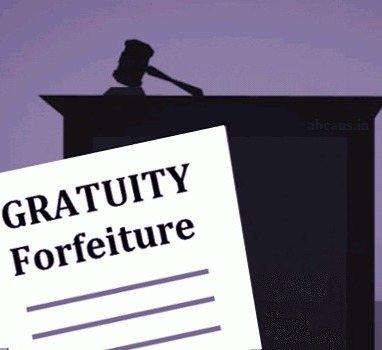
No Exceptions for Indictments: Why Pending Criminal Cases Lawfully Lock Retiral Gratuity for Retired Public Servants
Allahabad High Court Reaffirms Mandatory Statutory Embargo Under Civil Services Regulations Irrespective of Offence Severity
Decodifying Regulations 351-AA and 919-A(3): The Fine Line Between Provisional Pension Rights and Deferred Gratuity Disbursement
By Legal Editor
New Delhi: August 01, 2026:
The intersection of public employment law, criminal jurisprudence, and post-retiral entitlements has long remained a contentious battlefield in Indian administrative law. At the center of this debate is a recurring question: Can a state government withhold the retiral gratuity and final retirement benefits of a public servant solely because a criminal case or departmental inquiry remains pending on the date of superannuation?
Addressing this crucial issue, the , in the significant ruling of , delivered by Justice Anish Kumar Gupta, clarified the legal framework governing retiral benefits in Uttar Pradesh. The Court held in unambiguous terms that gratuity and final retirement dues cannot be released to a retired government employee while criminal proceedings against them remain pending before a court of law. Crucially, the Bench declared that the gravity, seriousness, or nature of the alleged criminal offence is entirely irrelevant to the statutory operation of the withholding provisions.
This decision reinforces a series of statutory provisions embedded within the Civil Services Regulations (CSR) applicable in Uttar Pradesh—specifically and . This article provides a comprehensive legal analysis of the statutory scheme, judicial precedents, constitutional principles under Article 300-A, and the broader policy implications surrounding the deferral of retirement gratuity.
1. The Factual and Legal Context of Hanuman Prasad Yadav
The writ petition before the Allahabad High Court was instituted by a retired government servant seeking a writ of mandamus to compel the state authorities to release his accumulated death-cum-retirement gratuity (DCRG) and final retiral benefits. The state government resisted the claim on the ground that criminal proceedings involving the petitioner were actively pending before a competent trial court.
The petitioner argued that the alleged criminal offense was minor or unrelated to financial loss caused to the state exchequer, asserting that withholding hard-earned retiral benefits—which constitute deferred wages rather than a mere bounty—violated fundamental principles of fairness and the constitutional protection guaranteed under Article 300-A of the Constitution of India.
Rejecting these contentions, Justice Anish Kumar Gupta emphasized that administrative authorities and judicial forums are strictly bound by the statutory framework governing civil services. When statutory rules explicitly create a prohibition against disbursing final gratuity during the pendency of judicial proceedings, courts cannot introduce subjective criteria—such as assessing how serious an indictment is—to grant equitable relief contrary to express law.
2. Statutory Architecture: The Uttar Pradesh Civil Services Regulations Scheme
To appreciate the legal foundation of the High Court's ruling, one must examine the specific provisions of the Civil Services Regulations (CSR) as adapted and applied in the State of Uttar Pradesh:
A. Article 351 and Regulation 351-A: Good Conduct and Financial Recovery
Implied Condition of Good Conduct: Article 351 of the CSR lays down the foundational premise that future good conduct is an implied condition of every grant of pension.
Governor's Power of Withholding or Recovery: reserves to the Governor the right to withhold or withdraw a pension (or any part thereof), whether permanently or for a specified period, and to order recovery from pension for any pecuniary loss caused to the government if the pensioner is found guilty of grave misconduct or negligence in departmental or judicial proceedings.
Definition of Pension: Under Regulation 41 of the CSR, the broad term "pension" includes "gratuity," as affirmed in landmark precedents like .
B. Regulation 351-AA: Sanction of Provisional Pension
When a government servant retires while facing pending departmental proceedings, judicial proceedings, or an inquiry by an Administrative Tribunal, bridges the financial gap by authorizing the Head of Department to sanction a provisional pension. This provisional pension is calculated up to the maximum admissible pension based on qualifying service completed prior to retirement or suspension.
C. Regulation 919-A(3): The Mandatory Bar on Gratuity
While Regulation 351-AA ensures subsistence through a provisional pension, sets out strict conditions regarding final retiral dues:
Clause (1) & (2): Provide for the payment and adjustment of provisional pension from the date of retirement until final orders are passed post-conclusion of proceedings.
Clause (3) - The Direct Statutory Bar: Explicitly dictates that "No death-cum-retirement gratuity shall be paid to the Government servant until the conclusion of the departmental or judicial proceedings or the enquiry by the Administrative Tribunal and issue of final orders thereon."
This statutory mandate leaves no administrative discretion. The expression "judicial proceedings" encompasses both civil suits arising out of official duties and criminal trials instituted by state investigative agencies or private complainants.
3. The Irrelevance of the Seriousness of Offence
A core contribution of the Hanuman Prasad Yadav judgment lies in its unequivocal rejection of the "severity test". Litigants frequently argue that withholding gratuity for minor criminal allegations or private disputes (e.g., matrimonial disputes under Section 498A IPC or minor IPC infractions) is disproportionate and punitive.
The High Court clarified that Regulation 919-A(3) operates as an automatic legal embargo triggered by the factum of pending judicial proceedings. The rule does not classify offences into bailable/non-bailable, cognizable/non-cognizable, or financial/non-financial categories. The court reasoned that:
Statutory Textualism: Where statutory language is plain, unambiguous, and mandatory, courts cannot read exceptions into the rule based on perceived gravity.
Pre-judgment Impartiality: Assessing the seriousness of an ongoing criminal case at the stage of retiral disbursements would require executive authorities or writ courts to venture into the merits of pending criminal charges, potentially prejudicing the criminal trial.
Risk Management: Until judicial proceedings conclude, the ultimate monetary liability, potential order of recovery, or finding of moral turpitude remains undetermined. Releasing gratuity prematurely could render subsequent recovery orders under Regulation 351-A ineffective.
4. Harmonizing Judicial Precedents and Constitutional Rights
The legal position affirmed in Hanuman Prasad Yadav aligns with established jurisprudence developed across multiple benches of the High Court and the Supreme Court of India:
┌─────────────────────────────────────────┐
│ Government Servant Retires with │
│ Pending Criminal/Judicial Case │
▼
┌───
│ Civil Services Regulations │
│ (CSR - Uttar Pradesh) │
└
│ │
▼ ▼
│ Regulation 351-AA │ │ Regulation 919-A(3) │
│ & 919-A(1) / (2) │ │ Mandatory Prohibition│
└──────────┬───────────┘
▼ ▼
│ Provisional Pension │ │ DCRG / Final Gratuity│
│ ALLOWED │ │ STRICTLY WITHHELD │
A. Alignment with Constitutional Right to Property (Article 300-A)
In (2013), the Supreme Court ruled that executive instructions or administrative orders cannot withhold pension or gratuity without explicit statutory authorization, as retiral benefits are property under Article 300-A.
The ruling in Hanuman Prasad Yadav respects this constitutional principle. The withholding of gratuity in Uttar Pradesh is not executed via arbitrary executive discretion; it is anchored in formal statutory law promulgated under the authority of Article 309 of the Constitution.
B. High Court Precedents
(2009): A Division Bench held that Regulation 919-A(3) specifically addresses gratuity disbursement during pending proceedings, making deferral mandatory.
(2019): Reaffirmed that no government employee facing civil or criminal judicial proceedings can demand final gratuity as a matter of right prior to exoneration.
5. Comparative Overview of Statutory Pension & Gratuity Provisions
The following matrix summarizes the applicable regulations governing retired public servants in Uttar Pradesh facing pending inquiries:
6. Public Policy Considerations & Remedies Against Unreasonable Delay
While the legal prohibition against releasing gratuity is strict, it can impose severe financial strain on employees when criminal trials drag on for decades. To balance state interests with employee welfare, courts have highlighted two key protections:
Mandatory Disbursement of Provisional Pension: The state cannot withhold both pension and gratuity. Under Regulation 351-AA, the employee must receive provisional pension to sustain themselves during the trial.
Right to Speedy Trial and Interest Remedies: Where criminal trials suffer from inordinate, unexplained state delay, retired employees can approach writ courts under Article 226 seeking directions for time-bound trial completion. Upon honourably winning an acquittal, the employee becomes fully entitled to the withheld gratuity along with statutory interest in unjust delays.
Searchable Index & Comprehensive FAQ on Service Jurisprudence
Quick Reference Navigation Index
Q1: Core Ruling in Hanuman Prasad Yadav
Q2: Primary UP CSR Rules Governing Retiral Dues
Q3: Distinguishing Regulation 351-A, 351-AA & 919-A
Q4: Status of Pension vs Gratuity During Trial
Q5: Impact of Offence Gravity or Financial Loss
Q6: Definition of Judicial Proceeding
Q7: Compatibility with Article 300-A Property Rights
Q8: Rights and Remedies Upon Acquittal
Q9: State Recovery Powers From Pension & Gratuity
Q10: Alignment with Supreme Court Precedents
Q1: What did the Allahabad High Court rule in Hanuman Prasad Yadav v. State of U.P.?
Answer: The High Court held that a retired government servant facing pending criminal proceedings cannot claim the release of death-cum-retirement gratuity (DCRG) or final retiral dues. The Court affirmed that the seriousness, nature, or financial implication of the alleged offence is completely irrelevant when applying the statutory bar.
Q2: Which legal rules govern the withholding of retiral benefits in Uttar Pradesh?
Answer: The primary governing framework is contained within the Civil Services Regulations (CSR) as applicable in UP:
Article 351 & Regulation 351-A: Power to withhold/withdraw pension or recover losses due to grave misconduct.
Regulation 351-AA: Sanction of provisional pension during pending proceedings.
Regulation 919-A(3): Specific statutory embargo prohibiting payment of gratuity until judicial/departmental proceedings conclude.
Q3: What is the operational difference between Regulation 351-A, 351-AA, and 919-A?
Answer:
Regulation 351-A provides substantive power to impose penalties or make recoveries from pension/gratuity after a finding of guilt in departmental or judicial proceedings.
Regulation 351-AA provides an interim financial arrangement permitting the sanction of provisional pension while proceedings remain pending.
Regulation 919-A(3) creates a mandatory interim bar prohibiting the payment of gratuity until proceedings conclude.
Q4: Can the state withhold both provisional pension and gratuity during a criminal trial?
Answer: No. While Regulation 919-A(3) strictly bars the payment of death-cum-retirement gratuity, Regulation 351-AA guarantees the grant of a provisional pension equal to the maximum admissible pension based on qualifying service. The state cannot leave a retired employee entirely destitute during the pendency of trial.
Q5: Does the severity or financial nature of the criminal charge affect the withholding of gratuity?
Answer: No. Regulation 919-A(3) does not distinguish between minor or major offences, nor between offences involving financial loss and non-financial disputes. The simple pendency of a criminal case before a competent court triggers the withholding requirement.
Q6: What constitutes a "judicial proceeding" under the Civil Services Regulations?
Answer: A "judicial proceeding" includes any criminal trial in which a court has taken cognizance of a charge sheet, as well as civil suits arising out of official actions. It applies once judicial proceedings have formally commenced against the employee.
Q7: How does withholding gratuity align with the Right to Property under Article 300-A?
Answer: Article 300-A states that no person shall be deprived of property save by authority of law. In Jitendra Kumar Srivastava, the Supreme Court held that pensionary benefits are property and cannot be taken away by mere executive orders. However, in Uttar Pradesh, the withholding of gratuity is sanctioned by statutory law (Regulations 351-AA and 919-A), making it constitutional and compliant with Article 300-A.
Q8: What happens to the withheld gratuity if the retired employee is acquitted?
Answer: Upon honourable acquittal or final conclusion of proceedings in favor of the employee, the statutory bar under Regulation 919-A(3) lapses. The employee becomes entitled to immediate release of full retiral gratuity, final pension sanction, and potential interest for undue delays attributable to administrative lethargy.
Q9: Can the Governor recover monetary loss caused to the government from gratuity?
Answer: Yes. Under Regulation 351-A read with Regulation 41, the Governor holds the statutory power to order recovery of pecuniary loss caused to the state exchequer from either pension or accumulated gratuity following a finding of guilt.
Q10: How does this High Court ruling harmonize with Supreme Court precedents?
Answer: The judgment aligns with Supreme Court jurisprudence by upholding statutory provisions framed under Article 309. While pension/gratuity cannot be withheld through arbitrary administrative orders, valid statutory rules specifically restricting retiral payouts during pending trials are legally binding.
Statutory Provision — Governing Scope — Immediate Entitlement — Final Entitlement Status
Article 351 — Implied condition of good conduct — Pension subject to future conduct — Can be forfeited for misconduct
Regulation 351-A — Governor's right of recovery/withholding — Post-conclusion action — Permissible upon finding of guilt
Regulation 351-AA — Pending inquiry/judicial case at retirement — Provisional Pension released — Adjusted upon final trial order
Regulation 919-A(3) — Death-Cum-Retirement Gratuity (DCRG) — Strictly Withheld/Deferred — Released only after acquittal