
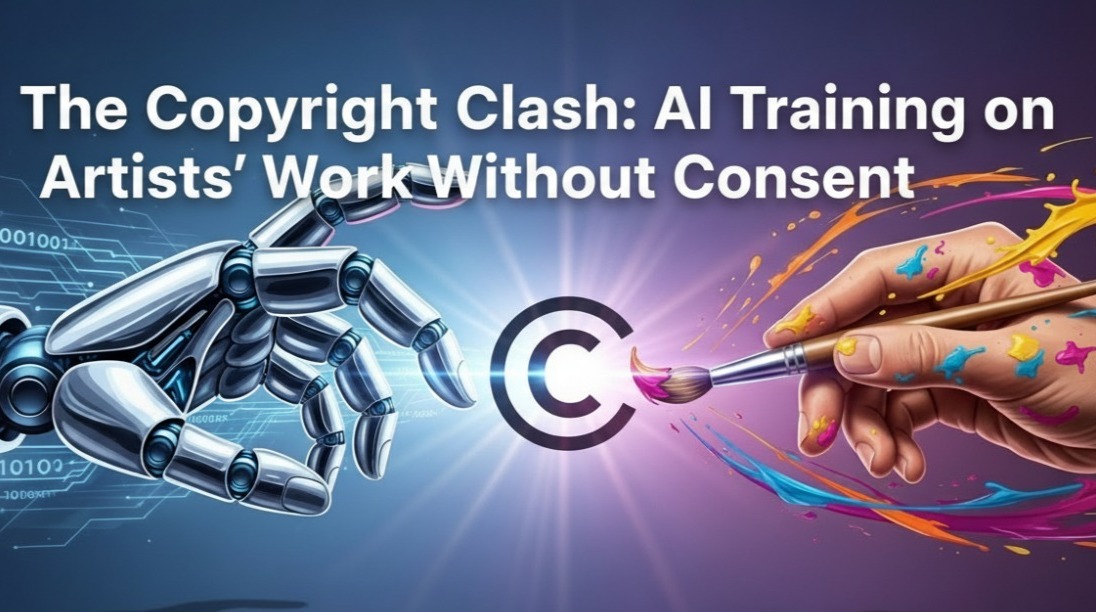
AI Training vs Copyright in India: Section 52’s Legal Crossroads
Why India’s fair dealing law may not shield AI companies
Comparative lessons from the US, EU, and global frameworks
By Vishwas Kumar
New Delhi: June 27, 2026:
India’s copyright law is facing a defining moment. Section 52 of the Copyright Act, 1957, was drafted in an era when the primary concern was photocopying textbooks or reproducing articles for classroom use. It provides narrow “fair dealing” exceptions for private study, research, criticism, review, and reporting current events. But today, the rise of artificial intelligence—particularly large language models (LLMs)—has stretched this provision to its limits. AI companies routinely train their systems on vast datasets that include copyrighted works, raising the question: is this legitimate research or outright infringement?
The stakes are high. On one side are creators—authors, journalists, musicians—who argue that their intellectual property is being used without consent or compensation. For them, the wholesale ingestion of their works into AI datasets feels like exploitation, undermining both livelihood and dignity. On the other side are technology firms and startups who insist that innovation cannot thrive if every dataset requires costly licensing. They argue that training AI is transformative, producing statistical patterns rather than reproducing works verbatim, and therefore should fall under research exceptions.
Indian courts have offered some guidance but remain cautious. In Rameshwari Photocopy, the Delhi High Court allowed photocopying for educational purposes, but emphasized that exceptions must be interpreted strictly. This suggests that stretching Section 52 to cover commercial AI training may not be judicially acceptable. Meanwhile, cases like ANI Media v. OpenAI highlight the unresolved tension between copyright protection and technological progress. Parliament, not the judiciary, may ultimately need to legislate a new framework.
Globally, India’s position looks rigid. The US relies on its flexible “fair use” doctrine, though outcomes vary. The EU has introduced explicit text and data mining exceptions, with opt-outs for rights holders. Japan has gone further, broadly permitting AI training. India risks falling behind if it fails to adapt, yet it also risks undermining its creative industries if it expands exceptions too far.
At its core, the debate is about balance. Innovation must be encouraged, but not at the expense of creators’ rights. Section 52 was never designed for algorithms parsing billions of words. The law must evolve to meet the realities of AI, ensuring that both human creativity and technological progress can coexist. Without clarity, India faces a future of litigation, uncertainty, and cultural erosion. The crossroads is here, and the choice cannot be delayed.
The Indian Legal Landscape
Section 52 of the Copyright Act, 1957: Defines limited exceptions—private use, criticism/review, and reporting current events. Unlike the US “fair use” doctrine, India’s model is rigid and statutory.
Judicial precedents:
University of Oxford v. Rameshwari Photocopy (Delhi HC) upheld photocopying for educational purposes but emphasized strict adherence to statutory text.
Civic Chandran v. Ammini Amma (Kerala HC) stressed examining purpose and character of use in fair dealing.
Pending litigation: ANI Media v. OpenAI challenges use of copyrighted news content for LLM training, highlighting unresolved questions about whether scraping and storing copyrighted works is “research” or infringement.
Comparative Perspectives
India’s rigid statutory model contrasts sharply with the US and EU, leaving AI companies in legal uncertainty.
Case Studies & Human Narratives
Authors & Journalists: Fear uncompensated use of their works in AI datasets, undermining creative livelihoods.
Startups: Argue that restrictive copyright rules stifle innovation, as licensing vast datasets is prohibitively expensive.
Students & Researchers: Benefit from AI tools trained on diverse data, but risk losing access if copyright disputes choke development.
A Delhi-based journalist recently discovered her articles embedded in AI outputs without consent—raising questions of ownership, dignity, and compensation.
FAQ Index on AI Training & Copyright
What is Section 52 of the Copyright Act? It lists specific exceptions to copyright infringement, such as private use, research, criticism, and reporting current events.
How does “fair dealing” differ from “fair use”? Fair dealing in India is narrow and statutory, while fair use in the US is flexible and case-by-case.
Can AI training be classified as “research” under Section 52? Courts have not yet clarified; arguments hinge on whether large-scale commercial training counts as research.
What did the Delhi HC rule in Rameshwari Photocopy? It allowed photocopying for education, emphasizing statutory exceptions but not expanding them beyond text.
Why is ANI Media v. OpenAI significant? It directly challenges whether AI scraping of news content is infringement or protected research.
Does storing copyrighted works for AI training equal reproduction? Yes, storing and copying data typically falls under reproduction rights under Section 14.
How does Section 14 define reproduction rights? It grants authors exclusive rights to reproduce their works in any material form.
Are AI outputs themselves infringing? Not necessarily—if outputs are transformative and don’t substitute original works, they may avoid infringement.
What is “transformative use” in US law? It means the new work adds value or purpose beyond the original, often favoring fair use.
How does the EU regulate text and data mining? EU law provides explicit exceptions for research and commercial use, subject to opt-outs.
Can rights holders opt out of AI training in the EU? Yes, they can reserve rights by declaring opt-outs, limiting use of their works.
What is Japan’s stance on AI training? Japan broadly permits text and data mining, prioritizing innovation over strict copyright control.
How does UK law treat AI training? It allows research exceptions but excludes commercial AI training, sparking reform debates.
Why is India’s statutory model considered rigid? Because exceptions are narrowly defined and courts cannot expand them beyond the statute.
Can courts expand Section 52 to cover AI? No, courts interpret but cannot legislate new exceptions; Parliament must act.
Should Parliament legislate a new AI-specific exception? Yes, many argue India needs clear rules for AI training to balance innovation and rights.
How do creators benefit from copyright protection? It ensures control over reproduction, distribution, and compensation for their works.
What risks do startups face under current law? They risk lawsuits and damages if training datasets include copyrighted works without permission.
Is AI training for commercial purposes treated differently? Yes, commercial use is less likely to qualify under “research” exceptions.
How does market impact affect fair use analysis in the US? If AI outputs harm the market for originals, fair use is less likely.
What role does “purpose and character” play in fair dealing? Courts assess whether use is educational, critical, or transformative versus commercial exploitation.
Can AI training be considered “private study”? Unlikely, since training involves mass reproduction beyond individual study.
How do Indian courts interpret “research”? They interpret it narrowly, focusing on academic or educational contexts.
What constitutional principles are implicated? Freedom of speech, property rights, and promotion of scientific progress intersect.
Does Article 19(1)(a) (freedom of speech) intersect with AI training? Yes, AI outputs may be seen as speech, but inputs implicate property rights.
How does Article 300A (property rights) apply to copyright? Copyright is treated as property, so unauthorized use may violate constitutional protection.
What is the balance between innovation and creator rights? It requires protecting authors while enabling technological progress.
How do licensing models work for AI datasets? They involve collective or individual agreements granting rights to use works for training.
What reforms are being debated globally? Debates include opt-out systems, collective licensing, and broader exceptions for AI.
Could India adopt a hybrid model like the EU? Yes, combining statutory exceptions with opt-outs could balance interests.
What remedies exist for creators whose works are used? They can seek injunctions, damages, or licensing fees through courts.
How do damages get calculated in copyright infringement? Courts assess actual loss, profits gained, and statutory damages.
Can AI companies claim “transformative research”? They argue training transforms data into statistical patterns, but courts remain skeptical.
What is the difference between input data and output content? Inputs are copyrighted works; outputs are generated text, often transformative.
How might collective licensing solve disputes? It pools rights, allowing AI firms to pay standardized fees for large datasets.
What role should industry self-regulation play? It can set ethical standards, transparency, and voluntary compensation schemes.
How do moral rights apply to AI training? Authors retain rights to attribution and integrity, which may be violated if works are misused.
Can AI training be justified under educational exceptions? Only if strictly for non-commercial, academic purposes—not for commercial LLMs.
What is the risk of over-expanding Section 52? It could undermine creator rights and reduce incentives for original work.
Who should ultimately decide—courts or Parliament? Parliament, since only legislation can create new exceptions for AI training.
Op-Ed Closing Vision
India stands at a pivotal moment. The Copyright Act of 1957 was drafted in an era of books, photocopies, and broadcast media—not algorithms parsing billions of words in seconds. Section 52’s fair dealing exceptions were designed to protect students, researchers, and journalists, not multinational AI firms building billion-dollar products. Yet the law now finds itself stretched to accommodate technologies its framers never imagined.
The temptation is strong to shoehorn AI training into “research.” After all, LLMs don’t spit out novels verbatim; they analyze patterns. But this argument glosses over the industrial scale and commercial context of AI training. When copyrighted works are ingested wholesale, stored, and processed, the act resembles reproduction more than private study. The outputs may be transformative, but the inputs are undeniably someone’s intellectual property.
Globally, lawmakers are grappling with the same dilemma. The US leans on its flexible fair use doctrine, but outcomes vary wildly across courts. The EU has crafted explicit text and data mining exceptions, balancing innovation with opt-outs for rights holders. Japan has embraced a broad exception, prioritizing technological advancement. India, however, remains caught in statutory rigidity, with Section 52 offering no clear safe harbour.
This uncertainty hurts everyone. Creators fear exploitation, startups fear litigation, and courts fear overreach. The result is a chilling effect on both innovation and creativity. Without clarity, AI companies cannot plan compliance, and authors cannot safeguard their works. The stakes are not merely legal—they are cultural and economic. India’s creative industries, from publishing to music, risk erosion if their works become raw material for AI without consent or compensation.
The solution lies not in judicial improvisation but legislative foresight. Parliament must craft a targeted framework for AI training, one that acknowledges the unique nature of machine learning. Such a framework should:
Define permissible uses of copyrighted works for AI training.
Establish licensing mechanisms that are scalable and affordable.
Protect creators through compensation and opt-out rights.
Encourage innovation by providing legal certainty to startups.
This is not about choosing sides between authors and algorithms. It is about striking a balance that sustains both creativity and innovation. India’s constitutional values—freedom of speech, property rights, and the promotion of scientific progress—demand nothing less. A hybrid model, borrowing from the EU’s clarity and the US’s flexibility, could serve India well. Collective licensing, industry codes of conduct, and statutory exceptions tailored to AI are all part of the toolkit.
The vision must be forward-looking. AI is not a passing fad; it is the infrastructure of the future. But so too is human creativity. If India fails to protect its authors, journalists, and musicians, it risks hollowing out the very culture that AI seeks to learn from. Conversely, if it stifles AI innovation, it risks falling behind in the global technological race. The challenge is to harmonize these interests, not sacrifice one for the other.
In the end, Section 52 cannot bear the weight of this future. It was never meant to. The law must evolve, just as technology has. India has the opportunity to lead by example, crafting a copyright regime that is fair, flexible, and future-proof. The choice is stark: cling to outdated provisions and invite chaos, or legislate boldly and secure a balanced path forward. The time to decide is now.
Jurisdiction — Approach — Key Features
United States — Fair Use (17 U.S.C. §107) — Flexible, case-by-case, transformative use doctrine; inconsistent outcomes.
European Union — Text & Data Mining (TDM) exceptions — Explicit statutory carve-outs for research and commercial use, subject to opt-outs by rights holders.
Japan — Broad TDM exception — Allows AI training without consent, provided outputs don’t substitute original works.
UK — Narrow research exception — Currently excludes commercial AI training; reform debates ongoing.