
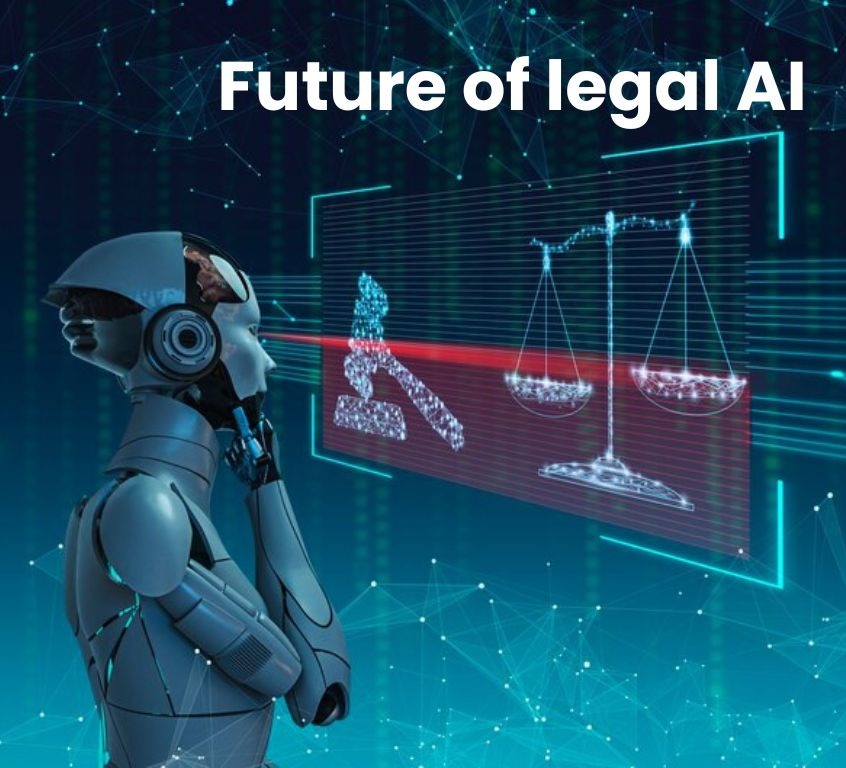
AI and the New Legal Frontier in India
How Lawyers Are Turning Disruption into Opportunity
Technology Law, Data Protection, and AI Ethics on the Rise
By Vishwas Kumar
New Delhi: June 01, 2026:
Introduction: The Rise of AI Specializations in Indian Law
Artificial Intelligence (AI) is no longer confined to laboratories or tech companies—it is reshaping industries, governance, and justice systems worldwide. In India, the legal profession is undergoing a profound transformation as lawyers increasingly research and build expertise in AI‑related specializations. Areas such as technology law, data protection, AI ethics, intellectual property in AI, and digital compliance are witnessing unprecedented demand. Law firms and clients alike are searching for professionals who can navigate the complex intersection of AI disruption and legal accountability.
As artificial intelligence continues to transform industries and public institutions, the legal materials related to AI and the New Legal Frontier in India offer valuable insights into the emerging challenges facing lawmakers, businesses, and courts. These resources examine issues such as algorithmic accountability, data privacy, intellectual property rights, cyber liability, automated decision-making, and regulatory governance. Legal professionals, technology companies, researchers, and policymakers can use these judgments and analyses to better understand how Indian law is adapting to the opportunities and risks created by artificial intelligence.
This surge reflects both opportunity and challenge. On one hand, AI promises efficiency, innovation, and new business models. On the other, it raises pressing questions about liability, privacy, fairness, and constitutional safeguards. Indian lawyers are positioning themselves at the forefront of this debate, turning disruption into opportunity by mastering emerging domains of law.
Constitutional and Legal Framework in India
India’s Constitution provides the bedrock for AI‑related legal specializations:
- Article 14 (Equality before Law): Ensures AI systems cannot discriminate, requiring fairness in algorithmic decision‑making.
- Article 19 (Freedom of Expression): Protects rights in digital spaces, including AI‑generated content and intellectual property.
- Article 21 (Right to Life and Liberty): Guards against arbitrary AI decisions in governance, policing, or welfare distribution.
- Articles 32 & 226 (Judicial Review): Allow citizens to challenge AI misuse in courts.
Key statutes shaping AI law include:
- Information Technology Act, 2000: Governs electronic records and cyber accountability.
- Digital Personal Data Protection Bill (2023 draft): Introduces obligations on data fiduciaries, directly impacting AI systems processing personal data.
- Copyright Act, 1957 & Patents Act, 1970: Provide frameworks for intellectual property disputes involving AI‑generated works.
Judicial precedents emphasize caution. Courts have stressed that AI must remain assistive, not determinative, reinforcing the need for transparency and accountability.
Comparative Global Perspectives
India’s evolving AI legal specializations can be compared with global frameworks:
- European Union: The AI Act (2024) categorizes AI systems by risk, mandating strict accountability in high‑risk sectors like justice and healthcare.
- United States: The NTIA’s AI accountability policy emphasizes transparency and liability in corporate AI deployment.
- United Kingdom: Issued a seven‑point framework for ethical AI in government decision‑making.
- China: Internet Courts use AI extensively, but critics highlight lack of disclosure and empathy.
India’s emphasis on constitutional morality sets it apart. While global frameworks focus on risk categorization, India roots AI accountability in fundamental rights.
Sociological, Economic, and Ethical Impacts
- Sociological: AI law empowers marginalized communities by addressing algorithmic bias and ensuring fairness in digital governance.
- Economic: Demand for AI legal expertise creates new career opportunities, reshaping law firms and corporate compliance departments.
- Ethical: Lawyers specializing in AI ethics grapple with dilemmas of explainability, accountability, and human oversight.
Case Studies
- Law Firms in Bengaluru and Delhi: Increasingly advertise expertise in AI compliance, data protection, and intellectual property disputes involving AI‑generated content.
- Su Sahay Chatbot (Supreme Court, 2026): Demonstrates how AI tools in judiciary require legal oversight and disclosure.
- International Example – COMPAS in US: Predictive AI used in bail decisions faced criticism for racial bias, highlighting the need for specialized AI ethics lawyers.
Extended FAQ (Quick Legal Understanding)
- What is AI law in India?
AI law in India refers to emerging legal frameworks that govern the use of artificial intelligence in areas like data protection, intellectual property, ethics, and compliance. It is still evolving, guided by constitutional principles and sectoral regulations. - Why are lawyers specializing in AI?
Lawyers are specializing in AI because clients and firms increasingly face disputes and compliance issues involving algorithms, data, and automation. Expertise in AI law helps them turn disruption into opportunity. - What is technology law?
Technology law covers regulations around digital platforms, cybersecurity, electronic contracts, and AI systems. It ensures accountability in the rapidly expanding digital economy. - What is data protection law?
Data protection law governs how personal data is collected, processed, and stored. In India, the 2023 Data Protection Bill sets obligations for AI systems handling sensitive information. - What is AI ethics?
AI ethics addresses fairness, transparency, accountability, and human oversight in AI systems. Lawyers specializing in this field help prevent bias and misuse. - How does intellectual property apply to AI?
Intellectual property law applies to AI in disputes over ownership of AI‑generated works, patents for AI inventions, and copyright protection for software. - What is digital compliance?
Digital compliance ensures organizations follow laws on data, cybersecurity, and AI use. It is critical for firms deploying AI in finance, healthcare, and governance. - Which constitutional provisions apply to AI?
Articles 14, 19, and 21 are key, ensuring equality, freedom of expression, and protection against arbitrary AI decisions. - How does Article 14 relate to AI fairness?
It requires AI systems to avoid discriminatory outcomes, ensuring equal protection under law. - How does Article 21 protect against AI misuse?
It safeguards life and liberty, preventing opaque AI decisions from harming individuals. - What is the IT Act, 2000?
The IT Act regulates electronic records, cybercrime, and digital signatures. Though not AI‑specific, it provides a foundation for accountability. - What is the Data Protection Bill, 2023?
It introduces obligations on data fiduciaries, requiring transparency and accountability when AI processes personal data. - How does copyright law apply to AI generated works?
Copyright law protects original works, but AI‑generated content raises questions about authorship and ownership. Courts are still grappling with these issues. - Can AI be an inventor under patent law?
Globally, courts are divided. India currently requires human inventors, but debates continue on recognizing AI contributions. - What judicial precedents exist on AI?
Indian courts have emphasized that AI must remain assistive, not determinative, especially in judgments and sentencing. - What is SUPACE?
SUPACE is an AI tool assisting judges with legal research and case analysis, improving efficiency. - What is SUVAS?
SUVAS is a Supreme Court AI system translating judgments into regional languages, enhancing accessibility. - What is Su Sahay chatbot?
A chatbot launched in 2026 to help litigants access case information, with clear disclosure of its AI nature. - What did Gujarat High Court decide on AI?
It prohibited AI from drafting judgments or evaluating evidence, reinforcing human oversight. - Can AI draft judgments in India?
No. Courts have barred AI from drafting judgments to preserve judicial reasoning. - What global frameworks regulate AI?
The EU AI Act, US NTIA policy, UK ethical AI framework, and OECD principles are leading examples. - What is the EU AI Act?
A 2024 law categorizing AI systems by risk, mandating strict rules for high‑risk applications like justice. - What is NTIA’s AI accountability policy?
A US framework emphasizing transparency, liability, and disclosure in corporate AI deployment. - How does UK regulate AI?
The UK uses a seven‑point ethical framework for government AI, focusing on fairness and accountability. - How does China use AI in courts?
China’s Internet Courts use AI for rapid dispute resolution, but disclosure and empathy remain limited. - What sociological impacts does AI law have?
AI law helps address bias, empowers marginalized communities, and builds trust in digital governance. - How does AI law affect marginalized communities?
It ensures they are not subjected to hidden algorithmic discrimination, reinforcing equality. - What economic opportunities exist in AI law?
AI law creates new career paths for lawyers, compliance officers, and consultants, reshaping the legal market. - How does AI law affect law firms?
Law firms are building AI practice groups, offering services in compliance, intellectual property, and ethics. - What ethical dilemmas arise in AI law?
Issues include balancing efficiency with empathy, preventing bias, and ensuring explainability in AI decisions. - Can AI decisions be challenged in court?
Yes. Citizens can challenge AI misuse under constitutional remedies. - Who is liable if AI makes a mistake?
Liability falls on the deploying institution or developer, not the AI itself. - Can AI hallucinate legal citations?
Yes. Generative AI may invent citations, requiring human verification. - How does AI affect judicial reasoning?
AI supports research but cannot replicate moral and empathetic reasoning. - What role does transparency play in AI law?
Transparency ensures decisions are explainable, auditable, and subject to review. - Can AI be regulated under IT Act?
Partially, but the IT Act was not designed for AI‑specific challenges. - How does India’s Data Protection Bill affect AI?
It imposes obligations on AI systems processing personal data, enhancing accountability. - What role does institutional oversight play?
Oversight ensures AI remains assistive, preventing misuse or overreach. - Can AI be used in sentencing decisions?
No. Indian courts prohibit AI from influencing sentencing. - What is India’s future vision for AI law?
A human‑centric framework where AI enhances efficiency but judicial conscience remains supreme, with mandatory disclosure and accountability.
Closing Vision
India’s legal profession is at a crossroads. The rise of AI has created unprecedented challenges, but also immense opportunities. Lawyers specializing in technology law, data protection, AI ethics, intellectual property, and digital compliance are not merely responding to disruption—they are shaping the future of justice and governance.
Mandatory disclosure of AI use, constitutional safeguards, and judicial oversight are essential. Yet, the real transformation lies in how lawyers interpret and apply these principles. By mastering AI law, Indian lawyers can ensure that technology serves democracy, not undermines it.
Globally, frameworks like the EU AI Act and US NTIA policy provide models, but India must chart its own path rooted in constitutional morality. The emphasis must be on human‑centric AI, where transparency, fairness, and accountability remain paramount.
Economically, AI law creates new career opportunities, reshaping law firms and compliance departments. Sociologically, it empowers marginalized communities by addressing algorithmic bias. Ethically, it challenges lawyers to balance efficiency with empathy.
The way forward lies in a dedicated AI Legal Framework:
- Legislative clarity tailored to India’s constitutional context.
- Judicial review of AI tools to ensure they remain assistive.
- Transparency mandates requiring disclosure of AI use.
- Capacity building for lawyers, judges, and law students in AI ethics.
- Public participation to empower citizens to challenge AI misuse.
India’s vision must be to harness AI as a tool of empowerment. Lawyers are central to this mission. By building expertise in AI law, they can ensure that in the age of algorithms, justice remains human, empathetic, and accountable.
Conclusion
India’s legal profession is standing at the edge of a profound transformation. Artificial Intelligence is no longer a distant concept—it is embedded in contracts, compliance systems, intellectual property disputes, and even judicial research. The rise of AI law is not simply about regulating machines; it is about redefining the very architecture of justice in a digital age. Lawyers who once specialized in traditional domains are now compelled to master technology law, data protection, AI ethics, and digital compliance. This shift is not optional—it is essential for safeguarding constitutional rights and ensuring that innovation does not erode accountability.
Mandatory disclosure of AI use, judicial oversight, and constitutional safeguards are the pillars of this new legal frontier. Without transparency, litigants’ risk being judged by invisible algorithms. Without oversight, bias and opacity could undermine trust in courts and governance. And without constitutional grounding, AI could become a tool of exclusion rather than empowerment. The Gujarat High Court’s prohibition on AI in adjudication, the Supreme Court’s cautious deployment of SUPACE and SUVAS, and the government’s push for data protection laws all reflect a growing consensus: AI must remain assistive, not determinative.
Globally, India’s approach is distinctive. The European Union’s AI Act categorizes systems by risk, the United States emphasizes corporate liability, and China showcases efficiency through Internet Courts. Yet India roots its vision in constitutional morality, ensuring that equality, liberty, and dignity remain central. This is not just a legal strategy—it is a democratic imperative.
Economically, AI law is opening new opportunities. Law firms are building practice groups around AI compliance, intellectual property, and ethics. Young lawyers are finding careers in advising startups, corporations, and governments on responsible AI use. Sociologically, AI law empowers marginalized communities by addressing algorithmic bias and ensuring fairness in digital governance. Ethically, it challenges lawyers to balance efficiency with empathy, reminding us that justice is not merely a calculation but a moral narrative.
The future of AI law in India must be human‑centric. Legislative clarity, judicial review, transparency mandates, and public participation are essential. Lawyers must become interpreters of technology, ensuring that algorithms serve democracy rather than dominate it. In this vision, AI is not feared but harnessed used to reduce backlogs, democratize access, and empower citizens.
India’s legal profession has always been a guardian of constitutional values. In the age of algorithms, that role becomes even more vital. By embracing AI law with transparency, accountability, and empathy, Indian lawyers can ensure that justice remains not only efficient but profoundly human. The challenge is immense, but so is the opportunity. The disruption of AI can be turned into a new chapter of empowerment—if law remains the conscience of technology.