
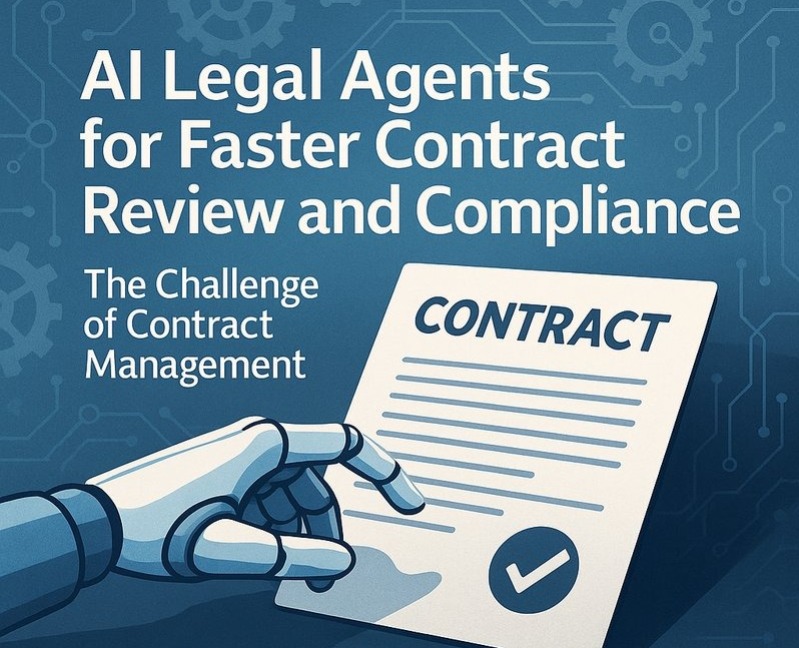
AI in Contract Review: The Silent Revolution in Deal-Making
From mergers to everyday agreements, artificial intelligence is reshaping how lawyers draft, analyze, and negotiate contracts.
Faster due diligence brings efficiency, but hidden risks demand human oversight.
By Vishwas Kumar
New Delhi: May 28, 2026:
Introduction: Contracts as the Lifeblood of Law
Contracts are the backbone of commerce, employment, and governance. Traditionally, reviewing contracts has been a painstaking process, requiring teams of lawyers to comb through clauses line by line. With the rise of AI, this process is undergoing a seismic shift. AI-powered contract review tools promise speed, consistency, and risk detection at a scale unimaginable in manual review. Yet, the transformation is not without challenges.
For readers researching significant constitutional and public law matters, the Bilkis Yakub Rasool vs Union judgment offers valuable insights into the interpretation of fundamental rights, administrative decision-making, and the exercise of judicial review by constitutional courts. The case is frequently referenced by legal professionals, law students, and researchers seeking to understand how courts balance individual rights with governmental powers. Studying this judgment helps readers appreciate the evolving principles of justice, rule of law, and constitutional governance in India, making it an important addition to any legal research on landmark court decisions and public law jurisprudence.
Section 1: The Traditional Burden of Contract Review
- Manual review: Lawyers and paralegals spending weeks on due diligence for mergers and acquisitions (M&A).
- Human limitations: Fatigue, oversight, and inconsistent interpretation.
- Cost implications: Billable hours ballooning for clients, especially in complex deals.
Section 2: How AI Contract Review Works
- Clause Recognition: AI identifies standard and non-standard clauses across thousands of documents.
- Risk Flagging: Algorithms highlight potentially risky provisions (e.g., indemnity, termination).
- Comparative Analysis: AI benchmarks clauses against industry standards.
- Automated Drafting: Some platforms generate first drafts based on templates and prior deals.
Section 3: Benefits for Law Firms & Corporations
- Speed: M&A due diligence reduced from weeks to days.
- Cost Savings: Clients save significantly on legal fees.
- Consistency: AI ensures uniform interpretation across documents.
- Scalability: Firms can handle larger volumes of contracts without expanding staff.
Section 4: Case Studies
- Global M&A Deals: Firms using AI report up to 40% faster due diligence.
- Startups & SMEs: Affordable AI tools democratize access to sophisticated contract analysis.
- India’s Legal Market: Growing adoption of AI in corporate law, especially in tech-driven firms.
Section 5: Risks & Challenges
- Contextual Nuance: AI may miss subtle implications of clauses.
- Bias in Training Data: Tools trained on Western contracts may misinterpret local legal norms.
- Over-Reliance: Lawyers risk outsourcing judgment to machines.
- Data Security: Confidential deal documents processed by AI raise cybersecurity concerns.
Section 6: Ethical & Regulatory Considerations
- Professional Responsibility: Lawyers must validate AI outputs before advising clients.
- Regulatory Frameworks: EU AI Act and India’s DPDP Act set standards for data handling.
- Client Trust: Transparency in how AI tools are used is critical for maintaining confidence.
Section 7: The Future of AI in Contract Law
- Hybrid Models: AI handles repetitive review; lawyers focus on negotiation strategy.
- Smart Contracts: Blockchain-based contracts may integrate AI for automated enforcement.
- Global Adoption: Multinational firms will increasingly rely on AI for cross-border deals.
Conclusion: Efficiency Meets Vigilance
AI in contract review is a silent revolution, streamlining processes and reducing costs. But vigilance is essential. Lawyers must balance efficiency with responsibility, ensuring that human judgment remains central to deal-making. The future of contracts may be machine-assisted, but trust and nuance will always require human oversight.
FAQs
Q1: Can AI fully replace lawyers in contract review?
No. AI can handle repetitive tasks, but human lawyers are essential for interpretation, negotiation, and contextual judgment.
Q2: How accurate are AI contract review tools?
They are highly efficient but not flawless. Lawyers must cross-check outputs to ensure accuracy.
Q3: Are AI tools affordable for small businesses?
Yes. Subscription-based models make advanced contract review accessible to startups and SMEs.
Q4: What are the biggest risks of AI in contract review?
Missing contextual nuances, bias in training data, and data security concerns.
Q5: How is AI regulated in contract law?
Jurisdictions like the EU and India are developing frameworks to ensure ethical and secure use of AI in legal practice.