
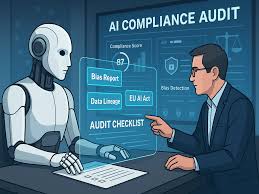
AI in Compliance: Automating Risk in a Complex Legal World
From GDPR to India’s DPDP Act, AI is helping firms navigate the maze of global regulations.
Automation reduces human error, but oversight is essential to prevent blind reliance on algorithms.
By Vishwas Kumar
New Delhi: May 28, 2026:
Introduction: The Compliance Challenge
In today’s globalized economy, regulatory compliance is one of the most pressing challenges for corporations and law firms. From data protection laws to financial regulations, the sheer volume and complexity of rules make manual compliance both costly and error prone. Artificial intelligence (AI) is stepping in as a gamechanger, offering automation, predictive monitoring, and risk management at scale. Yet, the reliance on AI raises questions about accountability, transparency, and adaptability in fast-changing legal environments.
The In Re: T.N. Godavarman Thirumulpad judgment is one of the most significant environmental law cases in India, shaping the legal framework for forest conservation, ecological protection, and sustainable development. Frequently cited in matters concerning environmental governance and natural resource management, this landmark decision highlights the judiciary’s role in balancing developmental needs with environmental preservation. Lawyers, environmental law researchers, policy analysts, students, and citizens interested in conservation issues can refer to this judgment to understand the evolving principles of environmental jurisprudence, forest protection policies, and the constitutional commitment to safeguarding India's natural heritage.
Section 1: The Traditional Burden of Compliance
- Manual Monitoring: Teams of compliance officers tracking regulatory changes.
- High Costs: Billions spent annually on compliance programs.
- Human Error: Oversights leading to fines and reputational damage.
- Global Complexity: Multinational firms struggle with inconsistent regulations across jurisdictions.
Section 2: How AI Powers Compliance
- Automated Monitoring: AI scans regulatory updates across jurisdictions.
- Risk Detection: Algorithms flag potential violations in contracts, transactions, and policies.
- Predictive Analytics: AI forecasts areas of likely regulatory scrutiny.
- Workflow Automation: Compliance tasks integrated into daily operations via AI-driven platforms.
Section 3: Benefits for Corporations & Law Firms
- Efficiency: Real-time monitoring reduces lag in compliance updates.
- Cost Savings: Automation lowers reliance on large compliance teams.
- Accuracy: AI reduces human error in interpreting complex regulations.
- Scalability: Firms can manage compliance across multiple jurisdictions simultaneously.
Section 4: Case Studies
- Financial Sector: Banks using AI to detect suspicious transactions and meet anti-money laundering (AML) requirements.
- Healthcare: Hospitals deploying AI to ensure compliance with patient data protection laws.
- India: Corporations adopting AI tools to comply with the Digital Personal Data Protection Act, 2023.
Section 5: Risks & Challenges
- Regulatory Gaps: AI may misinterpret ambiguous or evolving laws.
- Bias in Algorithms: Training data may reflect systemic biases in enforcement.
- Over-Reliance: Blind trust in AI outputs can lead to compliance failures.
- Cybersecurity Risks: Sensitive compliance data processed by AI must be safeguarded.
Section 6: Ethical & Regulatory Dimensions
- Professional Responsibility: Compliance officers must validate AI outputs.
- Global Frameworks: EU AI Act sets standards for trustworthy AI in compliance.
- Local Adaptation: India’s DPDP Act emphasizes data privacy safeguards.
- Transparency: Firms must disclose how AI tools are used in compliance processes.
Section 7: The Future of AI in Compliance
- Hybrid Models: AI handles monitoring, humans interpret and strategize.
- Proactive Compliance: AI predicts regulatory changes before they occur.
- Cross-Border Integration: AI platforms harmonize compliance across jurisdictions.
- Ethical Innovation: Stronger safeguards will ensure fairness and accountability.
Conclusion: Automation with Accountability
AI in compliance and risk management is revolutionizing how corporations and law firms operate. By automating monitoring and risk detection, AI reduces costs and errors. Yet, accountability and human oversight remain essential. The future of compliance lies in a balanced partnership between machine efficiency and human judgment, ensuring that automation enhances — not undermines — trust in the legal system.
FAQs
Q1: Can AI fully automate compliance?
No. AI can streamline monitoring and detection, but human oversight is essential for interpretation and accountability.
Q2: How reliable are AI compliance tools?
They are highly efficient but may misinterpret ambiguous regulations. Validation by experts is necessary.
Q3: Are AI compliance tools affordable for small firms?
Yes. Subscription-based models make advanced compliance monitoring accessible to SMEs.
Q4: What are the biggest risks of AI in compliance?
Regulatory gaps, bias in algorithms, and cybersecurity vulnerabilities.
Q5: How is AI regulated in compliance?
Frameworks like the EU AI Act and India’s DPDP Act set standards for ethical and secure use of AI in compliance processes.