
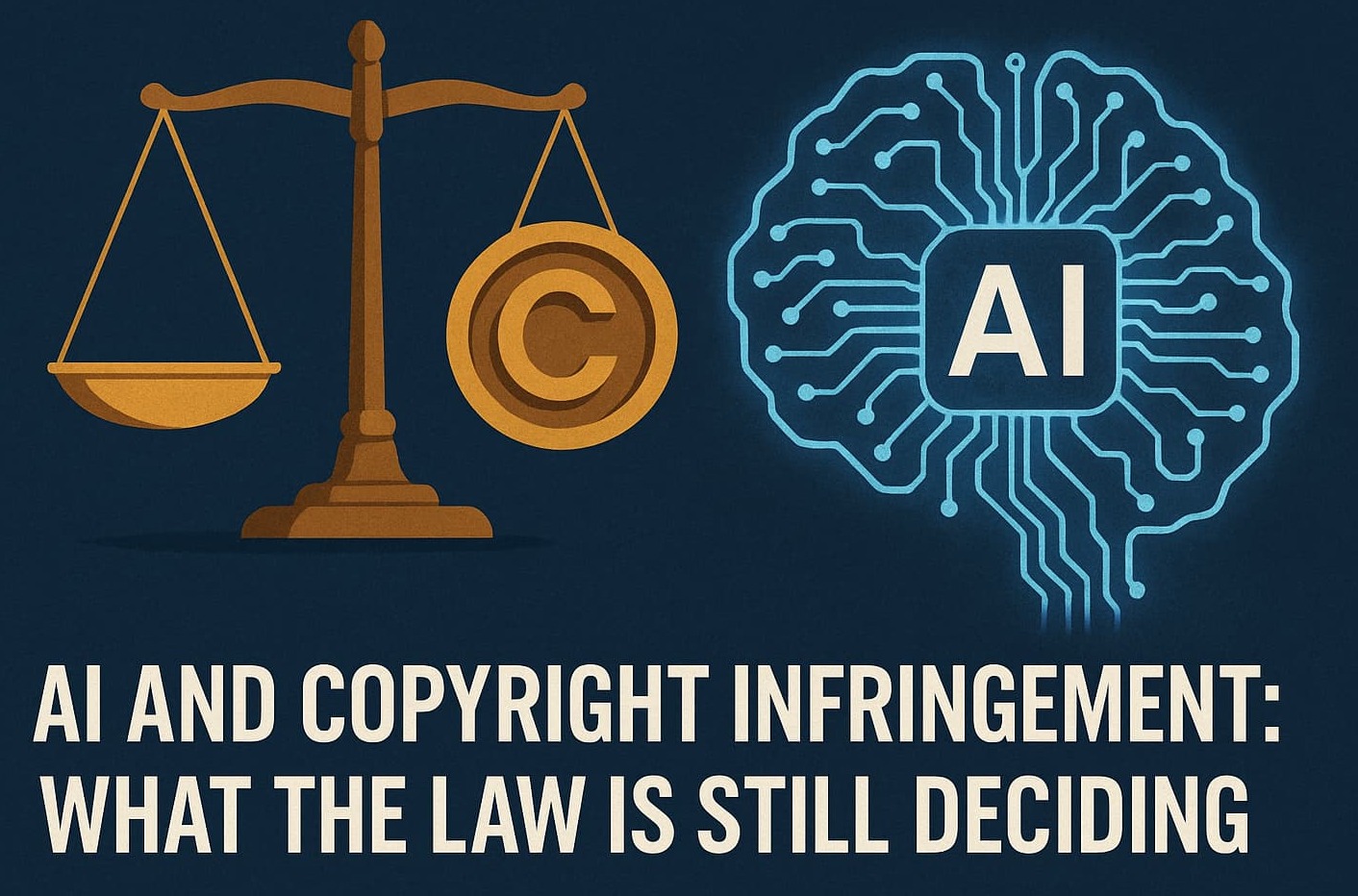
AI‑Generated Content and Copyright Challenges in India
Who Owns the Machine’s Creativity?
Global Lessons for Regulating AI in Entertainment and Media
By Vishwas Kumar
New Delhi: June 09, 2026:
Artificial Intelligence (AI) has entered the creative industries with unprecedented force, reshaping how content is produced, distributed, and consumed. From music compo sition and film scripts to digital art, advertising campaigns, and even journalism, AI tools are now capable of generating outputs that rival human creativity. In India, where both the entertainment and IT sectors are booming, this technological shift raises urgent questions: Who owns AI‑generated works? Can they be copyrighted? How should royalties be distributed?
Traditionally, copyright law in India, under the Copyright Act, 1957, requires human authorship for protection. Works must demonstrate originality, meaning they must reflect independent human creativity. AI‑generated content challenges this framework because the “author” is a machine, not a person. If an AI composes a song or writes a film script, does the copyright belong to the programmer, the user who prompted the AI, or no one at all? Indian law currently offers no clear answer, leaving creators, producers, and investors in a state of uncertainty.
Globally, different jurisdictions have taken varied approaches. The United States Copyright Office has rejected claims for purely AI‑generated works, insisting that human authorship is essential. The European Union is exploring sui generis rights—special protections for AI‑generated works—while China has begun recognizing AI‑assisted creativity under copyright law. India, however, remains silent, relying on judicial precedents that emphasize originality and human input, such as R.G. Anand v. Deluxe Films (1978). This precedent suggests that unless human creativity is evident, AI outputs may not qualify for protection.
The implications are vast. Economically, billions are at stake in industries like advertising, film production, and music streaming, where AI‑generated content is increasingly common. Without clear ownership rules, disputes over royalties and licensing are inevitable. Sociologically, AI democratizes creativity, allowing non‑experts to produce art and music, but it also risks devaluing human artistry. Ethically, training datasets used by AI often include copyrighted works without consent, raising fairness and privacy concerns. For example, if an AI trained on Bollywood scripts generates a new storyline, does it infringe the rights of the original authors whose works were used in training?
Case studies highlight these tensions. Indian musicians have expressed concern about AI‑generated tracks competing unfairly on streaming platforms. Bollywood producers experimenting with AI scriptwriting tools question who owns the resulting dialogues. Advertising agencies increasingly rely on AI‑generated visuals, sparking disputes over originality and ownership. Globally, the US “Zarya of the Dawn” case (2023), where the Copyright Office rejected protection for AI‑generated comic art, has influenced debates in India and beyond.
The way forward for India lies in clarity, collaboration, and creativity. Clarity in law is essential—defining authorship and ownership of AI outputs, perhaps through amendments to the Copyright Act. Collaboration with global partners will harmonize standards, ensuring India remains competitive in international markets. Creativity in enforcement—using contracts, licensing agreements, and even blockchain to allocate rights fairly—can provide interim solutions while legislation evolves.
AI is not replacing creativity; it is reshaping it. Protecting intellectual property in this new era is not only a legal necessity but also a cultural imperative. India has the opportunity to lead by crafting balanced frameworks that reward human creators, integrate AI responsibly, and sustain innovation. The challenge is immense, but so is the promise: to make India not just a hub of AI innovation, but also a leader in copyright governance for the digital age.
Legal Framework
- Copyright Act, 1957: Currently requires human authorship for protection. AI‑generated works fall into a grey area.
- Information Technology Act, 2000: Governs digital platforms but does not address AI authorship.
- Constitutional Provisions:
- Article 19(1)(a): Freedom of speech, relevant for AI‑generated expression.
- Article 21: Right to privacy, implicated in AI training datasets.
- International Treaties: TRIPS and Berne Convention emphasize human authorship, leaving AI outside formal protection.
Judicial and Policy Developments
- Indian courts have not yet ruled directly on AI authorship, but precedents on originality (R.G. Anand v. Deluxe Films, 1978) suggest that creativity must involve human input.
- Globally, the US Copyright Office has rejected claims for purely AI‑generated works, while the UK allows limited protection if human involvement is significant.
- WIPO has initiated consultations on AI and IP, signaling future harmonization efforts.
Comparative Perspectives
- United States: Requires human authorship; AI outputs are not protected.
- European Union: Exploring sui generis rights for AI‑generated works.
- China: Moving toward recognizing AI‑assisted creativity under copyright.
- India: Still silent, but debates are intensifying in academia and industry.
Sociological, Economic & Ethical Impacts
- Sociological: AI democratizes creativity, allowing non‑experts to produce art, but risks devaluing human artistry.
- Economic: Billions at stake in AI‑generated advertising, film production, and music; lack of clarity deters investment.
- Ethical: Training datasets often use copyrighted works without consent, raising fairness and privacy concerns.
Case Studies on AI‑Generated Content and Copyright
Artificial Intelligence is rapidly transforming creative industries, and India is experiencing both opportunities and challenges in this space. Several case studies illustrate how AI‑generated content is reshaping music, film, advertising, and global copyright debates.
AI‑Generated Music on Streaming Platforms
Indian musicians have raised concerns about unfair competition from AI‑generated tracks appearing on platforms like Spotify and JioSaavn. These tracks can be produced quickly and cheaply, often mimicking popular styles without the need for human composers. While listeners may enjoy the novelty, artists argue that such outputs dilute the value of human creativity and reduce royalty earnings. The lack of clear ownership rules further complicates matters—should royalties go to the programmer, the platform, or no one at all? This case highlights the urgent need for India to clarify how copyright law applies to AI‑generated music.
Bollywood Scriptwriting Tools
AI is increasingly being used in Bollywood to draft dialogues, plot outlines, and even character arcs. Producers experimenting with these tools face a dilemma: who owns the resulting script? If an AI trained on thousands of Bollywood films generates a new storyline, does it infringe on the works used in training? Moreover, if the script is commercially successful, should royalties be shared with the programmers or remain with the production house? These questions remain unanswered under current Indian law, which requires human authorship for copyright protection. The case underscores the tension between technological innovation and traditional notions of authorship.
Advertising Campaigns and AI Visuals
Brands in India are relying heavily on AI‑generated visuals for marketing campaigns. AI tools can create posters, logos, and digital ads in seconds, reducing costs and speeding up production. However, disputes have emerged over originality. Designers argue that AI outputs often borrow heavily from existing copyrighted works used in training datasets, raising ethical and legal concerns. For example, if an AI generates a poster resembling a famous Bollywood film’s promotional material, is this infringement or innovation? Courts have yet to rule on such cases, but the advertising industry is already grappling with the implications.
Global Precedent – US “Zarya of the Dawn” Case (2023)
One of the most influential global precedents is the US Copyright Office’s decision in the Zarya of the Dawn case. The comic book, created using AI tools, was denied copyright protection because the artwork lacked human authorship. This ruling has reverberated worldwide, including in India, where policymakers and legal scholars are debating whether similar standards should apply. The case demonstrates that without human creativity, AI‑generated works may not qualify for copyright, leaving them vulnerable to free use and exploitation.
Emerging Indian Contexts
Beyond these examples, Indian startups are experimenting with AI‑generated music videos, digital avatars, and even AI‑driven choreography. Educational institutions are exploring AI tools for creative writing assignments, raising questions about plagiarism and originality. Meanwhile, collective management organizations like IPRS (Indian Performing Right Society) are considering whether AI‑generated works should be included in royalty distribution systems. These developments show that AI is not a distant future—it is already reshaping India’s creative economy.
Key Takeaways
- Ownership Uncertainty: Current Indian law requires human authorship, leaving AI outputs in a grey zone.
- Economic Impact: Musicians, writers, and designers fear reduced royalties and devaluation of human creativity.
- Ethical Concerns: Training datasets often use copyrighted works without consent, raising fairness issues.
- Global Influence: International precedents like Zarya of the Dawn are shaping debates in India.
- Urgent Need for Reform: India must clarify copyright rules for AI‑generated works to sustain innovation and protect creators.
In summary, AI‑generated content is already challenging India’s entertainment and IT sectors. From streaming music to Bollywood scripts and advertising visuals, the lack of clear legal frameworks creates uncertainty for creators and investors. Global precedents provide guidance, but India must craft its own balanced approach to ensure that human creativity is respected while AI innovation is responsibly integrated.
Extended FAQ (40 Questions with 2–3 Line Answers)
- Can AI‑generated works be copyrighted in India?
Currently, no—Indian law requires human authorship. - What is originality in copyright law?
It requires independent human creativity, not machine output. - Can AI be considered an author?
No, under current Indian and global frameworks. - What is the role of human input?
If humans guide AI significantly, the work may qualify for protection. - Can AI‑generated music be monetized?
Yes, commercially, but ownership remains unclear. - What is the US stance?
AI‑only works are not protected; human involvement is required. - What is the EU stance?
Exploring new rights for AI‑generated works. - What is China’s stance?
Recognizes AI‑assisted creativity under certain conditions. - Can AI‑generated scripts be copyrighted?
Not unless human authorship is evident. - What is the ethical issue with datasets?
They often use copyrighted works without consent. - Can AI outputs be trademarked?
Yes, if used as brand identifiers. - What is WIPO’s role?
Consulting globally on AI and IP harmonization. - Can AI‑generated art be sold?
Yes, commercially, but copyright protection is uncertain. - What is the Indian judiciary’s stance?
No direct ruling yet; debates ongoing. - Can AI‑generated memes be protected?
Not under current law, unless human creativity dominates. - What is the role of contracts?
Contracts can define ownership of AI outputs. - Can AI‑generated films be copyrighted?
Only if human authorship is substantial. - What is the Zarya of the Dawn case?
US rejected copyright for AI‑generated comic art. - Can AI‑generated logos be protected?
Yes, under trademark law. - What is moral rights protection?
Applies only to human authors, not AI. - Can AI‑generated poetry be copyrighted?
Not unless human authorship is clear. - What is fair dealing in AI?
Debated—AI training may infringe existing works. - Can AI‑generated journalism be protected?
Not under current frameworks. - What is the economic impact?
Billions at stake in advertising and media. - Can AI‑generated avatars be protected?
Yes, under trademark or design law. - What is the role of licensing?
Licensing agreements can allocate rights in AI outputs. - Can AI‑generated songs be registered with IPRS?
Not under current rules requiring human authorship. - What is the ethical debate?
Balancing innovation with fairness to human creators. - Can AI‑generated games be copyrighted?
Only if human creativity is central. - What is India’s future stance?
Likely to evolve toward hybrid recognition. - Can AI‑generated ads be protected?
Yes, under contracts, but not copyright. - What is the role of collective management?
Currently excludes AI‑generated works. - Can AI‑generated literature be copyrighted?
Not unless human authorship is proven. - What is the role of patents?
AI inventions raise separate challenges in patent law. - Can AI‑generated choreography be protected?
Not under current copyright law. - What is the role of arbitration?
Contracts can resolve disputes over AI ownership. - Can AI‑generated photography be copyrighted?
Not unless human creativity is evident. - What is the role of consumer protection?
Ensures consumers are not misled by AI content. - Can AI‑generated designs be protected?
Yes, under design law, not copyright. - What is the global trend?
Toward hybrid recognition of AI‑assisted works.
Op‑Ed Closing Vision
AI‑generated content represents both opportunity and challenge. India’s IT and entertainment industries stand to benefit enormously from AI creativity, but the absence of clear legal frameworks creates uncertainty. Courts have yet to rule directly, but global precedents suggest that human authorship remains central. The sociological impact is profound: AI democratizes creativity but risks devaluing human artistry. Economically, billions are at stake in advertising, film, and music. Ethically, training datasets raise fairness and privacy concerns.
The way forward lies in clarity, collaboration, and creativity. Clarity in law—defining authorship and ownership of AI outputs. Collaboration with global partners—harmonizing standards through WIPO and TRIPS. Creativity in enforcement—using contracts, blockchain, and licensing to allocate rights fairly. India must balance innovation with fairness, ensuring that human creators are rewarded while AI tools are integrated responsibly.
AI is not replacing creativity—it is reshaping it. Protecting intellectual property in this new era is not only a legal necessity but a cultural imperative. The challenge is immense, but so is the promise: to make India not just a hub of AI innovation, but also a leader in balanced copyright governance. Intellectual property is the scaffolding of creativity; without it, the edifice of India’s digital economy risks collapse. With it, India can build a future where human and machine creativity coexist, thrive, and enrich culture in the digital age.