
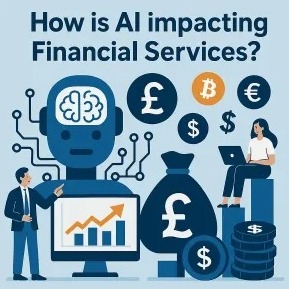
Smart Banks, Smarter Risks: AI in Financial Services
Algorithms in Lending and Compliance
Balancing Innovation with Consumer Protection
By Vishwas Kumar
New Delhi: June 13, 2026:
Taxation has always been a cornerstone of fiscal governance, ensuring that governments can fund public services while maintaining fairness and accountability. Traditionally, compliance relied on manual filings, audits, and human interpretation of complex laws. Today, Artificial Intelligence (AI) is revolutionizing this domain, introducing predictive analytics, automated compliance systems, and digital audits that promise efficiency but also raise profound constitutional, statutory, and ethical questions.
At the constitutional level, Article 14 guarantees equality before law, which now extends to algorithmic fairness in tax assessments. If AI systems disproportionately target certain taxpayers or misinterpret filings, they risk violating this principle. Article 21, expanded by the Puttaswamy judgment, enshrines privacy, making the protection of taxpayer data a constitutional necessity. Article 265 further underscores legality, mandating that no tax shall be levied except by authority of law — a safeguard against unchecked algorithmic imposition.
Statutory frameworks are adapting to this digital reality. The Income Tax Act, 1961 governs direct taxation, while the GST Act, 2017 digitizes indirect tax compliance. The DPDP Act, 2023 regulates personal and corporate data processed by AI systems, ensuring consent and accountability. The IT Act, 2000 provides cybersecurity safeguards and validates electronic records, reinforcing trust in digital tax processes. Judicial precedents, from Vodafone’s tax dispute to Shreya Singhal, highlight the importance of transparency and clarity in fiscal governance.
Globally, India’s trajectory mirrors broader trends. The EU’s GDPR and AI Act impose strict consent and fairness rules, the US IRS emphasizes disclosure and predictive audits, China enforces state-centric compliance, and the UK adopts pragmatic oversight. India’s evolving framework sits at the intersection of these models, balancing innovation with constitutional morality.
By 2030, taxation will be more efficient, predictive, and automated. Yet its legitimacy will rest on fairness, transparency, and respect for rights — ensuring that algorithms serve not just revenue, but justice.
Algorithms in Lending and Compliance
Artificial Intelligence (AI) is transforming the banking and financial services sector, particularly in lending and compliance. Traditionally, loan approvals and compliance checks relied on human judgment, manual documentation, and statistical models. Today, algorithms can process vast amounts of financial, behavioural, and transactional data in seconds, enabling faster decisions and more efficient regulatory oversight.
In lending, AI algorithms are used to assess creditworthiness by analyzing not just income and repayment history, but also alternative data such as digital transactions, utility payments, and even social behaviour. This predictive capability expands access to credit, especially for individuals and small businesses previously excluded from formal banking. However, it also raises concerns about fairness and bias. If algorithms are trained on skewed datasets, they may inadvertently discriminate against certain groups, violating constitutional principles of equality under Article 14.
Compliance is another area where AI plays a critical role. Banks and financial institutions face complex regulatory requirements under laws such as the Banking Regulation Act, 1949, and guidelines issued by the Reserve Bank of India (RBI). AI systems can automate compliance monitoring, detect suspicious transactions, and flag potential violations in real time. This reduces the risk of fraud and ensures adherence to statutory obligations. The DPDP Act, 2023 further strengthens compliance by regulating how personal financial data is collected and processed, ensuring that AI systems respect privacy rights under Article 21.
Globally, regulators are adopting varied approaches. The EU emphasizes strict consent and fairness in credit scoring, the US relies on disclosure-driven oversight, and China enforces state-centric compliance. India’s evolving framework seeks to balance innovation with consumer protection, ensuring that AI enhances efficiency without undermining trust.
By 2030, algorithms in lending and compliance will be indispensable. Yet their legitimacy will depend on transparency, accountability, and respect for constitutional safeguards, ensuring that technology serves both profitability and justice.
Balancing Innovation with Consumer Protection
Artificial Intelligence (AI) is reshaping the financial services sector, offering unprecedented opportunities for innovation in lending, compliance, and customer engagement. Algorithms can process vast datasets, predict creditworthiness, detect fraud, and streamline regulatory reporting. These innovations promise efficiency, financial inclusion, and profitability. Yet, they also raise critical questions about consumer protection, fairness, and accountability.
Innovation in banking often prioritizes speed and personalization. AI-driven credit scoring, for example, enables banks to extend loans to individuals and small businesses previously excluded from formal finance. Similarly, predictive compliance tools reduce regulatory burdens and enhance transparency. However, unchecked innovation can lead to opaque decision-making, discriminatory outcomes, and misuse of sensitive financial data. This tension underscores the need for a balanced approach that integrates technological progress with consumer safeguards.
Consumer protection frameworks play a vital role in this balance. The Reserve Bank of India’s digital lending guidelines (2022) mandate transparency in loan terms, prohibit predatory practices, and require explicit consent for data use. The Digital Personal Data Protection Act, 2023 ensures that personal financial data processed by AI systems respects privacy rights under Article 21 of the Constitution. Globally, the EU’s GDPR and AI Act impose strict fairness and accountability standards, while the US emphasizes disclosure-driven oversight. These models highlight the importance of embedding consumer rights into digital innovation.
Ethically, the principle of digital dignity becomes central. Consumers must be treated fairly, with clear explanations of AI-driven decisions and accessible grievance mechanisms. Banks and fintech firms must ensure that algorithms enhance trust rather than erode it.
By 2030, the success of AI in financial services will depend not only on technological sophistication but also on its ability to uphold consumer protection. Innovation must serve people, ensuring that efficiency and profitability never come at the cost of fairness and rights.
Legal and Constitutional Frameworks in India
Constitutional Provisions
Article 14 (Equality before Law): Prevents discriminatory lending or credit scoring by AI systems.
Article 21 (Right to Life and Liberty): Protects privacy in financial data processing.
Article 19(1)(g): Safeguards the right to carry on business, relevant for fintech innovation.
Statutory Laws
Banking Regulation Act, 1949: Governs licensing, solvency, and oversight of banks.
RBI Guidelines on Digital Lending (2022): Mandate transparency and consumer protection in AI-driven lending.
DPDP Act, 2023: Regulates personal financial data used in AI systems.
IT Act, 2000: Provides cybersecurity and digital evidence frameworks.
Judicial Precedents
Puttaswamy Case (2017): Privacy rights extended to financial data.
Shreya Singhal (2015): Reinforced clarity in digital regulation.
ICICI Bank v. Shanti Devi (2010): Highlighted consumer protection in banking disputes.
Comparative Global Perspectives
Sociological, Economic, and Ethical Impacts
Sociological: AI may expand financial inclusion but risks excluding digitally illiterate groups.
Economic: AI improves efficiency, fraud detection, and profitability; poor oversight can trigger systemic risks.
Ethical: Accountability for AI-driven lending decisions and fairness in credit scoring are critical.
Case Studies
Indian Example: RBI’s digital lending guidelines curbed predatory AI-driven loan apps.
Global Example: US banks using AI for credit scoring faced lawsuits over bias.
Human Story: A farmer in Maharashtra gained access to microcredit through AI-based inclusion programs, highlighting positive impacts.
Extended FAQ Index with Answers
What constitutional rights apply to AI in banking? Equality, privacy, and business rights are directly implicated when algorithms shape lending or compliance.
How does Article 14 prevent bias in lending? It ensures fairness in AI-driven credit scoring, preventing discriminatory outcomes.
How does Article 21 protect financial data? It guarantees privacy in digital banking and safeguards sensitive client information.
What role does Article 19(1)(g) play in fintech? It protects the right to carry on business, supporting innovation in financial technology.
What is the Banking Regulation Act’s role? It governs licensing, solvency, and oversight of banks, ensuring accountability.
How do RBI guidelines regulate AI lending? They mandate transparency, consumer protection, and fair practices in digital lending.
How does the DPDP Act apply to banking? It regulates personal financial data use, requiring consent and accountability.
What judicial precedents support fairness in banking? Puttaswamy, Shreya Singhal, and ICICI v. Shanti Devi reinforce privacy and fairness.
How does GDPR affect banking AI? It imposes strict consent and fairness rules on financial data processing.
What is the US approach to AI banking? Disclosure-driven, sectoral oversight under federal and state laws.
How does China regulate AI in banking? State-centric, mandatory compliance with strict data localization.
What is the UK’s model for AI banking? Pragmatic, case-by-case oversight under FCA guidelines.
How does AI affect financial inclusion? It expands access but risks excluding digitally illiterate groups.
What are the economic benefits of AI banking? Efficiency, fraud detection, and improved profitability.
How does AI reduce fraud in banking? By detecting anomalies and suspicious transactions in real time.
What ethical dilemmas arise in AI lending? Balancing efficiency with fairness and avoiding bias.
How does AI affect liability in lending? Banks remain accountable for AI-driven decisions.
Who owns AI-generated financial data? Typically, the client, though banks may control aggregated datasets.
How does AI affect small borrowers? It can expand access but risks bias in credit scoring.
What role does ICAI play in banking AI? Training professionals in ethics, compliance, and digital literacy.
How do small banks adapt to AI? By adopting affordable fintech solutions and retraining staff.
What global models can India learn from? EU’s strict compliance, US’s disclosure, and China’s oversight.
How does AI affect client confidentiality in banking? Encryption and compliance with privacy laws are essential safeguards.
What is “digital dignity” in banking? Fair and humane treatment in AI-driven financial decisions.
How does AI impact corporate transparency in banks? It improves disclosures but raises accountability concerns.
What are cybersecurity risks in banking? Data breaches, ransomware, and manipulation of AI systems.
How does AI affect liability insurance for banks? Policies must expand to cover AI-related risks.
Can AI lending decisions be challenged in court? Yes, if bias, error, or lack of transparency is proven.
How does AI affect professional education in banking? Professionals must learn AI literacy, ethics, and compliance.
What is the role of RBI in regulating AI? Setting standards, mandating disclosures, and ensuring fairness.
How does AI affect whistleblower protections in banks? AI can detect anomalies but must safeguard whistleblower identities.
What are economic benefits of AI governance in banks? Efficiency, reduced fraud, and better risk management.
How does AI affect international banking compliance? It automates treaty obligations and reporting compliance.
What ethical frameworks guide AI in banking? Transparency, accountability, fairness, and respect for privacy.
How does AI affect audit sampling in banks? Enables full-population analysis instead of limited samples.
Can AI predict insolvency risks for banks? Yes, by analyzing financial health and market trends.
How does AI affect mergers in banking? AI speeds due diligence and risk assessment.
What role does AI play in sustainability banking? It tracks ESG metrics and compliance with green standards.
How does AI affect cross-border financial reporting? It harmonizes standards and automates compliance globally.
How does AI affect fiduciary duties of bankers? Directors remain accountable despite AI assistance.
Op-Ed Closing Vision
By 2030, banking and financial services will be transformed by AI systems that assess creditworthiness, detect fraud, and automate compliance. Yet this transformation must remain anchored in constitutional morality and ethical responsibility. Article 14 ensures fairness, Article 21 safeguards privacy, and Article 19(1)(g) protects innovation.
Economically, AI promises efficiency and better risk management, but fairness must remain central. Sociologically, transparency builds trust, while exclusion risks erode legitimacy. Ethically, accountability for AI-driven lending decisions is non-negotiable. The RBI and ICAI must establish clear liability frameworks, mandate algorithmic audits, and ensure grievance redressal.
Globally, India must learn from the EU’s strict compliance, the US’s disclosure-driven model, and China’s state-centric approach. Yet India’s path must be unique — balancing innovation with rights.
The vision for 2030 is clear: financial services that blend machine efficiency with human judgment, constitutional safeguards with technological innovation, and fairness with profitability. The banker of tomorrow will not just calculate risks; they will uphold digital dignity and fiscal justice.
Jurisdiction — Key Regulation — Approach
EU — GDPR + AI Act — Strict consent, fairness in credit scoring.
US — Fair Credit Reporting Act + OCC Guidelines — Sectoral, disclosure-driven oversight.
China — PIPL + Banking Regulations — State-centric, mandatory compliance.
UK — FCA Guidelines on AI in Finance — Pragmatic, case-by-case oversight.
India — RBI + DPDP Act — Evolving, fragmented but proactive.