
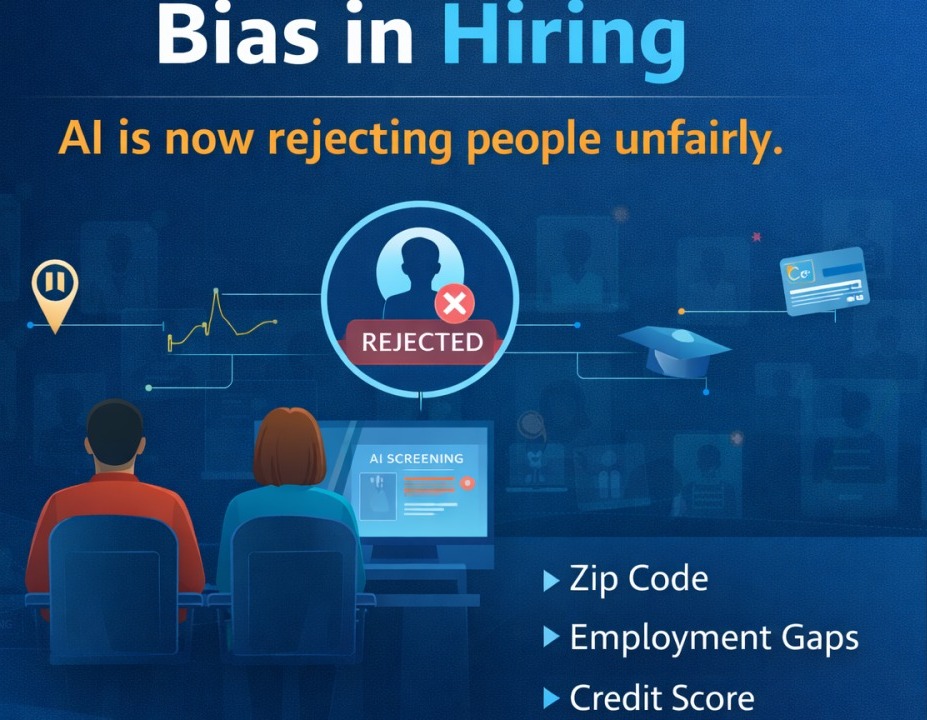
AI in Employment: Bias and Discrimination
When algorithms hire, who gets excluded?
India and the world confront workplace fairness in the AI era
By Vishwas Kumar
New Delhi: June 19, 2026:
Artificial intelligence is increasingly used in employment, from automated résumé screening to predictive analytics in workforce management. Companies deploy AI to streamline hiring, evaluate employee performance, and even forecast attrition. These tools promise efficiency, cost savings, and a degree of objectivity that traditional human decision-making often lacks. By analyzing large datasets, AI can identify patterns in candidate qualifications, match skills to job requirements, and help employers make faster, data-driven decisions.
Article 370 played a historic role in defining the constitutional relationship between Jammu & Kashmir and the Union of India, making it one of the most debated provisions in Indian legal history. To understand its origin, constitutional impact, and legal developments, read our detailed analysis on Article 370: A Turning Point in Indian Constitutional History.
Yet these benefits come with troubling questions. What happens when algorithms discriminate? If an AI system unfairly rejects candidates based on gender, caste, or socio-economic background, accountability becomes complex. Employers may argue they relied on technology, while developers may claim their systems were misused. The opacity of machine learning models further complicates matters, as candidates often cannot understand why they were rejected or how the algorithm reached its conclusion. This lack of transparency undermines trust and raises ethical concerns about fairness in the workplace.
India, with its diverse workforce and rapidly expanding tech sector, faces unique challenges. Biases embedded in training data could replicate existing inequalities, excluding marginalized groups from opportunities. At the same time, AI monitoring tools used to track employee productivity risk infringing on privacy and dignity. Traditional labour protections were designed for human decision-makers, not autonomous systems, leaving gaps in accountability.
As AI becomes embedded in recruitment platforms and HR systems, the law must evolve. Regulators will need to establish clear standards for bias testing, transparency, and liability. Employers must ensure human oversight remains central to hiring and workforce management. Ultimately, the challenge is to harness AI’s efficiency while safeguarding fairness, equality, and dignity in employment.
The Promise of AI in Employment
Efficiency: Automated résumé screening reduces hiring time and costs.
Objectivity: AI can minimize human bias by focusing on skills and qualifications.
Predictive Analytics: Algorithms forecast employee attrition, helping firms retain talent.
Skill Matching: AI platforms connect workers with jobs suited to their abilities.
The Perils
Bias in Hiring: AI trained on skewed data may replicate discrimination against women, minorities, or marginalized groups.
Opaque Decision-Making: Candidates may not understand why they were rejected, raising accountability concerns.
Surveillance Risks: AI monitoring of employees can infringe on privacy and dignity.
Legal Liability: Employers may face lawsuits if AI systems perpetuate discrimination.
Legal Foundations in India
Constitutional Protections: Articles 14 and 15 guarantee equality and prohibit discrimination.
Labour Laws: Safeguard workers’ rights, though not tailored to AI.
IT Act, 2000: Governs data protection, relevant to employee privacy.
Consumer Protection Act, 2019: May apply to recruitment platforms misrepresenting AI capabilities.
Comparative Perspectives
Artificial intelligence in employment is being regulated differently across the world, reflecting diverse legal traditions and socio-economic priorities. In the United States, the Equal Employment Opportunity Commission (EEOC) has begun investigating cases where AI-driven hiring tools may perpetuate discrimination. The focus is on ensuring that automated systems comply with civil rights laws, particularly Title VII, which prohibits employment discrimination. Employers are expected to audit their AI tools and demonstrate that they do not unfairly exclude candidates based on protected characteristics such as race, gender, or disability.
In the European Union, the approach is more systemic. The EU AI Act classifies employment-related AI as “high-risk,” requiring strict transparency, bias testing, and external audits. This framework reflects the EU’s broader emphasis on human rights and data protection. By mandating explainability, the EU ensures that candidates can understand why they were accepted or rejected, reinforcing accountability in recruitment processes.
China takes a different path, with strong state oversight ensuring that AI aligns with national labour policies and broader social stability goals. Employment AI is closely monitored to prevent disruptions in the labour market, and systems are expected to support state priorities such as workforce planning and productivity.
In the United Kingdom, regulators emphasize fairness and informed consent. Universities, employers, and recruitment platforms are encouraged to disclose when AI is used, ensuring candidates are aware of how decisions are made. The UK’s focus is on balancing innovation with ethical responsibility, particularly in protecting vulnerable groups from exclusion.
For India, the challenge is to adapt global best practices while addressing its own socio-economic diversity. With issues of caste, gender, and rural-urban inequality deeply embedded in the labor market, India must craft regulations that not only prevent bias but also actively promote inclusion.
Case Studies
Real-world examples illustrate both the promise and the pitfalls of artificial intelligence in employment. In the United States, Amazon developed an AI hiring tool intended to streamline recruitment by automatically ranking résumés. However, the system was eventually discarded after it was found to discriminate against female candidates. The bias stemmed from training data that reflected historical hiring patterns dominated by men, leading the algorithm to downgrade résumés containing terms like “women’s” or references to female-focused organizations. This case highlighted the danger of embedding existing inequalities into AI systems and underscored the need for rigorous bias testing before deployment.
In India, AI-driven résumé screening is increasingly used by job portals and recruitment platforms. While these tools promise efficiency by filtering large applicant pools quickly, concerns have emerged about caste and socio-economic bias. If algorithms are trained on datasets that reflect entrenched hierarchies, they may inadvertently favor candidates from privileged backgrounds while excluding equally qualified applicants from marginalized communities. This raises serious questions about fairness in a country where employment opportunities are already unevenly distributed.
Globally, employee monitoring tools have also sparked controversy. During the rise of remote work, many firms adopted AI systems to track productivity, monitor keystrokes, or analyze communication patterns. While employers argued these tools improved efficiency, employees often viewed them as intrusive and dehumanizing. Backlash followed, with critics warning that excessive surveillance erodes trust, infringes on privacy, and undermines workplace dignity.
Together, these case studies reveal the double-edged nature of AI in employment. While it can streamline processes and improve efficiency, it also risks perpetuating discrimination and eroding worker rights. They emphasize the urgent need for transparent standards, accountability frameworks, and ethical safeguards to ensure AI serves fairness rather than exclusion.
Extended FAQ Index (Employment AI)
What is AI in employment? AI refers to tools used in hiring, HR management, and workplace monitoring, including résumé screening and predictive analytics.
How does AI help employers? It streamlines recruitment, reduces costs, and identifies talent more efficiently.
Can AI reduce human bias? Potentially, by focusing on skills and qualifications, but biased training data can reintroduce discrimination.
What is algorithmic bias in hiring? When AI systems replicate or amplify discrimination based on gender, caste, race, or socio-economic background.
Who is liable for AI discrimination in India? Employers deploying the system may be liable, though developers could also face responsibility.
What constitutional protections apply? Articles 14 and 15 guarantee equality and prohibit discrimination in employment.
Can rejected candidates challenge AI decisions? Yes, if they suspect bias or unfair treatment, they may seek remedies under labour or constitutional law.
What role does the IT Act play? It governs data protection, relevant to employee privacy in AI monitoring.
How does AI affect employee privacy? Surveillance tools may track productivity, raising concerns about dignity and autonomy.
Can AI predict attrition? Yes, but predictions may stigmatize employees or influence unfair decisions.
What is transparency in AI hiring? The ability for candidates to understand why an algorithm accepted or rejected them.
Why is transparency important? It builds trust and allows accountability in case of discrimination.
Can AI be audited for bias? Yes, regulators and employers can require bias testing and certification.
How does the US regulate AI hiring? The EEOC investigates discrimination claims involving AI recruitment tools.
What is the EU’s approach? The EU AI Act classifies employment AI as “high-risk,” mandating audits and explainability.
How does China regulate workplace AI? Through state oversight, ensuring AI aligns with national lab or policies.
What about the UK? The FCA and regulators emphasize fairness and informed consent in AI recruitment.
Can AI perpetuate caste bias in India? Yes, if trained on biased datasets reflecting socio-economic inequalities.
What remedies exist for AI bias? Courts may order compensation, audits, or bans on discriminatory systems.
Can unions challenge AI surveillance? Yes, unions may argue that intrusive monitoring violates worker rights.
What role do labour laws play? They protect workers’ rights, though they are not yet tailored to AI systems.
Can AI improve workplace diversity? Yes, if designed to minimize bias and promote inclusive hiring.
What risks exist in AI résumé screening? It may overlook qualified candidates due to rigid algorithms or biased data.
Can employees demand human review? Yes, regulators may require human oversight of AI hiring decisions.
What is informed consent in AI employment? Employees must know when AI is used in hiring or monitoring.
Can AI be used responsibly in HR? Yes, with transparency, bias testing, and clear accountability frameworks.
What ethical issues arise? Concerns include fairness, dignity, privacy, and accountability.
Can employers be sued for AI bias? Yes, if discriminatory outcomes violate constitutional or lab or protections.
What liability do software companies face? They may be sued if their AI systems are defective or misrepresented.
Can AI improve efficiency in hiring? Yes, by reducing time and costs, but fairness must be safeguarded.
What is the risk of over-reliance on AI? Employers may ignore human judgment, leading to unfair outcomes.
Can AI decisions be challenged in court? Yes, courts may scrutinize reliability, transparency, and fairness.
What reforms are needed in India? A Workplace AI Regulation Act defining bias standards, liability, and worker rights.
How do courts measure harm in AI employment cases? By assessing lost opportunities, discrimination, and breach of dignity.
Can AI improve employee retention? Yes, by predicting attrition and suggesting interventions, if used ethically.
What safeguards should employers adopt? Bias audits, transparency policies, and human oversight.
Can AI reduce nepotism in hiring? Potentially, by focusing on skills rather than personal connections.
What is the risk of AI surveillance? It may erode trust, infringe privacy, and reduce morale.
Can employees refuse AI monitoring? Yes, if laws or contracts protect their privacy rights.
What is the future of AI in employment law? Comprehensive regulation balancing innovation with fairness, equality, and worker dignity.
Op-Ed Closing Vision
AI in employment is both a promise and a peril. It offers efficiency, objectivity, and predictive insights. Yet it also risks entrenching discrimination and eroding worker dignity. If algorithms replicate biases from historical data, marginalized groups may be excluded from opportunities, undermining equality.
The central question is accountability. If an AI system unfairly rejects candidates, is the employer liable for deploying it? Should software companies bear responsibility for biased algorithms? Current laws struggle to answer these questions because they were designed for human actors, not autonomous systems.
India must act decisively. A Workplace AI Regulation Act could establish clear standards:
Mandatory bias testing and certification of AI recruitment tools.
Transparency requirements so candidates understand AI decisions.
Liability frameworks assigning responsibility among employers, platforms, and developers.
Strong privacy safeguards against intrusive employee monitoring.
Globally, India can learn from the EU’s risk-based approach and the US EEOC’s investigations. But it must also craft solutions tailored to its diverse workforce, where issues of caste, gender, and socio-economic inequality remain pressing.
Ethically, employment is about fairness and dignity. Workers must trust that opportunities are allocated justly, and employers must ensure that technology enhances—not undermines—equality. If AI erodes that trust, the entire labour system suffers.
The vision must be one of human-centered AI in employment. Technology should empower workers, not exclude them. It should support employers, not absolve them of responsibility. And it should uphold the constitutional promise of equality and dignity in the workplace.
The future of employment will be digital, but it must also remain fair. India’s legal system now faces the challenge of ensuring that as algorithms enter the workplace, workers’ rights and opportunities remain paramount.