
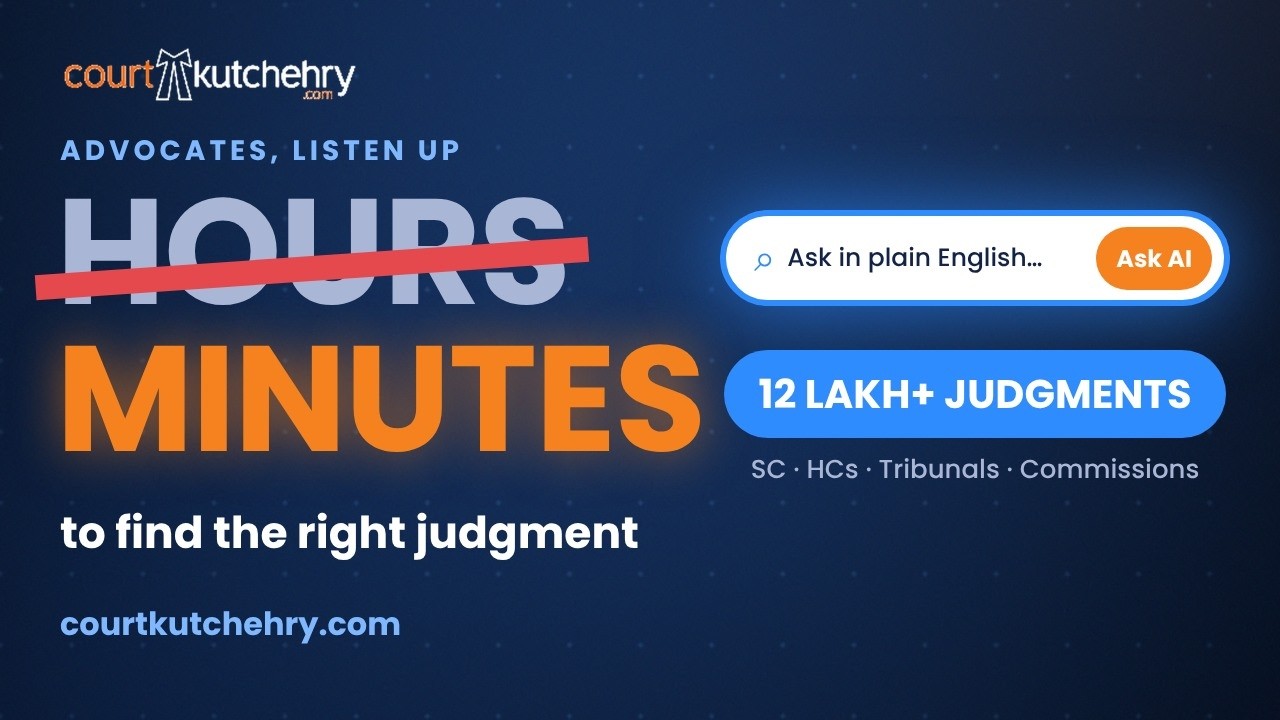
Watch the Video
In this 1-minute video, Adv. Vinayak Pawar shows how Courtkutchehry AI is designed to cut down the time advocates spend searching for judgments. This article explains how to research case law efficiently, what the tool shown in the video offers, and why every result must still be verified against the original judgment.
▶ Watch on YouTube: Advocates, Stop Wasting Hours Searching for Judgments | Courtkutchehry AI
▶ Watch the short version: Advocates: Hours → Minutes to Find the Right Judgment ⚡
How Many Hours Do You Spend Searching?
Every advocate knows the evening before a hearing. The client is calling, the brief needs one more authority, and the search results run into hundreds of pages. You open judgment after judgment, skim, close, and start again. Legal research is essential, but much of the time goes into finding, not reading.
The Daily Grind of Case-Law Search
Traditional keyword searching has well-known problems:
- A common word returns thousands of results, most of them irrelevant.
- The same principle is expressed in different words in different judgments, so a single keyword misses good cases.
- You often have to read a long judgment just to learn whether it is relevant at all.
Start With a Clear Question
Whatever tool you use, research is faster when you start well:
- Frame the legal question. Write it in one sentence: for example, whether written grounds of arrest are mandatory in an NDPS case.
- Identify the provision. Note the Act and section, and its old and new numbers where laws have changed (IPC to BNS, CrPC to BNSS, Evidence Act to BSA).
- Look for the leading case first. Find the Supreme Court or larger-bench authority, then work outwards to later decisions that apply it.
- Use filters. Narrow by court, date, judge, Act and section, so you are not reading cases from the wrong forum or period.
- Read the relevant paragraphs, not just headnotes, and note paragraph numbers as you go.
Ask in Plain English
The video shows how Courtkutchehry AI lets an advocate type a question in plain English and get an AI answer with supporting judgments and relevance scores. The idea is to move from “which keyword will work?” to “what is my legal question?”, and then go straight to the judgments that address it.
Structured Judgment Summaries
Deciding whether a judgment is relevant often takes longer than reading the part you need. The video shows structured summaries of judgments set out under headings: facts, issues, reasoning, decision, key principles, cases cited and similar judgments. A structured summary helps you decide quickly whether to read the full judgment, and which part of it to read.
Remember this line: a summary tells you where to look; the judgment tells you what the law is.
One Place for Judgments, Filters and Notes
According to the video, CourtKutchehry covers more than 12 lakh judgments of the Supreme Court, High Courts, Tribunals and Commissions in one place, with filters for court, judge, Act, section and date. It also lets users save and bookmark judgments, add notes and download the PDF, so research for a matter stays in one place.
Verify Before You Cite
Speed is useful only if the result is reliable. The video itself carries the caution that AI summaries are research aids and that screens shown are illustrative. Before relying on any judgment in a draft or in court:
- open the original judgment and read the paragraphs you cite;
- check the citation, court, bench and date; and
- check that it has not been overruled or referred to a larger bench.
Plans
As the video mentions, the monthly plan starts at ₹599 (plus applicable tax). Current plans are set out at the end of this article and on the pricing page.
Key Takeaways
- Research is faster when you frame the legal question and identify the provision first.
- Start with the leading case, then use filters for court, judge, Act, section and date.
- The video shows plain-English questions and structured summaries (facts, issues, reasoning, decision, principles).
- Save, bookmark, add notes and download PDFs to keep research for a matter in one place.
- Always verify with the original judgment before citing; AI summaries are research aids.
Frequently Asked Questions
What is the fastest way to start legal research?
Write down the legal question in one sentence, identify the Act and section, and look for the leading Supreme Court or larger-bench authority first.
What does a structured judgment summary contain?
As shown in the video: facts, issues, reasoning, decision, key principles, cases cited and similar judgments.
Can I rely on an AI summary in court?
No. Use it to decide what to read. Rely only on the original judgment, quoting the relevant paragraph.
Which courts does CourtKutchehry cover?
According to the video, judgments of the Supreme Court, High Courts, Tribunals and Commissions, more than 12 lakh in all.
How much does a plan cost?
The monthly plan starts at ₹599 plus applicable tax. See the plans table below and the pricing page for current offers.
Where can I watch the full explanation?
Watch Adv. Vinayak Pawar’s demonstration here: https://youtu.be/Rw1Pl1nhWTY.
Conclusion
Most research time is lost in searching, not reading. A clear question, the right filters and a quick way to judge relevance can turn a long evening into a focused hour.
Tools can help with that, but the professional rule does not change: read and verify the original judgment before you rely on it.
▶ Watch the video: Advocates, Stop Wasting Hours Searching for Judgments | Courtkutchehry AI
Research the Law on CourtKutchehry
CourtKutchehry gives you lakhs of Indian judgments, searchable for free. A membership adds unlimited summaries, all related judgments, original court PDF downloads, bookmarks, notes and the CourtKutchehry AI assistant.
| Membership | Price | Works out to | AI credits |
|---|---|---|---|
| Monthly (1 month) | ₹599 | ₹599 / month | 1,000 / month |
| Quarterly (3 months) · Save 16% | ₹1,499 | ₹499.67 / month | 1,100 / month |
| Six-monthly (6 months) · Save 33% | ₹2,399 | ₹399.83 / month | 1,200 / month |
| Yearly (12 months) · Save 44% · Best value | ₹3,999 | ₹333.25 / month | 1,300 / month |
Every plan is a one-off purchase for a fixed period: nothing auto-renews and no card is kept on file. Prices are exclusive of applicable tax, which is added at checkout. Extra AI chat credits can be topped up from ₹99. A free verified account gets 5 summaries and 50 AI trial credits.
Prices are as displayed on courtkutchehry.com on 20 November 2026 and are subject to change without notice. Please check the pricing page for the current plans and offers.
For more judgments, legal opinions and case analysis, visit courtkutchehry.com
Visit CourtKutchehry →