
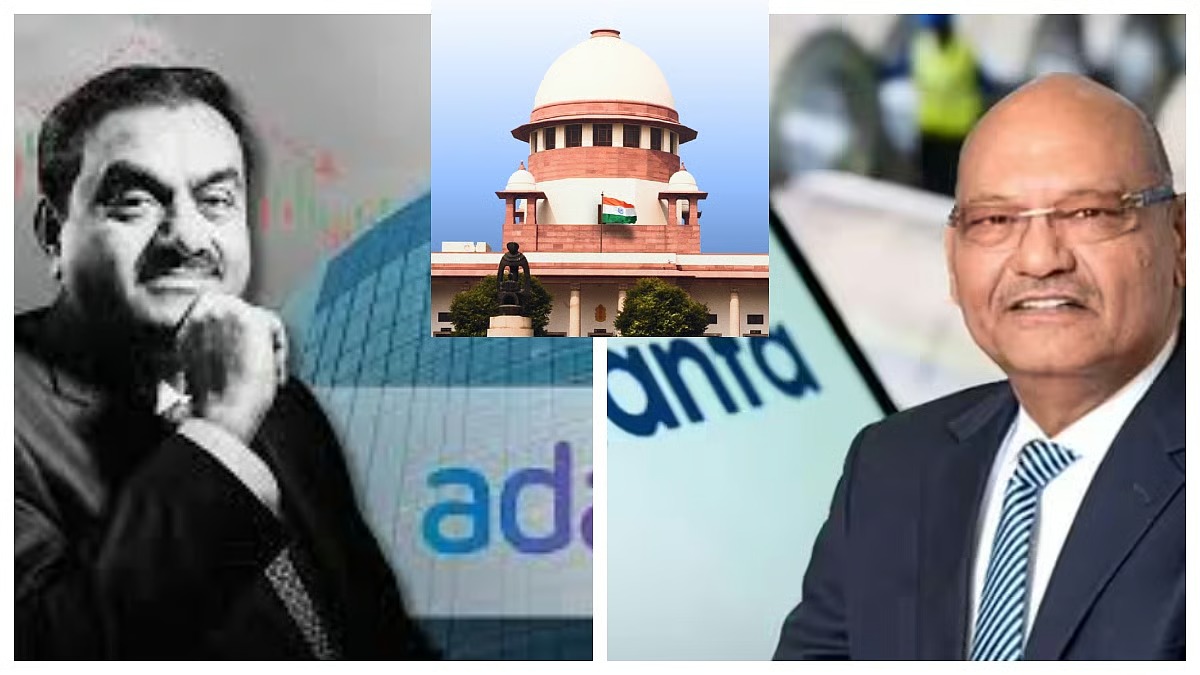
Supreme Court Upholds NCLAT Order on Adani’s ₹14,535 Crore JAL Bid
Vedanta’s challenge against Adani’s takeover of Jaiprakash Associates Ltd to be heard by NCLAT
Top court restrains JAL monitoring committee from major policy decisions without tribunal approval
By Legal Reporter
New Delhi: April 06, 2026:
In a major corporate law development, the Supreme Court of India has declined to interfere with the NCLAT’s interim order that refused to stay Adani Enterprises’ ₹14,535 crore resolution plan for Jaiprakash Associates Ltd (JAL). The ruling comes amid a heated contest between Adani Group and Vedanta Ltd, with the latter challenging the approval of Adani’s bid on grounds of valuation and fairness.
The apex court’s decision underscores its stance of allowing specialized tribunals like NCLAT to adjudicate corporate insolvency disputes, while ensuring that monitoring committees do not take unilateral policy decisions during the pendency of appeals.
Key Details of the Case
- Resolution plan value: ₹14,535 crore.
- Adani’s advantage: Despite a lower net present value, Adani’s plan was preferred due to faster timelines and higher upfront repayment.
- Supreme Court ruling: No interim stay; Vedanta and other parties must argue before NCLAT.
- Monitoring committee restriction: Cannot take major policy decisions without NCLAT’s approval.
- Next hearing: NCLAT scheduled to hear Vedanta’s appeal on April 10, 2026.
Legal Context
- Insolvency and Bankruptcy Code (IBC): Governs resolution of bankrupt companies like JAL.
- NCLT/NCLAT role: National Company Law Tribunal (NCLT) approves resolution plans; NCLAT hears appeals.
- Supreme Court’s supervisory role: Ensures fairness but avoids interfering in specialized tribunal matters unless perverse findings are shown.
Case Study Example
Consider a bankrupt infrastructure company with multiple bidders. One bidder offers higher value but slower repayment, while another offers lower value but faster repayment. Under IBC, committees of creditors often prefer speed and certainty over higher but delayed returns. This mirrors the JAL case, where Adani’s plan was chosen for its upfront repayment advantage.
Historical and Comparative Context
- India: IBC has transformed insolvency resolution since 2016, prioritizing creditor recovery.
- Global parallels: In the US, Chapter 11 bankruptcy allows similar competitive bidding, where speed and certainty often outweigh valuation.
- Adani’s expansion: The JAL acquisition adds to Adani’s growing portfolio in cement and infrastructure, consolidating its position against rivals like UltraTech.
Implications for Society, Families, and Courts
- Corporate sector: Reinforces confidence in IBC and tribunal-driven resolution.
- Investors: Signals judicial support for speedy insolvency resolution.
- Courts: Supreme Court’s restraint highlights reliance on specialized tribunals.
- Public interest: Ensures large infrastructure projects tied to JAL can move forward under Adani’s management.
Book Reference
Legal professionals and students alike will benefit from Will Writing Simplified, which covers procedure and case law in detail. Amazon.
📘 Buy Will Writing Simplified online: 🔹 Flipkart
FAQ Section
1. What is JAL?
Jaiprakash Associates Ltd, a major infrastructure and cement company, now bankrupt.
2. Why was Adani’s bid chosen?
Faster timelines and higher upfront repayment outweighed Vedanta’s higher net present value.
3. What did the Supreme Court decide?
It refused to stay NCLAT’s order and directed parties to argue before NCLAT.
4. What is the role of NCLAT?
It hears appeals against NCLT orders in insolvency cases.
5. Can Vedanta still challenge Adani’s takeover?
Yes, Vedanta’s appeal will be heard by NCLAT on April 10, 2026.
6. What happens if NCLAT rules against Adani?
The resolution plan could be modified or reassigned, subject to further appeals.
7. Why is this case important?
It sets precedent for how courts balance valuation, timelines, and creditor interests in insolvency.
Conclusion
The Supreme Court’s refusal to interfere in Adani’s ₹14,535 crore JAL bid highlights its commitment to letting specialized tribunals handle insolvency disputes. By prioritizing speed and certainty of repayment, the ruling reinforces the IBC’s core objectives.
For Adani, the acquisition strengthens its cement and infrastructure footprint. For Vedanta, the battle continues at NCLAT. For India’s corporate sector, the case underscores the judiciary’s support for efficient resolution of bankrupt companies.
Suggested Keywords for SEO
- Supreme Court Adani JAL bid
- NCLAT Adani Vedanta case
- Jaiprakash Associates insolvency resolution
- Adani cement acquisition India
- IBC Supreme Court ruling
- Corporate insolvency disputes India
- Adani vs Vedanta NCLAT hearing